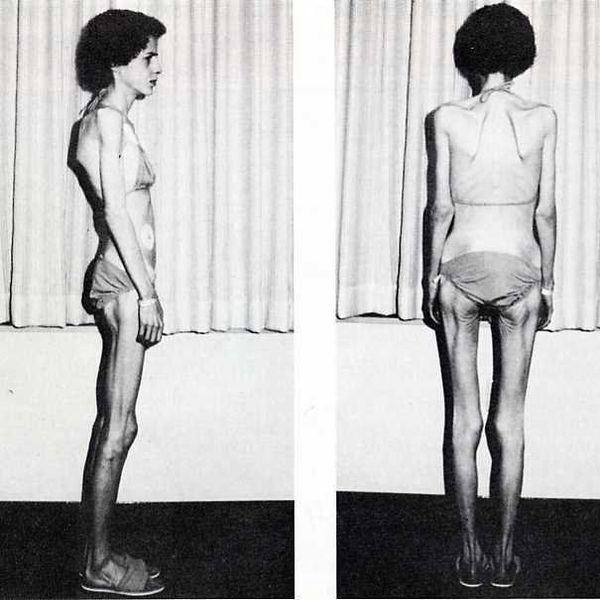


Well, it’s that time of the year again. As you probably did not know, February 21st through the 27th marks National Eating Disorder Awareness Week.
For many young people, exposure to the idea of disordered eating has come exclusively through television and movies. While there are a handful of shows/films that have handled eating disorders like the serious, life-threatening medical issue they are, many others simply make jokes at the expense of eating disorder sufferers, using serious mental illnesses as an excuse for a cheap laugh. On TV, jokes about a character’s perceived anorexia are thrown out breezily and carelessly. Bulimia is a punchline, thrown out for easy gross-out laughs, in the vein of a fart joke.
I’m a pretty optimistic person, so I like to believe that this insensitivity (as painful as it may be for eating disorder sufferers and survivors like myself) isn’t rooted in meanness, but rather ignorance. The people who write/say these things are doing so simply because they don’t know anything about eating disorders or, rather, what they do know is based on wrongful impressions and incorrect assumptions, like the following:

1. Eating disorders are rare.

Here in the U.S., 20 million women, as well as half that many men suffer from clinically significant eating disorders at some point in their lifetime, including anorexia nervosa, bulimia nervosa, binge eating disorder and EDNOS/OSFED. Those numbers grow exponentially when you include sub-clinical disordered behaviors, which can also be medically significant if practiced over a prolonged enough stretch of time.
2. Eating disorders are a "white girl problem."
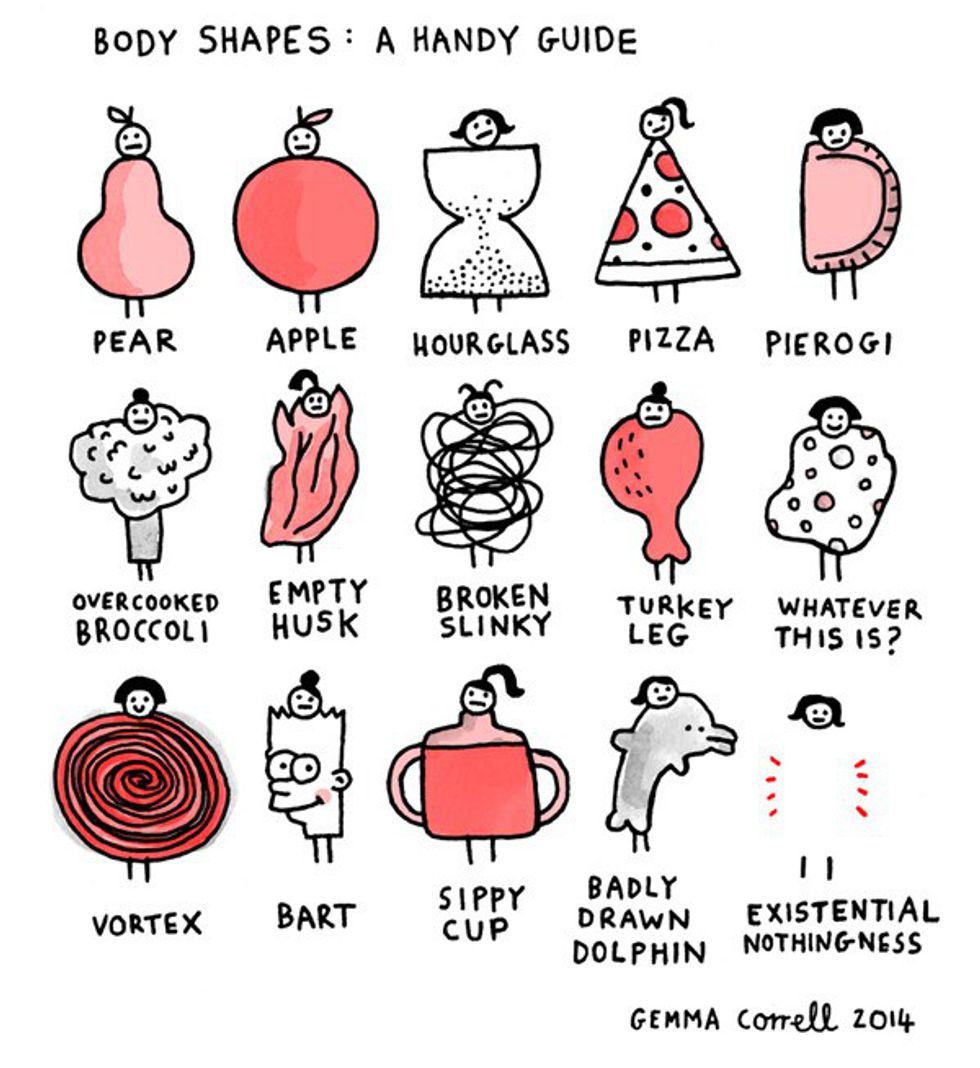
This notion is not only straight-up false, it’s also super harmful. Eating disorders tend to be under-diagnosed amongst males as well as people of color, in huge part due to this widely held misconception. All humans eat, and thus all humans are perceptible to disordered eating, regardless of age, race, gender, socioeconomic background or any of a bajillion other factors.
3. Eating disorders are a lifestyle choice.

The idea that eating disorders are just some kind of extreme diet you can opt in/out of whenever you want has been around forever, and it's frequently used to dismiss these diseases as valid medical diagnoses. Whenever some ill-informed dumb-dumb makes a joke about “going anorexic” in preparation for “bikini season,” they are playing off of this misconception. Let me ask you, if eating disorders were simply a lifestyle choice, why are there thousands of clinics and in-patient treatment facilities across the nation whose sole focus is treating them? Why do so many suffers end up involuntarily committed to psychiatric care? Oh yeah, because a disease is not a lifestyle choice. Duh.
An aside –– as a feminist and eating disorder survivor/advocate, there may not be any combination of otherwise innocuous words that sets off "Kill Bill" sirens in my head faster than “bikini season.” It is a made up concept born from capitalism and fueled by misogyny.
4. Eating disorders aren’t as serious as other mental health issues.

This is a not only a ridiculous assertion but is also literally the opposite of true. Anorexia nervosa is in fact the number one deadliest psychiatric diagnosis a person can receive. Deadlier than any of the many variations of clinical depression, deadlier than bipolar disorder, deadlier than schizophrenia or any personality disorder. Bulimia nervosa can cause irreversible damage to most major organs (most dangerously, the heart) as well as electrolyte imbalances that, when severe enough, can cause organ failure, coma and even death.
On a personal note, back in high school I had two very scary, very serious run-ins with a severe variation of electrolyte imbalance called “hypokalemia,” which results from low potassium levels and effects a relatively small number (about 4.6 percent) of all bulimia sufferers (generally those who’s BMI has dipped into the “underweight” zone and are participating frequently in more than one type of purging) and can be deadly.
5. You can "tell" when someone has an eating disorder.
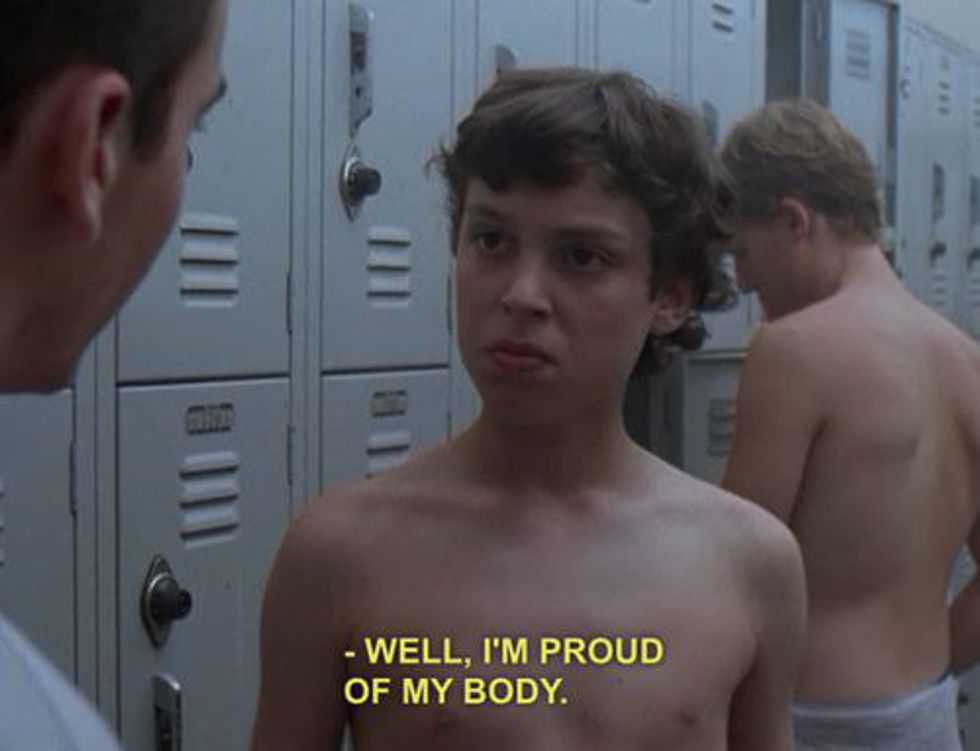
What? No. No you can’t. You are probably super smart, you are probably magnificently perceptive, but unless you are someone’s physician you simply cannot “tell” whether or not someone is suffering from an eating disorder. Because of this, it’s important to steer clear from talking/behaving in a way that is triggering to anyone in your life who may be suffering. If this sounds like some huge inconvenience, I promise it isn’t. It’s all pretty much stuff that falls into the general category of not being a dick, i.e. not making unsolicited comments on people’s eating habits or bodies. You may think telling someone they “eat like a bird” is a compliment but it isn’t, and it may be just the wrong thing for a certain person to hear at that certain moment so it’s probably best that you keep it to yourself.
Also, birds eat worms. Is the person you are talking to/about eating a plateful of worms? Probably not. If they are, I am sorry for my previous comments, though not really because they are probably still using a fork and knife or maybe chopsticks, which are all tools unavailable to actual birds. People eat like people.
I want to end all of this by reminding every last person reading this that they are wonderful, unique creatures who deserve happiness and goodness. The focus of #NEDAwareness week this year is early intervention, so they’ve set up a super quick, confidential eating disorder screening survey over on their site. I encourage you to take it if you’re currently struggling with any kind of eating/exercise/self-image issues, it takes two-three minutes at the most and is a super valuable resource.