
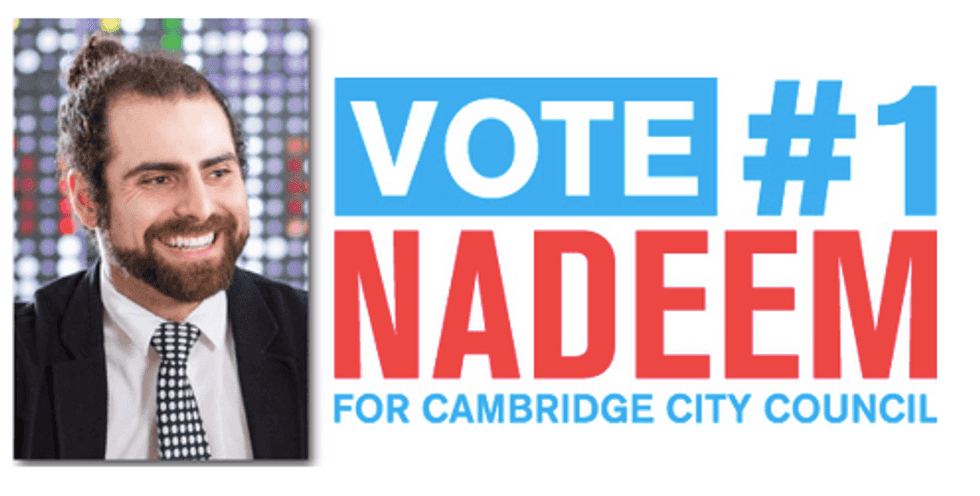
Nadeem Mazen is a 32-year-old MIT graduate who is the only Muslim to be elected to municipal council in Massachusetts. But he rejects that title.“Frankly, I am just another city councilor,” he said. “I am not just the ‘Muslim city councilor.’ I have other priorities."
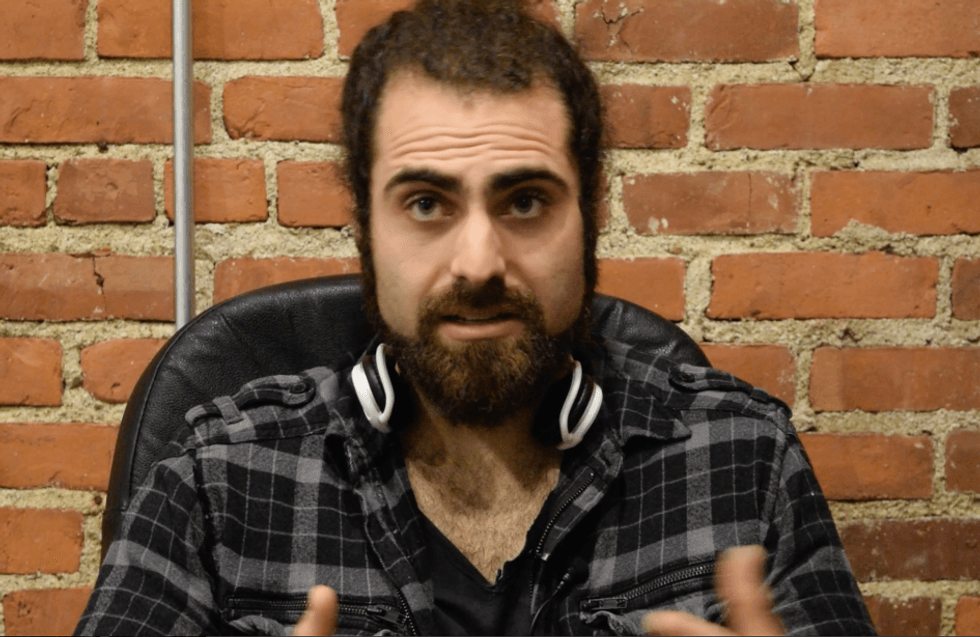
Nadeem Mazen in his office in Central Square
He said, “Nadeem is very helpful to the community, especially the Bangladesh community. I don’t see him as a Muslim, I see him as an immigrant, you know, like I’m related to him as an immigrant family. His is the second generation to become an elected official and it’s an inspiration for the immigrant community.
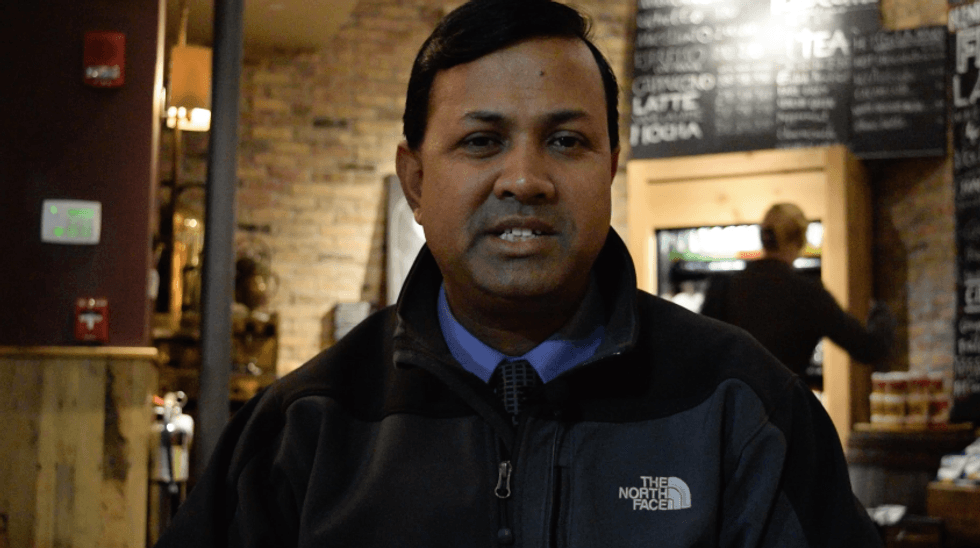
The progressive Democrat’s platform includes affordable housing, the $15 dollar minimum wage and voting rights for immigrants on track to citizenship.
The only religiously oriented concept that compelled him to run, he says, is fard kifaya, which is a Muslim law that enforces communal obligation to help those in need when the members of the community, or the government, are not doing it.
Growing up, Mazen attended Phillips Academy in Andover, one of the highest ranking high schools in the country. He then went on to study mechanical engineering at the undergraduate and graduate level at MIT.
The apple doesn’t fall far from the tree, however. Nadeem’s father, Abdelmagid Mazen, has a doctorate from Purdue University and is a professor of management and entrepreneurship at Suffolk University. He immigrated from Egypt to the US where he married Mazen’s mother, Shelly.
Mazen remains humble, despite his prestigious credentials. “A- was never an option in our family. So I worked really hard and I wasn’t a naturally brilliant kid. I didn’t do well because it was easy, I did well because I was made to work hard.”
Nevertheless, when asked what Muslims are up against in this country, he says, “Hate speech is cropping up again and it is up to all of us to speak out against it, but the point is, hate groups still exist. Now, for the first time in a long time, they can raise big money by pointing at Muslims and saying ‘that’s our next target, that’s our next problem.’”
In the Boston Globe last April, Mazen spoke out against a federal program called Countering Violent Extremism, which is designed to reduce the risk of young people from being recruited by extremist groups. The program is highly contested by civil rights organizations for racially profiling Muslims, or anyone who might have facial hair or ostensibly religious ideologies. Mazen describes the program as “authoritarian.”
Although he wouldn’t explicitly state which ones, Mazen said that there have been many organizations in the country that, over the years, have raised millions of dollars to destroy the careers of specific Muslims in order to prevent them for successfully entering into leadership positions, whether in the private or public sector.
“I could sound paranoid kind of saying there is a group like that,” he said. “But it’s true…It’s just bizarre that you can raise that kind of money to either demoralize, impugn, or in many cases, specifically professionally target individuals in order to reduce their opportunity to lead. That’s weird.”
His solution to extremism is to integrate Muslims into the country with community engagement and organizations such as a Muslim-only AFL-CIO. Another problem he sees for Muslims in the US is that they are not well represented in the media and, as he says, “It is certainly not for a lack of trying.”
“As we [Muslims] build more institutions, we become more vociferous, more present,” he said in response to a question about the integration of Muslims into the country.
“Muslims are present and speaking out loudly and somehow, somehow still not getting the air time. Somehow, Muslims do not have a major personality in the role of a talk show, like Jesse Jackson or someone like that.”
Mazen thinks that Muslims today are facing a “new kind of bizarre xenophobia.” The once implicit racism of the 1970s and 1980s has now become more explicit over time, he says, in spite of the country’s newfound acceptance of minorities.
“For a long time, the portrayal of Arabs, Muslims and South Asians in film and mass media have been implicitly racially biased and implicitly offensive, and now that it has gotten explicit, we are taking a step backwards,” he said.
The reason Muslims lack a presence in the media is because journalists, he believes, fail to include members of the religious group in their “little black book” of contacts; and when they do, the organizations are hardly representative.
“There is a group called the American Islamic Congress, an incredibly well funded group that, for a time, tried to be the voice of Muslims despite the fact that they wouldn’t work with other Muslim groups. They were not Muslims, without knowledge of Muslims, speaking on behalf of Muslims.”
When asked what his plans are for the future of his career and his advice to other aspiring Muslim politicians, his response was that he would like to train those who are more selfless and greater than himself, so that they can bring power back to their neighborhoods rather than looking at politics as a lifelong pursuit of personal brand building and an ascension of power for the self.
“My job as a politician, whether it is targeting Muslims or non-Muslims who want to run for office, is to find and train people who are more humble and service oriented to run for office,” he said.
Mazen has self-imposed term limits and when he leaves office, he plans on returning to the private sector to continue working with his two companies in Cambridge, Nimblebot, a software design company, and danger!awesome, a retail fabrication studio.
Work Cited
Civil rights groups protest federal program to combat extremism, saying it targets Muslims

















