
For some reason, being an introvert is often considered to be a personality flaw. In a society that places value on qualities like assertiveness and outspokenness over solitude and quiet contemplation, introverts are often overlooked and misunderstood. There are a lot of misconceptions about introversion that cause people to believe that it is somehow a negative trait. Usually, when people hear the term "introverted," they might think "loner," "shy," "guarded," "reserved," "boring," and other limiting synonyms that suggest anti-social behavior and smallness of personality, which is highly inaccurate. "Introverted" is not synonymous with "socially awkward" and a lot of introverts are far from being shy. Not all introverts are exactly the same (in fact, there are four different kinds of introversion), but it's important to understand what the broad term "introversion" actually means.
For the record, I consider myself an introvert, if you haven't already assumed that from the topic of this article. Based on the Myers-Briggs Type Indicator (MBTI), I am an INFP and I find it eerily accurate. (If you don't know your personality type, take the test here to get a comprehensive analysis.) The quality of introversion or extroversion is just one of the many facets of someone's personality and there are many variations on the spectrum.

The main difference between introverts and extroverts lies in the fact that while extroverts are energized from being around people, introverts are drained from social interaction. While introverts thrive on their alone time, extroverts find themselves bored and lonely in solitude, yearning to be around people again. A common myth about introverts is that we're misanthropic and don't like being around other people, which couldn't be further from the truth. I love hanging out with friends and family, going to parties and concerts, exploring cities, and meeting new people. I find long, passionate conversations interesting and fulfilling. However, my energy drains quickly from social interaction and I need alone time to re-energize and regain a sense of self. Introverts are not anti-social. After being social for a few hours, we simply need time to turn off and recharge. Introverts typically spend more time with close friends and family than with other people, but even then we need our alone time.

One of the reasons why people might get the idea that introversion is a flawed trait is because extroverts are the loudest and most outgoing type of people, so they are heard and noticed more often than introverts. Also, it can be hard for an extrovert to understand why someone would want or need to be alone because, from their perspective, company is always welcome. When introverts become tired and drained from social interaction, but still have to be around people, we can sometimes seem rude or detached, which leads to a misunderstanding about our personality.
I can't tell you how many times I've been asked, "Are you okay?" or, "Why are you so quiet?" while I was listening intently to a conversation or deep in my own thoughts. Introverts typically listen and reflect more than they talk (usually because we can't get a word in edgewise around extroverts), but there are constantly about a million thoughts shooting around in our heads all at once. Introverts tend to choose our words carefully and think before we speak, as opposed to extroverts who speak in order to think.
Introverts value quality over quantity in our relationships. We like having a smaller group of close friends rather than a large network of acquaintances. Although it may be shocking, introverts really do like socializing. Introverts simply socialize in a different way than extroverts. We don't need to be around people 24/7 to maintain friendships or to have a good time. We're selective with both who we spend our time with and how much time we spend with those people. It's not because we're arrogant, but because that's just how our brains work.
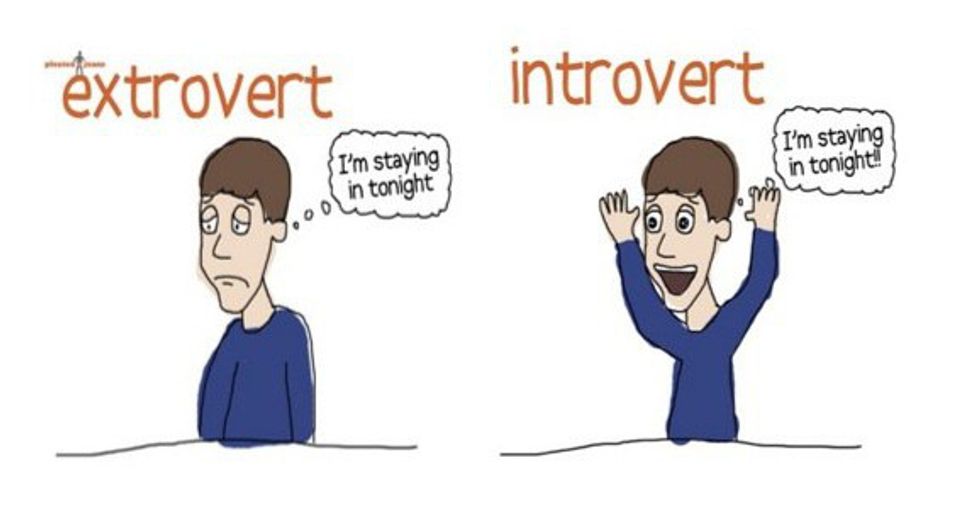
There have actually been scientific studies behind introversion and extraversion linked to dopamine levels (aka the happiness chemical). These studies show that the brain of an introvert is easily stimulated, while the brain of an extravert requires more outside stimulation to function properly. So it's not our fault that we can entertain ourselves with our own thoughts and still be perfectly happy.

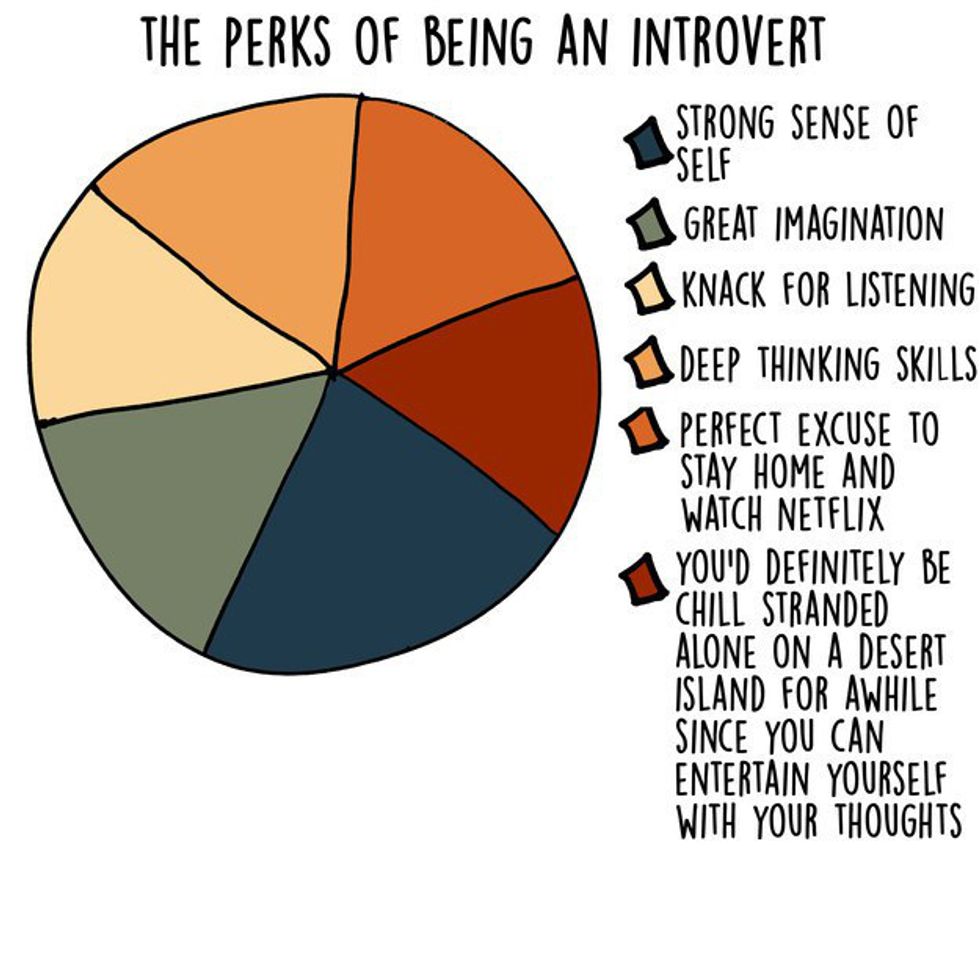
Introverts may be misunderstood, but we certainly have a lot of advantages. We're independent, creative, intelligent, thoughtful, great listeners, work well one-on-one and in small groups, and form deep and meaningful relationships. We know how to be happy on our own, without help from others. We enjoy being around other people and we equally enjoy being alone. It's the best of both worlds and I think that we're pretty interesting human beings. So keep doing you, fellow introvert.