75 degrees, a cool breeze, and good company.
You're spending your Saturday afternoon in the big city, spending quality time with those closest to you. The urban scene is bustling; it seems that everyone has decided to take advantage of the beautiful weather, and the liveliness of your surroundings almost brings about a sense of kinship with those around you.
But something feels off.
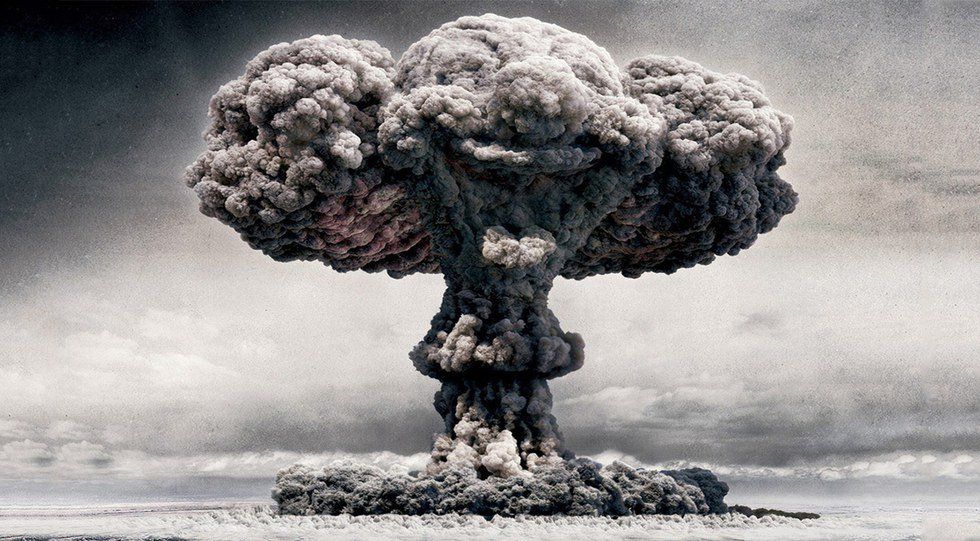
Without warning, you hear a deafening boom. The sky grows dark, and an immeasurable heat washes over your body. Flames engulf everything—and everyone—around you. The sudden influx of smoke makes breathing near impossible, and you struggle to keep your eyes open. For what little time you have left on this earth, you watch complete and utter destruction wash over the people and city you love. Even years after you are gone, residual radiation will ensure that your city exists as nothing more than a desolate reminder of what atrocities humans are capable of inflicting upon each other.
Such is the reality of nuclear warfare: gritty, ruthless, and heartbreaking.
Why, you might ask, do countries not insist upon immediately dismantling every nuclear weapon on the face of the planet? Is it because they want to harness the formidable power of the nuke, and lay waste to their enemies? Maybe so, but there might just be another goal they're after: ensuring the protection of their population through Mutually Assured Destruction.
What is Mutually Assured Destruction?
Mutually Assured Destruction (or MAD) is a defense strategy adopted during the Cold War by many states in the possession of nuclear weapons. MAD essentially encompasses the idea that, if a state initiates nuclear warfare (i.e. launches a nuclear missile at another state), it is sure to meet the same fate due to retaliation by the victim or its allies (presumably also in possession of nuclear weapons). Thus, destruction is mutually assured for all parties involved, dissuading anyone from being the aggressor.
This fairly morbid concept has been a dominant force in international nuclear dialogue since the Cold War. It not only hinges on each nuclear state retaining the ability to launch a second strike (that is, a retaliatory nuclear attack), but also the assumed vulnerability of each state's population to a nuclear attack. Both concepts are seen as imperative to maintaining a level of stability and security among the nuclear powers. Unfortunately, that means no country is willing to be the first to eradicate its weapons. Although many treaties have been signed regarding the creation and possession of such devastating tools, several countries are still flush with nuclear missiles—a portion of them armed -and ready at all times.
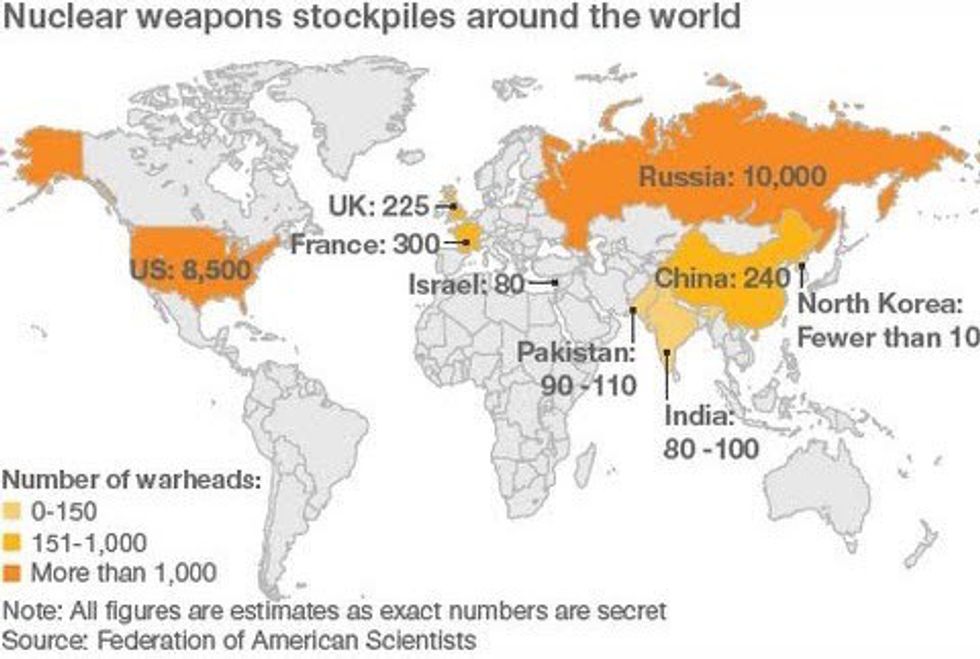
What has already been done to prevent the advancement of nuclear weapons?
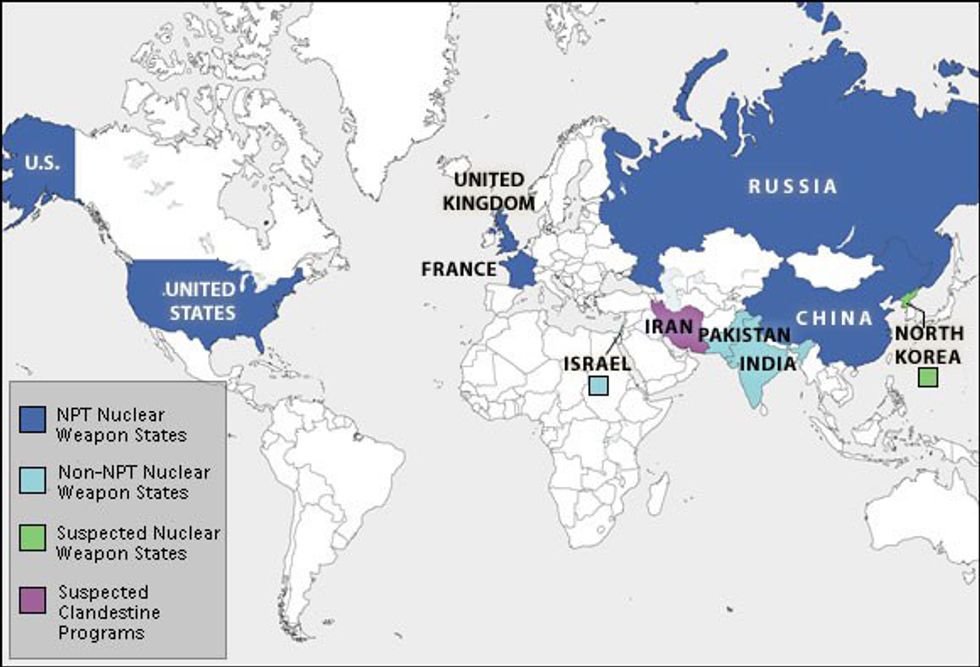
The Treaty on the Non-Proliferation of Nuclear Weapons, otherwise known as the Non-Proliferation Treaty (NPT) was designed to prevent the spread of nuclear weapons to countries not already in possession of them. What the NPT entails is that, if you are not a nuclear-weapons state (the United States, China, France, the United Kingdom, or Russia), you are prohibited from pursuing the creation or possession of nuclear weapons. Meanwhile, the nuclear-weapons states promise to put complete disarmament above all else. More countries have agreed to the NPT than any other arms limitation treaty, serving to show its significance; the NPT is a really big deal. However, there are several countries that have not signed the treaty: India, Pakistan, Israel, and North Korea. These countries are not bound by the NPT, and are known to possess nuclear weapons, therefore hindering efforts to eradicate nuclear weapons altogether.
As one can see, the NPT can only do so much to reduce nuclear proliferation. If a country does not sign the treaty, it is by no means prohibited from developing its own nuclear program (although it is strongly advised not to). This can cause issues in regards to the legitimacy of nuclear power as a method of deterrence. Although nuclear-weapons states are still overwhelmingly using MAD as their basis for nuclear deterrence, any efforts to change the status-quo into something less sinister are severely undermined by the non-NPT countries (the aforementioned Israel, India, Pakistan, and North Korea) continuing to establish their power and security through nuclear weapons programs. In fact, the continued proliferation of nuclear weapons by just these four countries can even encourage others to develop their own nuclear programs in response (as was the case with India and Pakistan).
How can we possibly replace MAD as our basis for nuclear deterrence?
Many U.S. politicians have advocated for increased spending on missile defense systems in order to reduce the threats of nuclear attack. However, every missile defense system pursued by the U.S. and its defense contractors has been remarkably ineffective, and ultimately resulted in the unproductive loss of billions of dollars. While some may see the U.S.'s failure to provide adequate missile defense as a scary prospect, others see it as a boon to national defense. A successful Anti-Ballistic Missile (ABM) system, some say, could completely throw off the balance that has been brought by MAD. If a country is developing a system that will prevent its population from being vulnerable to attack (a vital tenet to MAD effectively deterring nuclear warfare), it could potentially provoke another arms race, or even result in a preemptive nuclear strike from another country if tensions are high enough.
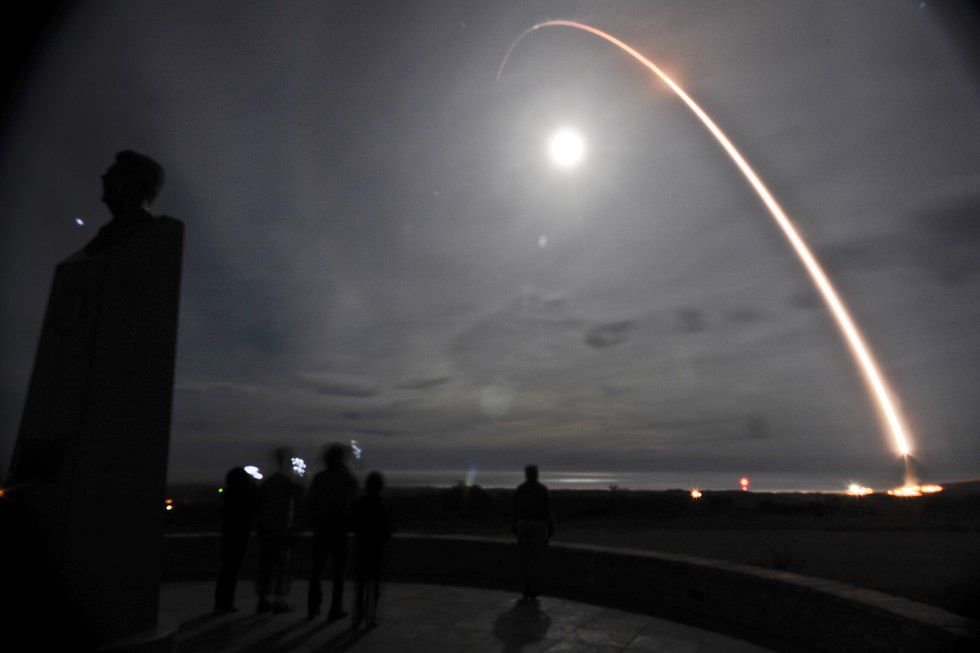
Above: The U.S. launches the Minuteman III, one of its most high-tech ICBMs to date.
Henry D. Sokolski, Executive Director of the Nonproliferation Policy Education Center, says that one of the most important factors in rooting out MAD as a dominant mode of thinking is for nuclear states to take proliferation seriously (p. 346). The U.S. and its allies have notably referred to India, Pakistan, and Israel's possession of nuclear weapons as "understandable" (p. 347). This soft approach to proliferation, alongside the U.S.'s stance on using nuclear weapons to destroy hardened and otherwise-impenetrable bunkers, has all but invalidated the U.S. as a leader of non-proliferation. Unless something changes, MAD will continue to be a dominant force throughout the foreseeable future. If one of the most powerful sponsors of the NPT can't find within it the will to completely disavow nuclear weapons, who can?
All in all, Mutually Assured Destruction is one of the leading factors in determining the fate of our world. As long as nuclear weapons maintain their power, both physically and ideologically, states will continue to seek the development of their own nuclear devices for protection. Although the situation may seem bleak looking at the past and the present, the future may hold potential for change; a number of organizations concerning nuclear proliferation have risen over the years, and are continuing to make strides in determining global policy every day. I believe that with reasonable government transparency, the proper dissemination of information, and a devoted population, the world can someday become free from the ever-looming threat of global nuclear war.