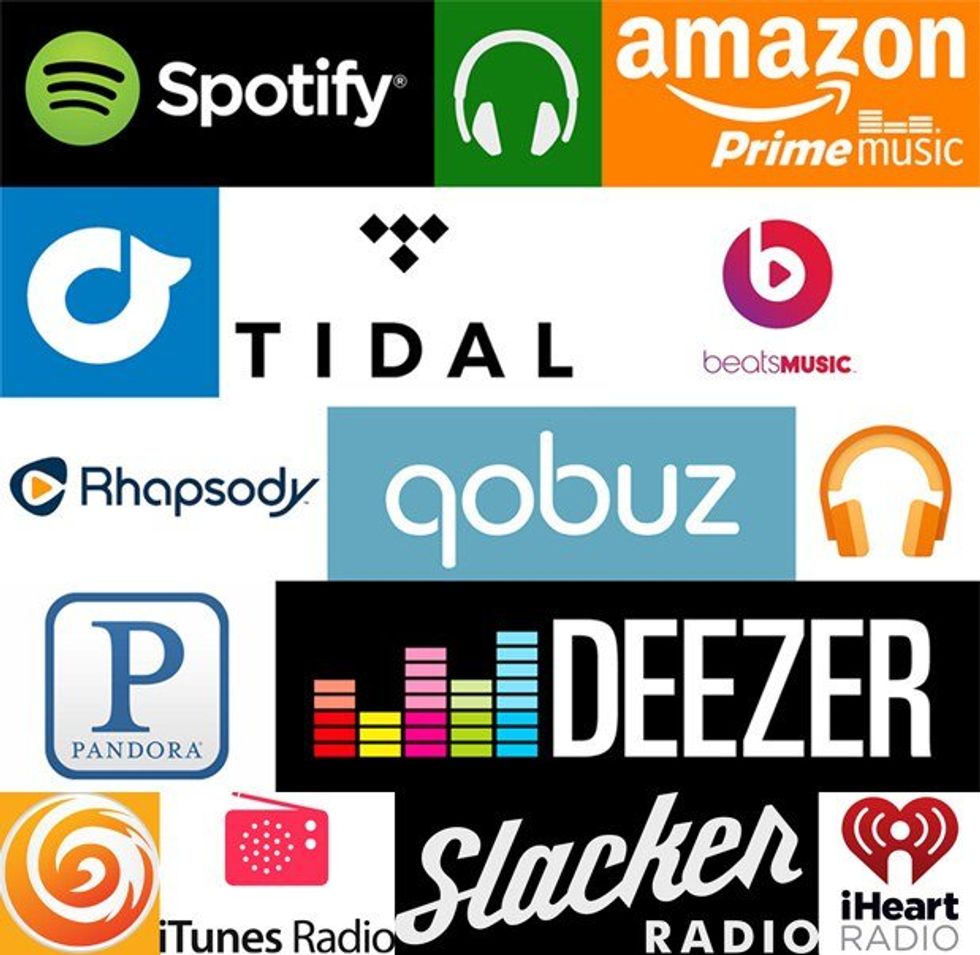
The era of streaming services has officially begun. No longer are people spending money to buy CD's or records, but instead, monthly 10-dollar fees for streaming. Everyone has a preference. Maybe you don’t mind the interrupting commercials of Spotify because it's free. Or you got Tidal just so you could listen to the new Kanye West album and all of its different forms. You could have subscribed to the free three-month trial Apple music offers, and then just never deleted it. Or maybe you aren’t going to let the dream die and you're still using Pandora for who knows what reason.
The problem is, streaming services are still are fairly new idea, Apple music was started only last summer. And the effect they will have on the music industry, and more importantly, the artists themselves, is still to be proven. While some smaller, lesser-known bands have praised streaming for at least providing a small amount of money, the highest amount of money provided to an unsigned band was .043 cents per play by Tidal.
Other artists like Taylor Swift have called out services like Spotify for undervaluing the music.
“I think there should be an inherent value placed on art. I didn’t see that happening, perception-wise, when I put my music on Spotify.” Swift goes on to claim that she thinks streaming is pushing people away from buying albums in a dying music industry, which is a pretty valid point.
The problem is that Swift, unlike hundreds and thousands of other lesser known musicians, is in a place to ask for more money. It becomes much harder to protect the inherent value of your music when it means a paycheck--or lack thereof--for a struggling artist.
Each platform offers its own unique experiences and price range. If you want to listen to most Jay Z albums, you're going to have to use the streaming service he owns to do so. Tidal surprised everyone when they put out the long-awaited Rihanna album "Anti." Tidal has also streamed live concerts that only subscribers can access. Most recently, they streamed a Lil' Wayne/2 Chainz double header in support for their joint album.
Since it has been released, the only place to listen to the new Kanye West album was Tidal. While the album came out February 14, Kanye would randomly update the album, adding verses to songs or making minor changes in beats. Some have called the output a mess, but Kanye himself has called it both a living, breathing work of art, and that it would never be sold on CD, and has even said that he would never put work on CDs again.
This is an interesting use of a streaming service. Instead of putting out just one album, artists can have an album grow and adapt with time: a groundbreaking idea that could change how people listen to music. Imagine being able to hand in a paper, but then over time, make corrections and add new information in. You'd end up with a great, updated paper.
Apple has plenty of exclusives, with everyone from Drake to Dr. Dre to Tegan and Sara to Wavves, getting Apple radio shows. These shows are platforms where fans can tune in weekly to listen to what their favorite artists are listening to. Drake uses this as a platform to drop new songs, like this summer when he dropped a Meek Mills diss track and "Hotline Bling" on the same show. Or when he premiered his joint album/mixtape hybrid with Future, “What a Time to Be Alive.”
Apple also signed the artist Future to a lucrative deal, and was the sole streaming site to release his latest mixtape “Evol” unlike past Future mixtapes, which were released for free to download on websites like Datpiff.
The biggest problem with this takeover of streaming services is this same split that makes each one unique. What happens when you want to listen to the new Future, Taylor Swift and Kanye West albums? You would have to subscribe to both Apple (Future, Taylor) and Tidal (Kanye), costing you about 20 bucks a month just to stream.
Soon, streaming services will act like sneaker companies, offering huge paydays to have exclusive rights to artists. It will be almost impossible to keep up with who is one which, and almost immediately, teams and feuds will start to pick up. Already, in a recent Lil Wayne/Tidal concert, Apple blacked out Drake’s part of the stream.
Listening to new music when it comes out may depend on the streaming services you pay for. Or, you will have to pay for all the streaming services. This is something that could not only be pricey for fans of different musicians, but also limit the amount of exposure an album gets.
Think you've heard much more “Purple Reign” or “What a Time to Be Alive” than “Evol” at the bar? And you most likely haven’t heard anything off “Life Of Pablo” besides “Panda” and previously released singles. Could what looks like lucrative signing deals for the artists actually begin to hurt their mainstream exposure?