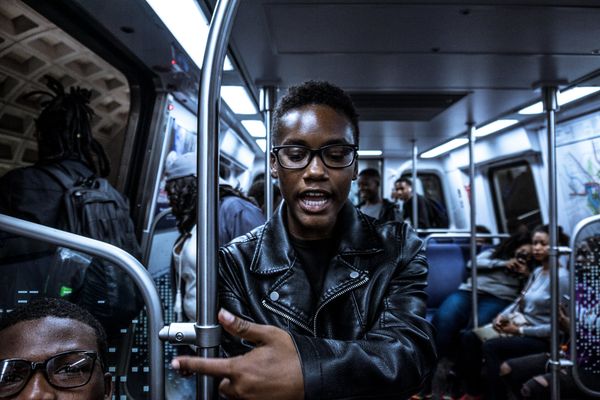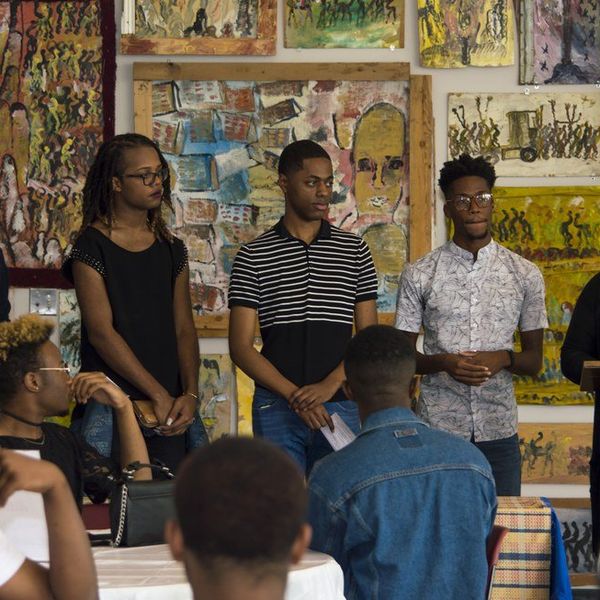
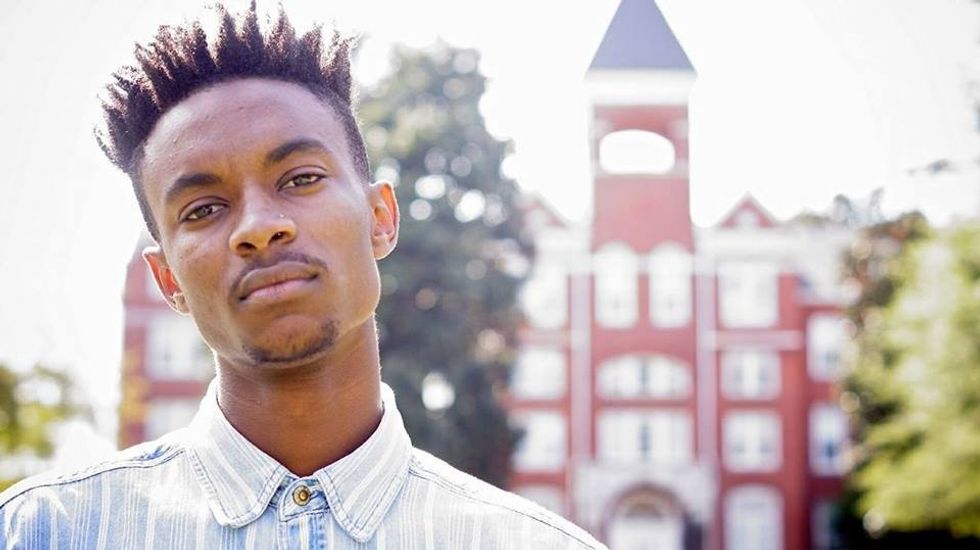
During this week, I had the opportunity to conduct an interview with one of Morehouse College's most brilliant minds, Avery Jackson. In this interview, we were able to discuss many topics such as what inspires him, his work as an organizer and his vision for the future.
How would you describe yourself and your every day being?
As an outlier. I never fit in whatever is going on, I can never accept that and just fit into it, ever. Even in my daily life, there is always something that I am doing differently.
What do you mean as an outlier? are you just different?
Yes, different. There's a certain standard of normal and whatever normal is, I'm never what it's perceived to be.
Are you also referring to masculinity & hetero norms?
Yeah in terms of masculinity and also in terms of when I am on campus, how I am on a day to day basis, how I may dress, where I may be at, what I say when I'm in a classroom, whatever else that is considered "normal" I'm usually not that.
What would you say are your current muses in life that inspire you and the work that you do?
It would be the people that I've met through research conferences, people that I met through the Spelman women studies research center, and also, some of the work I do with folks in section 8 housing in Atlanta and viewing their motives and how they are so dedicated given their situations in life.
Were there any particular events in your life or in general that made you start your work?
The first thing that I did organizing wise in high school was during my senior year. They tried to take away Martin Luther King Day. Half of the students I organized with wanted to keep it and we said, "No, we're not going to school and whatever". I always wanted to do this kind of work but never did until my senior year in high school.
How would you describe your organization #AUCSHUTITDOWN & The overall mission of your organization?
#AUCSHUTITDOWN is a collection of folks that are organizing to increase advocacy, activism, and mobilization in the AUC and it was started because we felt like there was a gap in the AUC in terms of people that wanted to do that type of work and we didn't have a radical space to be political.
You recently ran for SGA President with the campaign #NEWMOREHOUSE What made you ran and did you think Morehouse was ready for such a movement?
I ran because I'm big on accountability and I think there's interesting ways to hold people accountable not just within the position but also by running in the race. By just being involved in the conversation with other people I knew I would be able to hold individuals accountable in SGA. If I would have won SGA president it would have been a really interesting opportunity to push Morehouse to a space that it hasn't been but I also understand that I'm working against a 150-year-old machine that's not very accepting.
In regards to intersectionality and other forms of oppression, how does your work aim to dismantle them?
I see my life as a tool to lift everyone in all respects and all intersections. Everything I do is somewhat a way or form of trying to make it easier for someone else. No matter what intersection they are, I think the biggest part of doing work that is actually effective is willing to sacrifice your own comfortability to enhance someone else's life. My biggest push is trying do little things in spaces that will make it easier for someone else to be themselves.
What do you have in store for the future?
A lot, I have one more year at Morehouse & I'm going to give it all I got. I plan on relaunching a #NEWMOREHOUSE campaign as a peer learning advocacy collection, hosting workshops, teaching and hopefully developing a new base at Morehouse that understands the general issues.