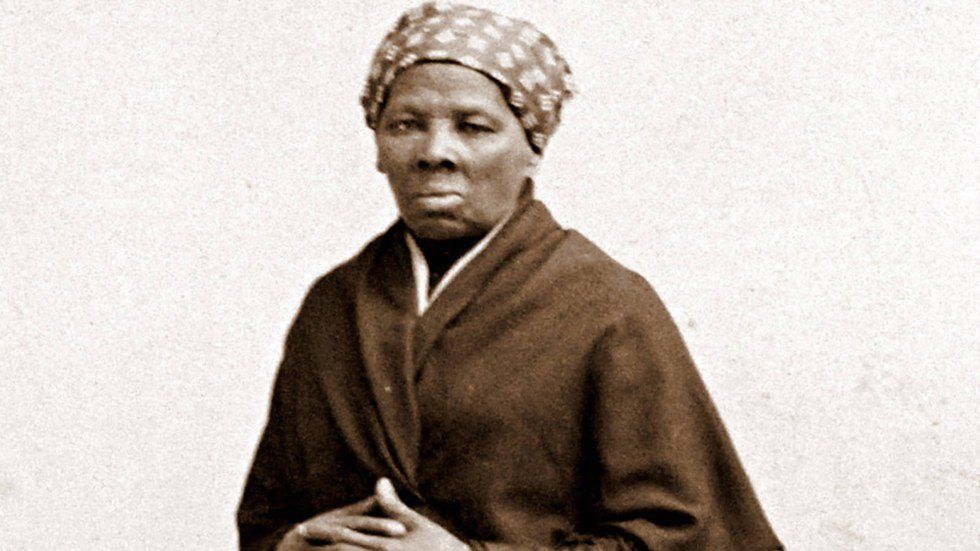
Whenever it was announced in April 2016 that Harriet Tubman would be replacing Andrew Jackson on the $20 bill I vowed that I would, from that point on, solely carry cash in increments of 20.
(However, the Tubman bills are not set to begin circulation until 2020.)
The switch may not seem important, yet the decision by the U.S. Treasury to make such a contrasting move from Andrew Jackson is actually very bold and imparts the moral depth and growth we are so desperately trying to make as a nation.
Currently, Andrew Jackson is on the U.S. 20 and 10 dollar bill faces. In many history courses, we are taught to think of him as a warrior president with countless honorable army accolades. He is imparted to us as the leader of the Age of Democracy. We learn how he expanded suffrage to all white males, and additionally how he pushed the U.S. into western territory expansion. He is taught to us as a man who had goals of glory for the U.S. to span from coast to coast, and put them into motion.
What is often not stressed is his sociopathic willingness to step on anyone who fell in the way of these goals.
Before his election as president, Jackson was well known by Americans not only as a war hero, but an "Indian hunter." In office, Andrew Jackson had an official policy plan for "Indian" removal in the southeast to an area in modern-day western Oklahoma, which was now designated as native land (I put "Indian" in quotes because the term, at the time was used acceptably to describe Native American peoples, and used officially in this policy movement).
He saw the need to relocate natives from populated areas into newly claimed rural ones. Hundreds of Native American nations were forced to relocate from areas they had inhabited for centuries before European arrival to North America. The government oversaw and approved "The Indian Removal Act of 1830," and the journey known as "The Trail of Tears" began with Andrew Jackson's executive approval. These forced migrants faced starvation, disease and exhaustion. In the Cherokee tribe alone 4,000 out of 15,000 died on the journey.
"The Indian Removal Act of 1830," and Andrew Jackson's presidency for that matter, should be a shameful reminder to the U.S. of our past willingness to herd native people as cattle.
It should be taught as an embarrassing account of our past tendencies to use those of non-european decent as playing pieces in a game where white legislation makes the rules.
Additionally, Jackson's national expansion of suffrage during his term is neither here nor there. The notion that only white male land owners were allowed voting rights was becoming outdated regardless. Excluding wage workers from suffrage was Jeffersonian, and already beginning to wane in popularity with the American public ideology and state legislation.
In fact, every state in the U.S. besides three had already expanded voting rights to include non-landowner white males once the national law was passed by Jackson.
One would assume that if Jackson's social actions as president were so shameful, and his suffrage expansion nothing but inevitable, there must be something particularly economically impressive that sets him apart to earn two of our U.S. bill faces.
However, his economic blunders are nearly as embarrassing as his social policy.
At the beginning of Jackson’s presidency, the second national U.S. bank was the infrastructure that ruled the national economy. The bank's charter ran out during his term as president and Congress passed a bill to reinstate it. However, it was vetoed by Jackson because he was paranoid that the national bank would use its money to inhibit him from being reelected for a second term. Therefore, after the second national bank expired in 1836, the U.S. had no central institution to control its own economy.
As a solution, Jackson proposed that federal money be controlled and divided into local banks (some of which he favored over others, depending on their leader’s level of alliance to his administration).
Jackson’s economic solution monetarily rewarded his political supporters and disenfranchised those who did not openly endorse his regime.
These smaller banks began to print copious amounts of money because there was little regulation or precedent for them to follow in how much could/should be produced. This caused the first real wave of inflation the U.S. economy would experience, and consequently caused “The Panic of 1837.” This was the nation's first real economic collapse.
Jackson’s single-handed involvement in the economic downturn is arguably one of the biggest blunders of fiscal policy in American history.
In addition to this, during his term as president he passed “The Force Act” which allowed Jackson to use the army and navy to forcibly collect taxes from those unwilling to adhere to tax laws.
Policies such as this, in addition to his constant use of veto power, caused Jackson to be more of an authoritarian leader than any other president before or since.
In complete contrast, lets consider Harriet Tubman.
Instead of creating a “Trail of Tears” filled with forced migrants being displaced from their rightful territory, she created an escape for those disenfranchised.
Harriet Tubman is arguably one of the most noble figures in American history, regardless of race or gender. She was a champion of the underground railroad, and with her assistance, countless families were enabled to escape bondage and attain freedom. She additionally set a precedent for others elsewhere to do the same, consequently making an invaluable impact for the hope of runaway slaves nationwide.
Tubman was born into slavery in Maryland and escaped to freedom in 1849 at the age of 29. This was her first excursion as a leader of runaways, and over the course of her life she risked losing her freedom over 20 times by taking trips back to to her birthplace to lead slaves to freedom.
She is not only known for success in these endeavors, but additionally her continual meek and selfless attitude towards those she assisted. She carried a hymnal on every journey she made with escaped slaves, and unceasingly prayed for and with them. She was not only gentle in her character however, she possessed an authority and forcefulness that made her a natural born leader.
In addition to Tubman’s famous role in the “Underground Railroad,” she also played a key role as an assistant to the Union army. Because of her experience with traveling undercover in strange terrain, in 1863 the Union army sent her behind enemy lines to lay out the land to conduct a major plantation raid. With her assistance in networking and planning, three key plantations were able to be seized by the Union troops, consequently freeing all slaves in the area, crippling confederate supply lines, and taking another step towards Union victory.
Harriet Tubman’s role in American history may seem small compared to the enormous negative and irreversible impact Jackson caused in Native American lives, and additionally his expansion of suffrage.
However, her replacement of Jackson on the 20 dollar bill illustrates the new grasp American culture is attempting to make towards rewarding the meek and discarding the proud.
Tubman's impact, however small comparable to Jackson’s, means something important to us as a nation and is growing more relevant still. She is an inexplicably powerful figure for the U.S. because she was, against all odds, defiant and proud in her incongruities with the average leader.
Tubman’s power lies within her unapologetic feminine gentleness in a position of authority, and her unapologetic blackness, which are both aspects we should be doing our best to impart to young African American women today.
The switch from Jackson to Tubman signifies a new wave of ideology in the U.S., which encourages Americans to embrace the champions of the disenfranchised, and begin to recognize those who are honored and do not deserve to be.