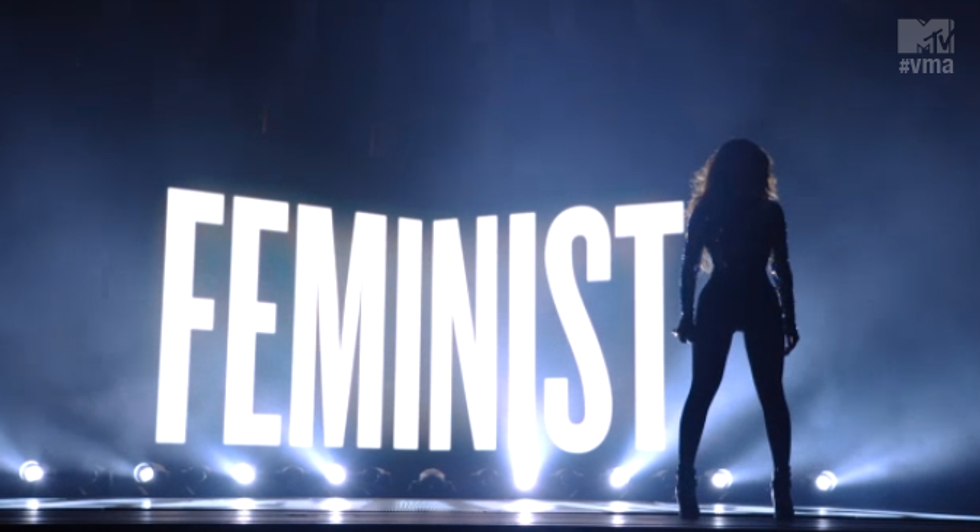
For as long as it has existed as a movement, feminism has been surrounded by stigma and even regarded by many as a dirty word. People have a lot of reservations about feminism, which are more often than not rooted in a misunderstanding of the philosophy as a whole. These misconceptions exist not only outside of feminism, but within it as well; many people who consider themselves feminists unfortunately continue to believe and perpetuate these ideas. So, in an effort to dispel some of this, here are four common misconceptions about feminism.
1. Feminists can't conform to societal gender roles.
For some reason or another, people seem to think that feminists are required to go against normal gender roles. This entails that women can't get married or take their husbands' last names, men can't hold doors, stay-at-home moms aren't "feminist enough," and the like. This kind of thinking has strayed from the point of feminism; at its root, feminism is the opportunity to be able to choose. A feminist should be able to marry, settle down, have children, and be a housewife if she so chooses, but the point is that other, less traditional paths should be equally available.
2. Feminism is misandry.
Thanks to Beyonce, most people are aware that feminism is defined as the theory of the political, economic, and social equality of the sexes. This is not to be confused with misandry, which is the dislike of, contempt for, or ingrained prejudice against men. To the dismay of feminists everywhere, many women masquerade as feminists when what they are really promoting is misandry, but this should not be equated with feminism as a whole. Feminism is not about hatred, and it's not about thinking one gender is inherently better than another. It's about equality, plain and simple, and anyone who says otherwise is misinformed.
3. Feminism is only for women.
When it's done right, feminism is not only a movement for women. It should be for men, women, and everyone who doesn't fall into either category. Unfortunately, feminism has a history of being incredibly trans-exlusionary and unconcerned with the rights and experiences of non-binary or gender non-conforming individuals, and this needs to change. Feminism that is true to its definition should be intersectional and inclusive of all races, genders, and classes. This is a fault in not only historical but also modern feminism that has yet to be addressed by many white, western, cisgendered women. Further, many "feminists" seem to think that for some reason, feminist movements working toward the advancement and equality of women should not include trans women. This exclusion goes against the very idea of feminism. Women are women, period.
4. We don't need feminism anymore.
Especially in recent years, this idea has been picking up speed. Many non-feminists seem to think that the movement is now unnecessary, but that couldn't be farther from the truth. Just because women can vote, abortion is legal, and Title IX exists, it does not mean the fight is over. We've all heard of the wage gap, and yes, white women in America only make 77 cents to each white man's dollar, but it goes deeper than just that. For each dollar earned by a white male, African American women make 64 cents, Native American women make 60, and Hispanic women make only 53. In America, a sexual assault occurs every 107 seconds, and that's practically nothing compared to the occurrences globally. Planned Parenthood is facing strong opposition from people all over America. Women and across the world are being denied the right to education. These are all feminist issues, and that's only the tip of the iceberg. As long as feminism is still a dirty word and as long as these misconceptions and issues exist, we will still need feminism.