

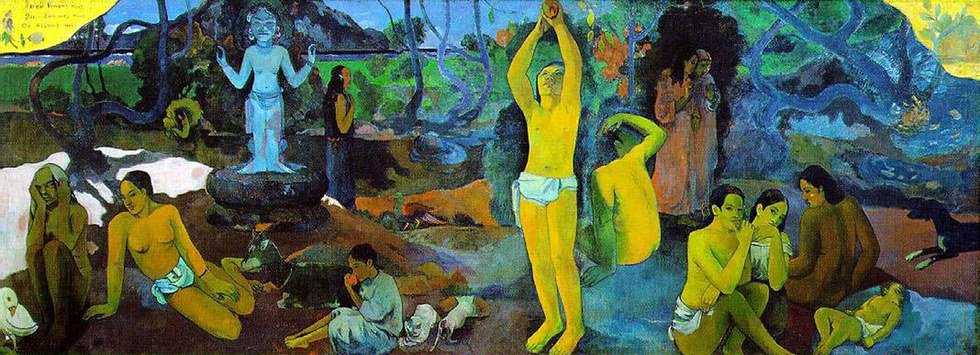
Have you ever asked the question, What am I? Have you ever wondered why your arm moves when you want it to? Have you ever thought about and been shocked by the rapidity with which you were able to acquire language as a child, only a few years after you stopped babbling incoherently? Have you ever wondered what allows you to do these things so automatically, so easily? Or wondered what it is inside you that drives you towards these things?
These are the big philosophical thoughts that we all dwell on at one point or another, directly or indirectly: the opinions differ, the hypotheses differ, and yet the problem remains the same. What, who, why, how are we?

The what
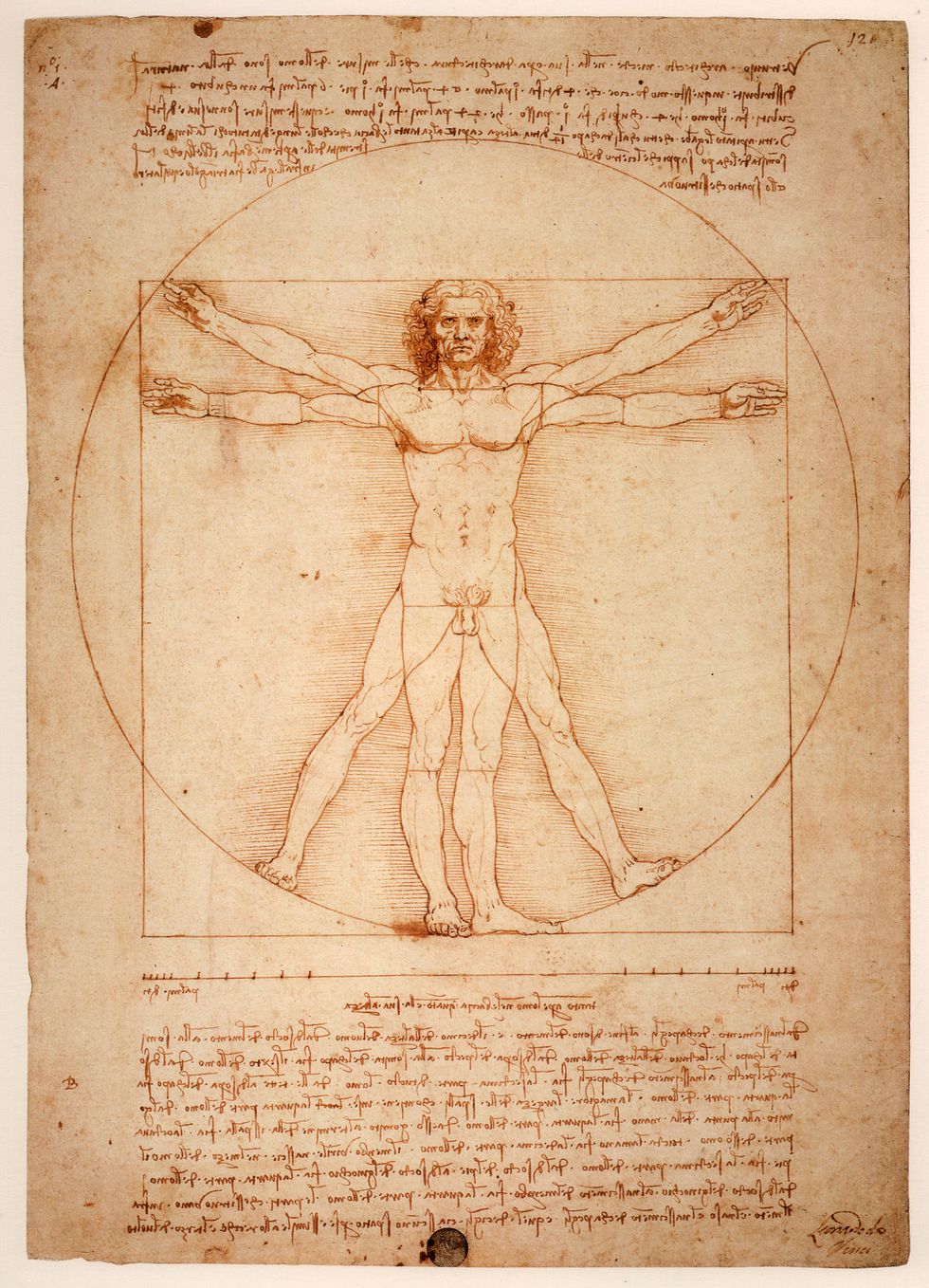
Definition of homo sapien: The species of bipedal primates to which modern humans belong, characterized by a brain capacity averaging 1400 cc (85 cubicin.) and by dependence upon language and the creation and utilization of complex tools.
Definition of human being: A man, woman, or child of the species Homo sapiens, distinguished from other animals by superior mental development, power of articulate speech, and upright stance.
A human that is termed “normal,” tends to stand upright, has four limbs -- two hind limbs and two forelimbs -- and a round head propped upon a spindly neck, which then connects to a long flat torso. We attain heights anywhere from 21.5” up to an astounding 8’3”, and can weigh anywhere between 4.7 pounds and 1400 pounds. We ingest food and water, and expel waste; we mate in order to procreate; an average lifespan is about 70 years, but can extend up to 122 years for a top specimen. We need these things in order to maintain homeostasis: food, water, sleep. Everything else is incidental.
The what, but also the who
We interact with our environments through the medium of our body, and command/perceive our surroundings with our mind. Internal perception of the external appearance of our world leads one to conclude that humans are biological organisms, living on a spherical rock which is floating around in the middle of blackness. We do not know the boundaries (if there are any) of the universe in which we live; just as we do not understand the limits of our mind, time, gravity and other higher phenomena.
We understand, at least superficially, the boundaries of our own abilities: I cannot simply fly away, right now, even if I really really wanted to. It just doesn’t work that way. It’s the specifics, and the overall picture, where things start to break down into incoherence: the norm is pretty well understood.
The who
“Throughout human history, the apostles of purity, those who have claimed to possess a total explanation, have wrought havoc among mere mixed-up human beings.” Salman Rushdie
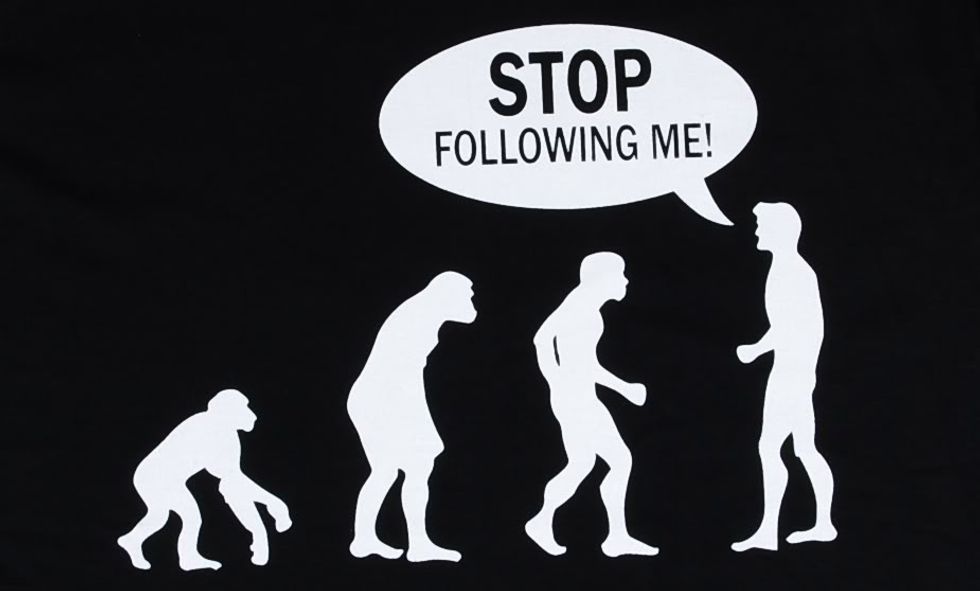
I have no idea who we are. It’s not even reasonable to try and explain who we are, even in broad terms, because if I do then I will have definitely excluded things of importance, and if I don’t then I have failed before I even began. Try I will, though, for is that not everything?
Here are some generalizations we can make about who we are.
We think: meaning that everything we do or say is a result of thought.
When I want a glass of water, my mind tells the proper limbs to perform the proper movements: any action at all involves the point of contact between mind and body (on a side note, Descartes believed this area was the pineal gland). The work of philosophy up to this point has informed us that we have an interior, and an exterior: a mental, and a physical realm, a mind and a body.
We are social creatures.
We enjoy interacting with one another; we have communication systems which allow us to connect with one another beyond the range of other animals: as Noam Chomsky would say, we are able to respond creatively and appropriately to different stimuli using language, which is what makes our language systems different from other animals.
We are territorial.
Whereas, we enjoy the things we are familiar with, we are fearful of things that are different from us: we can become jealous, angry, fearful, etc. This feature is important in the way we evolved because territoriality used to be a part of survival: if you could not defend yourself, if your instincts for defense were too weak, then you were dead meat. D-E-A-D. Gonzo.
We have elaborate histories, societies and cultures.
These are passed down to us by oral, pictographic, and written traditions that chronicle and embody our time on the round rock we call Earth.
It should be noted that “history” is a term which is quickly slipping off the edge of a very nasty looking cliff: a cliff where history and fact can no longer be trusted as such due to our subjective perceptions of reality and events, and the inability for anyone to really “get the whole story.” Basically, fact and fiction are kind of becoming one, at this moment in time. This is a dangerous area to get into. I will only say that I believe the problem of mind-body to be the source of the subjective-perception problem, as well as its solution.
Side note: Overall, who we are is specific to each and every one of us: it is the fact that I am simultaneously an individual, and also apart of many different communities/groups: that is really tricky to get the old noggin’ around. The fact that we are at once individual and communal, in every aspect of life, is absolutely amazing: no matter the group or community, you are at once a part of the whole, and also a distinct whole of your own.

The why and how
The real problem that I wanted to bring up is the gap between the two aforementioned categories: who we are, and what we are. Who we are can dictate and guide what we are: and visa versa. But how can we reconcile the inherent differences between what we are physically, and who we really are mentally? Is there any way to reconcile this problem? Does it even matter?
The observations of phenomena wholly outside our individual experiences are comprehensible only in cross-sections: smell, taste, sight, touch, etc. These senses, or cross-sections, are then understandable by the mind. By this, I mean to say that we can understand from the context of an apple falling that something we call ‘gravity’ exists; we can understand from hearing a speeding car that something we call the "Doppler effect" exists. However, we can never “know” the authentic existence of something, such as gravity or the Doppler effect, because we are not those things. It’s the same way that I am unable to experience you, and you are unable to experience me: we filter our true thoughts through words, actions, observations; however, all of these are external phenomena. They are not inside us.
One bit of personal philosophy I want to add here is that, in my opinion, language as we know it does not exist; at least not in the way we have traditionally thought. Language is, as Derrida says, a collection of symbolic representations which exist because of their context with one another. Adding what we know from Wittgenstein, we can conclude that language is a series of intercorrelated signs whose meanings are created both through their position with regards to one another, as well as the context in which they are being used.
This is a beautiful way to think about language, but it is only taking into account the external structures of language. Language inside the brain is simply different than language outside the brain: a thought is chaos theory in motion. That’s why we do not actually speak in the language of thought: we speak in languages that have rules, limits, boundaries, ones that we can understand and work with. Otherwise, we wouldn’t be able to communicate. The only boundaries of thought, is thinking: we can think anything we can think, and we cannot think anything we cannot think; these are pretty apparent facts.
Thoughts can be pictorial, textual and can take other forms that we don’t really have the words for. And, also, what is a thought? It’s pretty clear that thoughts come from somewhere inside of us -- whether in reaction to something, in defiance of something or as a piecing together or different fragments of other thoughts. No matter what, it’s clear that thoughts occur inside of us, and are affected by the emotions inside us and the situation around us: emotions and surroundings which are themselves perceptions of external stimuli.
The original thoughts, or emotions, or whatever you want to call them, are too complex to be spoken without at least a small degree of abstraction (i.e language). The act of speaking diminishes the efficacy of what we truly wish to communicate, in the very same way that the act of feeling diminishes the truth of what we wish perceive. It’s like there’s a dead zone between the “me” and the “outside world,” something that thoughts and words pass through to become intelligible.
Thinking of it this way, “me” and “my thoughts” are the substructure, and language is the superstructure: we represent what is inside us through what we are able to affect outside ourselves. The middle zone would be the area where thoughts pass into words, and vice versa: the line between sub-substructure and super-structure.
What exactly is that middle zone? And does this mean we have free will? Or does it mean we are fixed, mechanical creatures? What does “the dead zone” between mind and body actually do, if anything? Is that the “real” us? Or is it the same in everyone? Is it specific, or general? And does it mean we are all inseparably similar, or that we are irreconcilably different? Is this piece of us mechanical, or something else? Is it a physical property, or a property like gravity or the Doppler Effect?
These questions all spring from the single question left at the center of this argument: can we ever hope to understand the process wherein thoughts turn into language, or vice versa, when it is that process which limits and makes possible our ability to think in the first place?