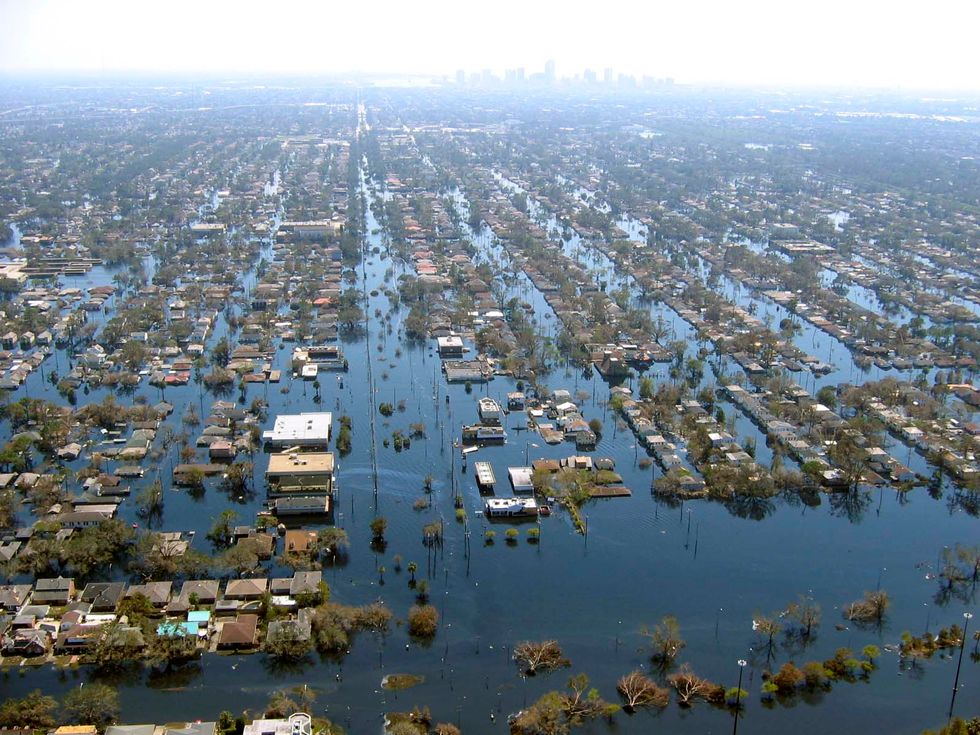
Ten years ago, I lost everything in Hurricane Katrina and was one of the four hundred thousand people displaced from New Orleans and the surrounding Gulf Coast. As the anniversary of Hurricane Katrina passes, I look back on my time when my identity was known as being a “Katrin a Kid” and I am forced to think about how Hurricane Katrina not only changed my past life, but the life I wish to live in the future.
A hurricane is a natural disaster, but Hurricane Katrina was a man-made disaster. For those unfamiliar with what happened to New Orleans when Katrina hit, there are some complicated factors to know before pointing the blame on one single reason for the destruction.
Because most of New Orleans is six feet below sea level and the city is “bowl-shaped”, there is nowhere for rainwater to drain away, even with light rain. To prevent rain storms from affected the city, there is a levee system, which is made up of soil embankments designed to curb floods around the city. The problem with the New Orleans levee system was that it was never made to stop a storm as strong as Hurricane Katrina. As you can see from this graphic, when the levees broke, New Orleans flooded. To make matters worse, there was a lack of federal response from the Federal Emergency Management Agency (or “FEMA”) that last days after the storm passed. Eighteen-hundred people died both directly and indirectly as a result of Hurricane Katrin and New Orleans was not the only place affected by Hurricane Katrina, but other places along the Gulf Coast as well.
A lot has changed in these areas since the storm, but there is always more that can be done. President Barack Obama recently visited the Lower Ninth Ward, an area that never truly bounced back from the devastation of Katrina, and said, “Part of our goal has always been to make sure not just that we recovered from the storm, but also that we started dealing with some of the structural inequalities that existed long before the storm happened.” Obama is talking about problems that have always existed in New Orleans and maybe the time has come to not fix New Orleans so it can go back to the ways things used to be, but create results that are better than how New Orleans was before Katrina.
In an interview with BuzzFeed News, New Orleans Mayor Mitch Landrieu, said, “When I became the mayor of the city of New Orleans, what I said was out of this huge tragedy came this huge responsibility to get it right. Some people say, ‘Oh, you see Katrina as an opportunity.’ I don’t really see it that way. I see it as a huge responsibility to make it right.” Landrieu is saying that Hurricane Katrina is a lesson to be learned from and I think as future leaders of the world, millennials need to acknowledge what happened due to Hurricane Katrina to make sure it does not happen again.
There is always going to be another storm, another shooting, another riot, or another problem in this country. If we as millennials do not recognize these issues that are happening in front of our very eyes, how do we stand a chance to make a change in our futures?
Millennials need to learn that more should have been done to help those trapped in the odorous Superdome for days without proper access to food, water, or hygiene. They need to Google “Hurricane Katrina” and witness the damage, both immediate and long-term, the storm caused to the Gulf Coast. We all need to realize this kind of disaster can happen anywhere in America if not proactively addressed. Millennials need to remember Hurricane Katrina and the corruption it exposed because Katrina is an example of why we need to recognize and respond to problems occurring before disaster strikes. Otherwise, we are just like the delayed help that were too late after Hurricane Katrina.