

Approximately 650,000 people will attempt to take their lives this year, and over 40,000 will be successful. However, 75 percent of college students do not talk about it, or seek help for mental health problems.
I've never known a world where there isn't some sort of stigma around mental illness. We don't talk about it, ever. But with facts like suicide being the second leading cause of death among college students, we sure as hell should be talking about it. This past academic year, nine students died at Appalachian and at least four were ruled suicides. As a survivor myself, this makes me physically ill. And as a human being, it should make you feel the same way. According to the facts above, when you're in class, or at a bar, or just walking around campus; there is someone in your vicinity who has suffered from mental illness. As John Steinback wrote in his novel Of Mice and Men, "Maybe everybody in the whole damn world is scared of each other." We have become afraid of vulnerability and therefore scared to ask for help, even when we desperately need it.
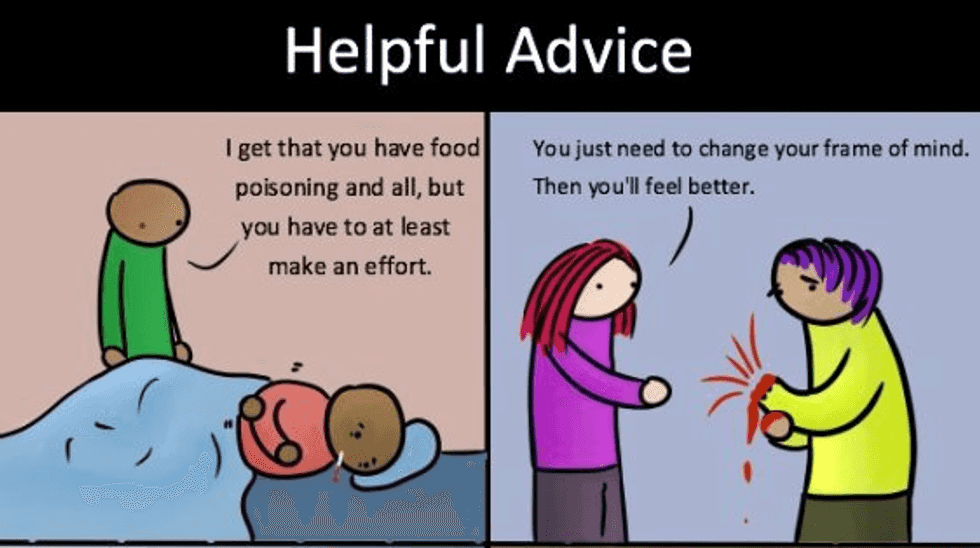
My freshman year, I was hospitalized for two days for an overdose. Initially, I was forced into therapy and the exploration of my issues, but I sought help on my own the following summer. For a very long time, I was embarrassed about my depression and anxiety. I thought it was stupid, or that my friends wouldn't understand, or that my life was too good for me to be feeling this way. Mental illness is not something you can just "get over." At the time, I saw it this way, and was angry at myself for not being able to just be happy.
The past three years, I have grown more than I had in the 18 years prior. I found ways to feel at peace within myself. I shared my story with friends that I trusted. They loved me all the same. No one thought I was crazy; they thought I was human. In the appropriate situations, I found myself sharing my story with people I didn't know very well. I opened the wound that I didn't want anyone to see (ever), and as a result, I've had both best friends and acquaintances break down in front of me because they weren't afraid. I don't have all the answers, but if I can help one person feel like they aren't alone, I call that a win.
When someone breaks their arm or has asthma, we don't blame them. We don't tell them to just get over it and that it probably isn't even that bad. They don't have to lie and say they'll be somewhere else when they're going to see a doctor. Why do we treat mental health this way? The conversation begins here, and it begins now.
"We are all in the same boat, in a stormy sea, and we owe each other a terrible loyalty." -G.K. Chesterton