For as long as humans have known planets existed beyond our own, we have considered the possibility of life on one of them. However, as we have become able to search for other planets, we have found quite a few, making it very difficult to analyze all of them. The Kepler mission has found thousands of exoplanets since its launch in 2009, and while only a few of these seem likely to support life, they are very far apart. To search every known planet for life would take, well, almost forever. So, when scientists look for life-supporting planets, where do they start?
According to SETI research scientist Elisa Quintana, “When we search for life outside our solar system, we focus on finding planets with characteristics that mimic that of Earth.”
These characteristics include size, composition, atmospheric makeup, and proximity to the star the planet orbits- its “sun”.
For a planet to be considered "earthlike", it should be similar in size to the earth and have a rocky composition. It should also orbit its sun from a safe distance- close enough to keep water in a liquid state, and far enough away to avoid too much harmful radiation. Although Earth-like exoplanets have been proposed before, none have ever been close enough to Earth to be very good candidates for exploration... until now, that is.
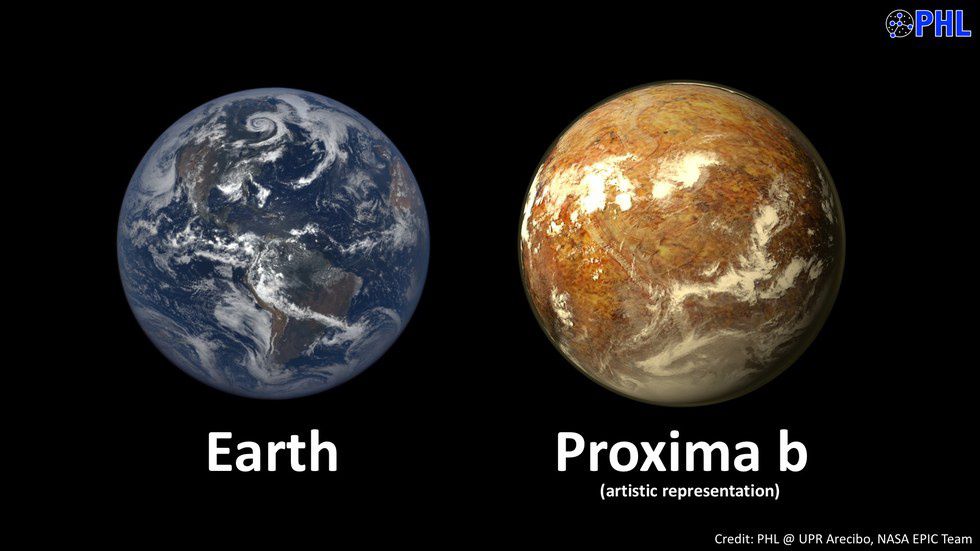
Last week, researchers announced the existence of an approximately earth-sized rocky planet called Proxima b, which orbits Proxima Centauri, the closest star to our own sun at just over four lightyears away.
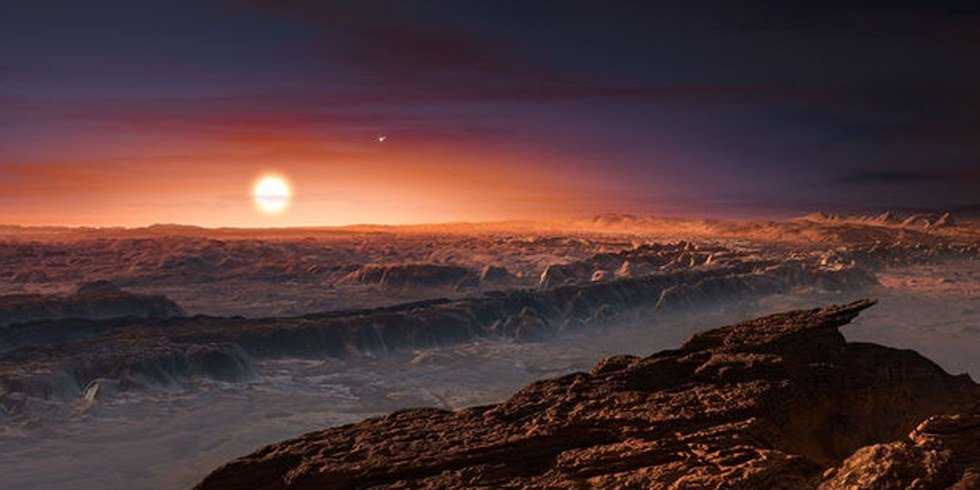
Proxima b is particularly notable because it exists in the habitable zone of its star- in other words, the region where liquid water can exist. No one can say with certainty if Proxima b has water on its surface yet- but it is quite likely. Fortunately, since the new planet is located relatively close to the earth, there is a good chance that in the next few centuries scientists will be able to study it more closely, possibly with robotic probes.
Further study of Proxima b is important because there are still quite a few things about it that we do not know. While Proxima b does have much in common with Earth, such as its size and, most likely, its rocky composition, there are a few big differences that could affect its habitability. For example, its proximity to its star. Proxima Centauri is a cooler star than our sun, so its habitable zone is smaller. This means that Proxima b must orbit the star much more closely than Earth orbits the sun- in fact, at only about 5% of the distance. Depending on the makeup of Proxima b's atmosphere, it may or may not be sufficiently protected from Proxima Centauri's radiation. Until scientists know more about Proxima b's atmospheric makeup, nothing can be determined about its surface, either.
We may not know Proxima b very well yet, but our newly-discovered neighbor is sure to turn out many exciting new discoveries in the near future.