
My morning ritual went one of two ways. On some days, it started with an hour long rendezvous with the bathroom mirror; a scan for yellowing eyelids and potentially cancerous moles, swollen lymph nodes and blood spots. Other times, I would hide from my reflection entirely. I’d avoid changing clothes and bathing for days, afraid of my own body and all of its undiscovered complications. Regardless of which way the morning went, it wasn’t long before I would drag myself downstairs to sit at the dining room table, where I would spend the rest of the day sinking into myself and thinking "I am going to die today".
Hypochondria isn’t often talked about seriously. We have all seen quirky health-conscious characters on TV, or have heard our friends proclaim that they are “total hypochondriacs” when they’re worried that they might be getting sick. Health anxiety is so much more than that; it is an ongoing, deafening alarm, lying to you and telling you that you are slowly dying. We are taught throughout our lives “to trust our guts” and “if you feel like something is wrong, it probably is”. With hypochondria, that radar is broken, constantly making you feel as though something isn’t right with your body, but you can’t be sure exactly what. It takes over your life and the lives of your friends and family, who are helpless. In an effort to make things better, my mom would tell me, "You are in control of your own happiness. This isn't how you want to live your life."
She was right, it wasn't how I wanted to live my life, but I had already accepted the feeling as a portent of an upcoming doomsday. I would wake up with a pain in the back of my head, or lose a few pounds during the night, each symptom becoming an omen of my nearing death. Whenever I tried to ignore it, the feeling of foreboding would crawl back into my body, hurt like a forgotten friend, making me feel guilty for neglecting it if only to watch a movie or wash my hair. I obsessed over the things that I would miss out on because of my death. The dining room table chair I sat in every day would become my deathbed.
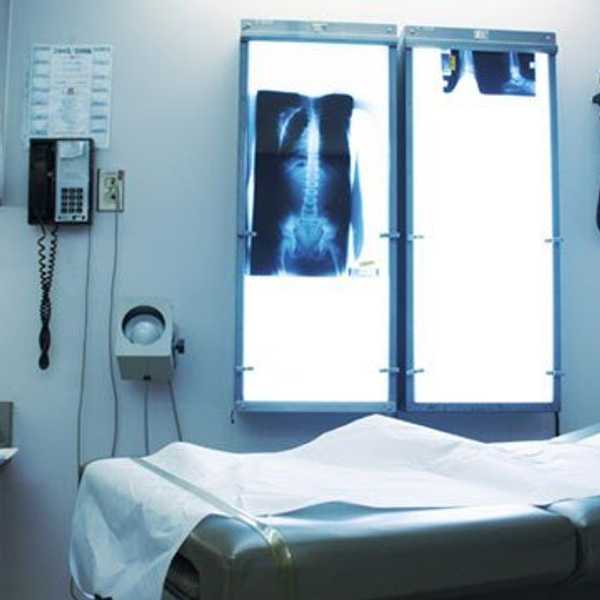
Weeks were spent puddled at my computer screen, outlining my shadow in chalk until my parents took me to the pediatrician, the dermatologist, the radiologist. I'd sit in waiting rooms, far away from the reception windows, avoiding the eyes of mothers trying to peel apart my limbs to uncover my illness. I’d insist the doctors consider my fatigue and panic attacks as symptoms of a chronic disease, “maybe it’s a brain tumor, or maybe it’s that recently discovered brain-eating amoeba.” We would return back home at the end of day, having gotten no diagnosis, and I would lie in bed, resisting sleep, fearing that I would never wake up.
The worst thing about health anxiety is that there are time in which you almost want to be sick just so that your feelings can be justified. I remember praying that I would have a seizure or a fainting spell so that doctors would have a reason to take me more seriously and I could stop feeling delusional. The trouble is, once you’re diagnosed, almost every physical symptom you may have is immediately brushed off by your loved ones as a symptom of your anxiety. This, in turn, increases your worry and strengthens the cycle. There are times where I find myself canceling plans and lying to friends and family about why I can’t see them, not being able to tell them “I don’t think I’m going to be much fun today, I’m too busy thinking about all the ways I might be dying.”
There came a time recently when I realized that I was going to miss out on life because of my anxiety and I didn’t want that. I looked back on the years prior and all I could remember were the days I spent in doctor’s offices and lying in bed, and it broke my heart. I was living the contradiction that most people with health anxiety face: I was in constant fear of missing out on life due to an untimely illness, but I spent most of my life paralyzed by the idea that I might be sick anyway.
When you seek treatment for hypochondria, they tell you that the key to getting better is learning to accept the uncertainty in life. That is, while no one can promise us eternal health and safety, it’s largely out of our control and worrying about it isn’t productive. While I am still trying to embrace this, having people who understand my worries and who are patient with me has been a great help thus far, along with letting go of people who made me feel like a burden. Validation is an important part of overcoming health anxiety, and one can find solace in simply knowing that others feel this, too, and we’re all trying to overcome it together and live a full and happy life.