
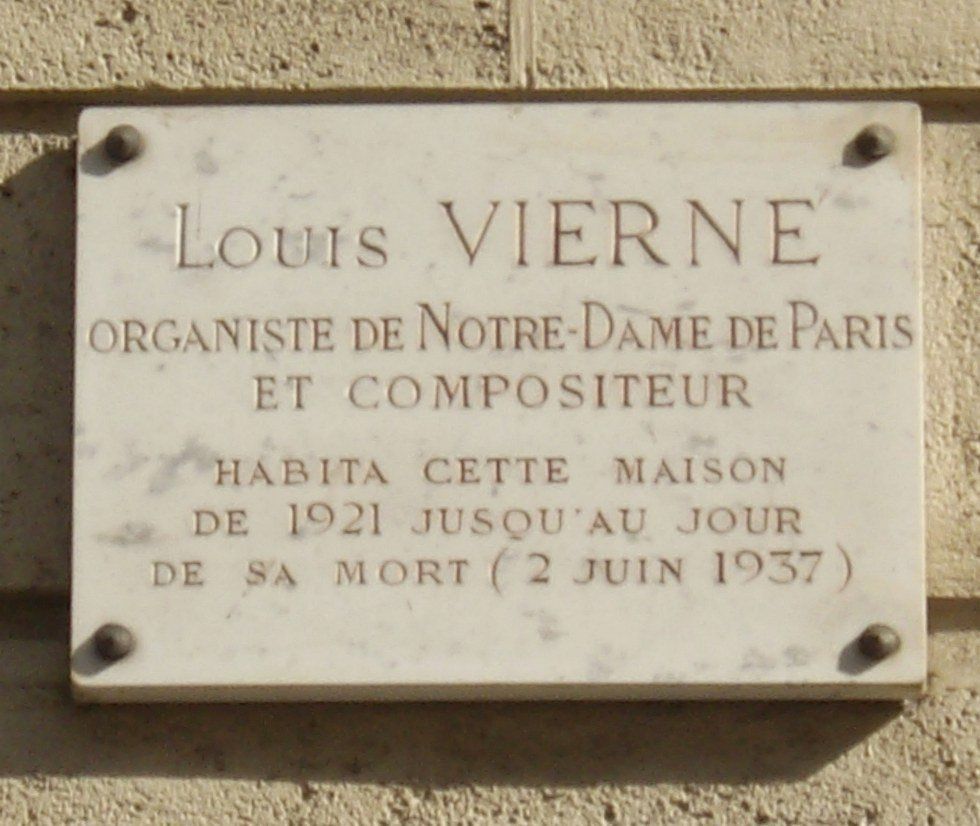
The art world loves a good death. Whether it’s Millais’s "Ophelia," singing in a river as she drowns, or Mozart’s apocryphal death by requiem (famously depicted in the play and movie "Amadeus"), the end of a fictional life tends to carry more glamour (or tragedy) than a real one. It would be a fair assessment, then, to initially believe that the life and death of French composer Louis Vierne is one of fiction. His story not only reads like one straight out of Hollywood but ends exactly how he wished — even if that wish might have been an exaggeration.
Born in 1870 with cataracts so severe that he’d be legally blind today, Vierne was dealt an unfortunate hand. Though a later operation would grant him a very narrow field of view, he would have to rely on his other senses to guide him through life. The family that raised him was much more nurturing than the world that cursed him. His uncle, an accomplished musician, suggested that Vierne receive an education in music (or at the very least, develop a “broad cultural background”). His father agreed and at an early age, Vierne was exposed to the instrument he instantly fell in love with: the pipe organ.

Vierne was born at the right time, as French organs in the late 1800s were undergoing nothing short of a revolution. With the whole of art and culture being swept up in 19th-century romanticism, not even church instruments were spared. The new “symphonic” organs pioneered in France by Aristide Cavaillé-Coll were big, expressive and cutting edge. They featured a large variety of stops (a term that roughly equates to “instrument” on an organ) that could be played together, on their own, increase or decrease in volume and provide a seemingly endless pallet of sounds, much like a symphony. This was the kind of sound and music Vierne first heard at Église Saint-Maurice in Lille. The relatively modest instrument instantly captivated him with its “magical effects of softness, crescendo and power.” It was obvious from the start: the organ would be the instrument of his expression.
The Vierne family moved to Paris, where he’d receive a top-notch education. Vierne learned from Franck, Widor and Guilmant, masters at the time of both performance and composition. Before he became an organist, however, he was hit with the first of many tragedies — his beloved uncle suddenly died. It was he that Vierne credited with his inspiration and success in life. Despite this and the death of his younger sister and father, Vierne completed his studies with glowing success. He served as an assistant at Saint-Sulpice before earning the coveted position as principal organist at Notre-Dame de Paris.

His career there would ultimately define him as a composer and performer. He’d become world renowned for his improvisation and write a large catalog of pieces, primarily for organ, voice and piano. His personal life was not nearly as successful. It was plagued by injuries, illness, divorce and deaths of family members. Despite all of it, he trucked on with a job that he loved to death: Vierne often stated that it was his wish to die at his console. Whether or not he was serious, Vierne got his wish. He was giving what is claimed to be his 1,750th concert. Age, tragedy, work and drugs to cope had clearly taken a toll on him. Though the audience heard music just as fast and energetic as he always played, Maurice Durufle, one of Vierne’s students up in the loft with him, could tell he was feeling ill. He came to the part in the program where he was scheduled to play two improvisations. Vierne chose the stops he would use and suddenly fell forward, stepping on a pedal as he went down, sending a guttural low tone throughout the cathedral. As the silence grew longer, it became clear — the note was his last.
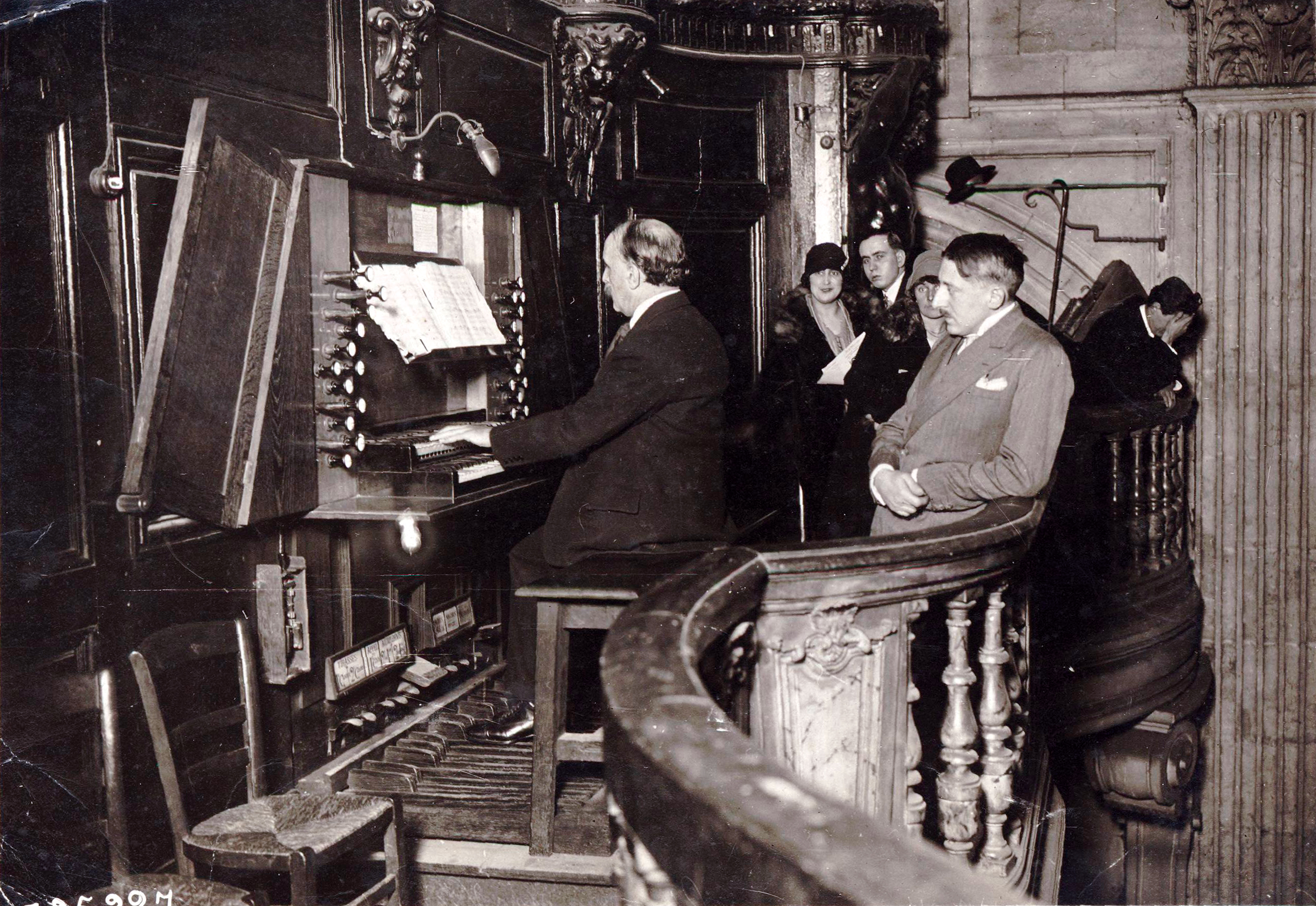
Vierne’s life and death quickly became Notre-Dame legend. Though the outdated console was replaced, it remains on display at the cathedral, complete with the bench he played on to the very end. The prestigious organ, in disrepair for most of his career, is now a state-of-the-art wonder to behold (mostly with your ears). Though Vierne’s pieces aren’t performed nearly as often as that of Widor or Bach, they still enjoy regular programming and a slew of recordings. It’s music that offers a reflection of his own life — dramatic, at times dark, but often with a big, unforgettable finish.