What is the American Dream? Historians would argue that it is Jefferson's idea of "Life, liberty, and the pursuit of happiness." Most would say it is being able to provide for themselves and for their families with an ample amount of finances. People gamble to have a chance at winning the money they don't have in order to turn these frivolous dreams into resounding realities. Subconsciously, though, I think the American Dream is a desire for a home. It is built into in our very nature to want to desire bigger and better things. The desire to live in a nice house is just a very small fragment of this desire. In fact, every American, every European, Asian, African, Hispanic -- every individual -- has a desire in his or her heart for a home.
We are even struck with this notion of "home" from the time we first come "home" from the hospital as if finding security in a nursing unit with a family is inappropriate and unacceptable. Little girls play with $100 Barbie Dream Houses and play "house," pretending that they are moms who won't let their imaginary children go to imaginary soccer practice until they sweep their imaginary kitchen. Adolescent boys help their fathers with handiwork around the house by mowing the lawn and nailing things that need fixed and adjusted just so the house can look presentable. When we are able to move out of the house and into college, we are told that a social institution will become our temporary home and that we will be given the items/necessities we need in order to live there. At the end of the semester, we feel almost displaced as we attempt to shove all of our belongings into suitcases and boxes that are supposed to travel to our summer internships, new apartments and former houses that have changed.
We work so we will have a place to live, but at the end of the day, we still feel unsatisfied with living conditions. All of the improvements, down payments, and aesthetic features we add to our living quarters just don't add up. Why? We're all searching for a home we don't have. If there truly is "no place like home," where and what is home? Buckle up and click your heels, Dorothy, because this thought twister is about to throw you for one bumpy ride.

It seems that in society today, the definition of the word home varies. Common culture explicates there are two qualities or characteristics that a home must have in order to be considered an actual home. Homes, denoted by today's standards, must either be a place to reside, or a place for fellowship and social well-being
Naturally, both definitions fit hand in hand, but one definition can exist without the other. Definition 1 refers to the sense that a home must be a place to stay. It also refers to the security one feels when a living quarter is present. We can also define home as (2) a place of fellowship so the foundation of a non-physical home can become apparent in places like camps, churches, schools, and workplaces. The fellowship and community present among individuals elicits the warm fuzzies and you feel in a safe and secure environment.
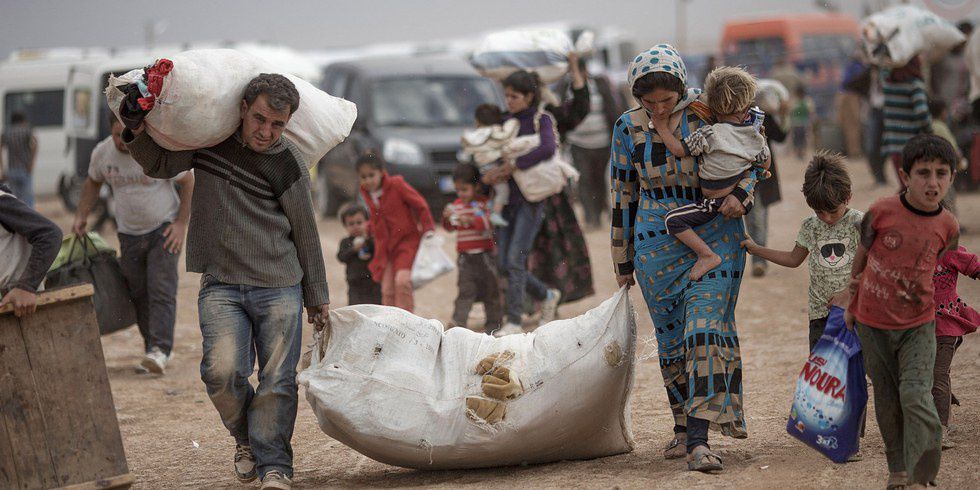
So, combined, having a secure place to reside and the community/family fuzzies should serve as a good definition of a home, right? That is what popular culture tells us, but those simple definitions can lead us to ignore the complexities of many unanswered questions.There is so much more to a home than it's plain popular culture definition. How can the Syrian refugee ever find home again after his whole community has been bombed? What about the orphan or the homeless man living on the streets? How can home become rediscovered for a family that loses their house to fire? What is home to the elderly woman who is forced to live in a nursing facility? How is home prevalent among military personnel residing in a dangerous location? These are the questions we must ask to really explore the meaning of home.
Home is so much more than a location, shelter and a mere social setting. Home is a treasure we will always want but a concept we will never quite be able to grasp.
Agree to disagree with me, but I believe that every person is homeless, in some way or another. We all suffer from the searing pain in our gut that tells us we just don't belong. Homelessness isn't just prevalent on the streets. It is written into our very souls. We are all awaiting some sort of pain-free afterlife or alternative anesthetic that will give us hope and will offer us some sort of remedy for this numbness that we experience on a day to day basis. Regardless of what your belief or religion is, you have homelessness written into the depths of your heart, and naturally, you will do everything you can in an effort to conceal the feeling of displacement. There are many existing types of homelessness that can somehow resonate with each of us.
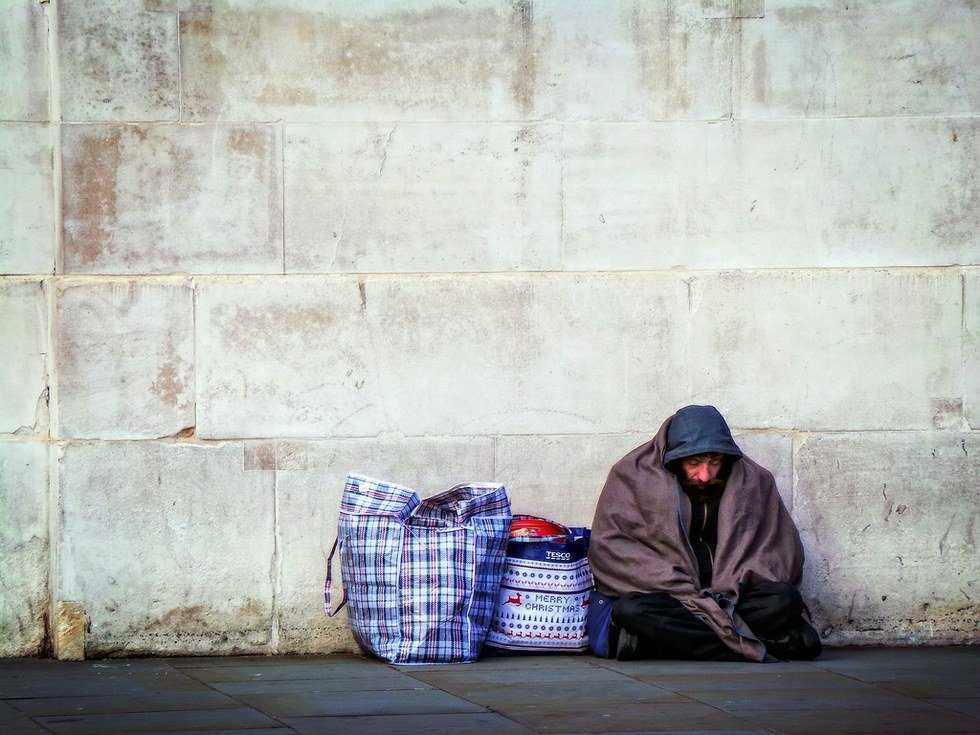
The first (and most obvious) form of homelessness is the physical absence of shelter. This is the condition that leaves individuals to fend for themselves on city sidewalks without any source of hope or security. According to the U.S. Department of Housing and Urban Development, there were just under 600,000 homeless individuals reported in January 2015, and California accounted for nearly 21 percent of the nation's homeless.
Bill Quigley, a law professor from Loyal University, reports in a 2014 Huffington Post article that cities are "increasingly making homelessness a crime." In fact, the National Law Center on Homelessness and Poverty (NLCHP) surveys that 53 percent of cities make it illegal to sit or lie down in a public setting; 43 percent make it illegal to sleep in your car; 33 percent make loitering illegal; and 18 percent make it illegal to sleep in a public setting. These statistics are just sad reminders that we are forgetting to recognize the severity and tragedy of homelessness. I can only imagine how stressful it would be to live without shelter knowing that there is a possibility of getting kicked out of a good spot in a public location.
While low finances and mental health inadequacies can account for a lack of shelter, natural disasters can also damage houses that offer people security and comfort. In 2015, the International Displacement Monitoring Center (IDMC) reported that since 2008, 26.4 million people have been displaced from their homes because of natural hazards. Every second, an individual in the globe exchanges shelter and security for unpredictability and restlessness. It seems that we can no longer preserve this interpretation of home as a permanent residence.

The second form of homelessness one can experience is the feeling of not belonging. This might blow your mind, but the secret is out. We've all been there. We have all been the uncool kid at one point in our lives. The dweeb, if you will. The loser in high school with the braces that no one wants to sit with at lunch. The little girl that wants to leave the sleepover early because she misses her dog. The one friend that doesn't get invited to the party of the year. The last person to be picked for the phys. ed. kickball team. The awkward, quiet kid in the church youth group who doesn't ever volunteer to answer Sunday school questions.
How does disconnection play a part in homelessness though? We become homeless because we can become the vulnerable individual that doesn't quite fit into the picture. Homelessness becomes viable not because we are lacking a physical home, but because we are lacking a social environment that will encourage us to reach our full potential. We were created to live in harmony with others, but that often goes awry. Society screams at us to accept ourselves, but negatively criticizes us when we make friends with the loser, the brace face or the overweight jiggly-giggly boy. Has homelessness become the sociological absence of harmony between people? Recently, one of my friends who just lost her house to a fire explained to me that her new found sense of home was upheld by community. When I asked her how she viewed her house as just a "temporary place," she responded, "I've learned that while my old house was definitely home to me, I can still find myself at home with the people that God has given me." It amazes me how quickly she was able to replace her absence of a physical home with a home extended to her by a support group.
However, lacking a strong support group often entails a sense of loneliness. Homelessness can also cause us to feel like we don't belong even to ourselves. Depression and anxiety are certain disorders that can cause us to separate the mind from a pleasant setting. Becoming hostile to negative thoughts can also damage our perception of home and wishful thinking that attempts to conceal this blemish of homelessness that is written into our hearts. Whether we fail to become accepted by others or fail to accept ourselves, homelessness augments a sting inside of us and tells us we can't belong.
The loss of family or a loved one is another aspect of homelessness. Have you ever noticed the amount of sayings that relate families to a sense of home? A few popularized quotes have reshaped the way we view family in relation to our view of home. To name a few:
"Home is where the heart is."
"Home is wherever I'm with you..."
"Family makes this house a home."
The ideal of a thriving home is to experience shelter with a perfect family. However, reality tells us that we cannot experience home with a far from perfect family. Our house isn't a home because it is too small and cluttered. Our home hasn't felt like a home since our mom was still alive. Often, people equate family with the notion of reaching home. Unfortunately, as we come to realize that people are far from perfect and that all life must reach an end, we can no longer find fulfillment in a definition of home that tells us to rely on others for emotional well-being or satisfaction. We know this feeling of homelessness all too well because maybe we measured home with our grandma's cooking or the smell of our grandfather's freshly mowed grass. Regardless of how or to whom we equate our sense of home, it will eventually disintegrate before our eyes as we lose the ones we love and the things we love. Nothing is permanent.
All of these thoughts on the word, "home," are super cheerful, aren't they? What's the point in believing that we are the living and breathing 21st-century temporaries? How can we glean any glimpse of hope from homelessness?
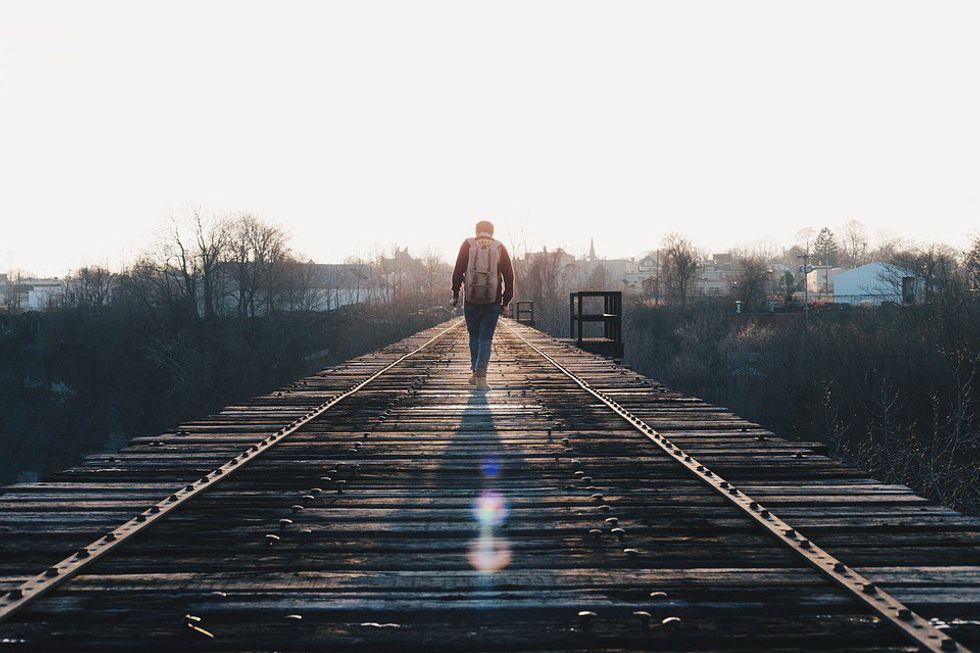
Jon Foreman, lyricist and lead singer of the '90s band Switchfoot, best describes our search for a home through his song "Southbound Train".
Oh,
I guess they'll say I've grown
I know more than I wanted to know
I've said more than I wanted to say...
I'm headed home
Yeah, but I'm not so sure
That home is a place
You can still get to by train
So I'm looking out the window
And I'm drifting off to sleep
With my face pressed up against the pane
With the rhythm of my heart
And the ringing in my ears
It's the rhythm of the southbound train...
I'm headed home
Yeah, but I'm not so sure
That home is a place
That'll ever be the same
So we gather up our things
And we head out in the cold
And your eyes are where you carry the pain
When I hear the whistle weeping
It's crying to the sky
It's the rhythm of my southbound train...
Jon Foreman compares the human search for home to a train that must reach its destination. It seems that his uncertainty for home leaves him longing for an unidentified place, which is never mentioned in the song. Do we all long for this same destination? Regardless of whether we identify as Jew, Christian, Muslim, Hindu, or Buddhist, do we all have the same longing for a home beyond this world which is inscribed onto our souls?
There has got to be so much more than this sense of homelessness that we have come to know. The only explanation of home that can make sense is heaven. Our longing for heaven is more evident in every life stage we pass. Our worries are small when we are younger and increase as we learn new things that keep us from believing in a final destination. Because we are so wired and connected and involved in the tasks all around us, we sometimes forget our homelessness even while the hurt is still there.
Can it be possible that we are trying to keep ourselves busy to distract ourselves from the inevitable? We are all going to die eventually (sorry for the morbidity, but it is true). It seems to me the only way we will ever be able to live life to its fullest is to place our hope in a home that extends beyond our life lines. We need to let go of the things that tell us that this place on earth is a fixture. It is not healthy for us to buy into the lies of a popular culture that tells us that this is our permanent home. We must lastly come to understand that while we are all homeless in some way or another, we are not hopeless. There is so much to look forward to in the ideal home we will be able to find in heaven! No more tears. Eternal life. Eternal liberty. The eternal destination of the happiness we could never find on Earth. Home.
Sources:
https://www.hudexchange.info/resources/documents/2015-AHAR-Part-1.pdf
http://www.huffingtonpost.com/bill-quigley/ten-facts-about-homelessn_b_5977946.html
https://www.ready.gov/home-fires
http://www.internal-displacement.org/global-estimates