Lolita is enormous.
Saying that to any woman would be definite grounds for a punch in the face. Or at least, a very stern lecture on how it is not polite to comment on a woman’s weight.
But literally, it’s in her genes.
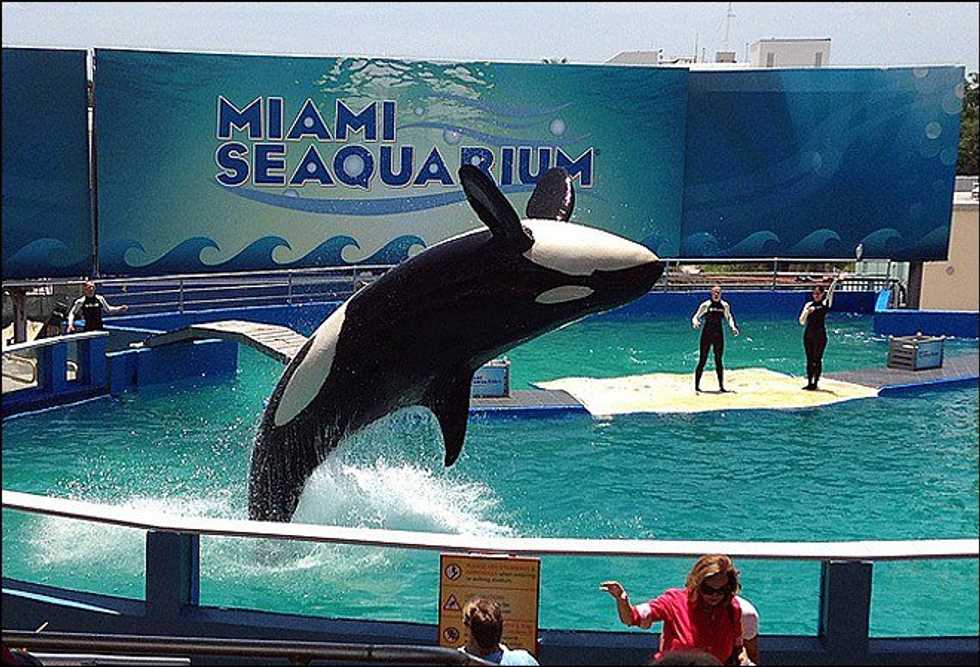
See, Lolita is the oldest, captive orca (more commonly known by their nicknames as killer whales). And she has spent the majority of her life confined in a small tank, in a rundown park known today as Miami Seaquarium.
If the park’s name sounds familiar, that’s no surprise. The popular 1960s show, "Flipper," was filmed a lot here. It involved a bottlenose dolphin, two kids, and their dad constantly getting all four of them out of a tight situation.
With the advent of the millennial generation, and YouTube, the park has been suffering a decline in recent years. Its Yelp! reviews are mostly positive, but most of them do underline the issues the park faces; repairs need to be made, and there’s not a whole lot of fun waiting around for show times.
Back to the original point though, in the 1970s, Lolita was captured off the coast of Washington State, taken from her mother when she was four years old, and sold to Miami Seaquariam.
Her tank is only 20 feet deep in one area.
Mind you, she’s 20 feet long, and weighs 7,000 pounds. There are differentiating accounts on how wide the tank is, but suffice it to say, not wide enough to hold a creature that is this huge.
When Lolita arrived to Miami Seaquariam, she was met with unfamiliar faces. Torn from her family, and her home, she was put into something the size of a bathtub, and forced to share it with a male orca named Hugo.
By all accounts, however, Lolita and Hugo got along. They were partners, mating frequently (because I assume that’s all they could do to pass the boredom of swimming laps), but never producing a calf.
Hugo died in 1980; he repeatedly smashed his head against the walls of the tank. It’s been described as a suicide act.
Lolita lives with dolphins, now. I suppose trainers put them in with her thinking she would have some company. In the 1980s, it was hard to comprehend what we know about whales today.
In 2015, orca whales are considered one of the most intelligent animals. They live in family groups, have a way of speaking to one another (think Dory speaking whale, but instead of Dory, it’s an actual whale), and mourn the loss of a family member. They travel hundreds of miles, dive deep into the ocean, and, contrary to what some sea parks will say, have large standing dorsal fins.
So if we know all this now, why is this middle-aged whale still being kept in a somewhat upgraded hotel pool?
That’s tricky.
Protestors say to free her to the wild. But is that wise?
She was taken from her family as a young whale, does she know how to hunt, where to swim, what to do? And if she does not find her family, would another take her in? Or would she perish out there, alone?
Since the movie "Blackfish," this has been a serious question, not just for Lolita, but for all captive orca whales. The documentary gave way to some serious questions on the matter, and so here we are.
The Whale and Dolphin Conservation believes it’s possible to rehabilitate these creatures, as long as strict guidelines are followed. It’s worked with dolphins, so why wouldn’t it work with whales?
It’s a question that needs to be considered seriously.
So for now, we will just have to settle ourselves with hoping for a better future for whales like Lolita.
Hang in there, girl, maybe one day you’ll reunite with your family.