
One thing that most people don’t know about me is that I have alopecia areata. WebMD defines alopecia areata as “a type of hair loss that occurs when your immune system mistakenly attacks hair follicles, which is where hair growth begins. The damage to the follicle is usually not permanent. Alopecia areata usually begins when clumps of hair fall out, resulting in totally smooth, round hairless patches on the scalp.”
There are so many definitions online, and each definition will provide different levels of explanation. But anyways, that’s not even what I want to write about. I would rather write about the emotional effects of having alopecia areata. Although I hardly remember it, I’ll set the scene—it was the summer before I was starting kindergarten, and we had just returned from waterskiing over Labor Day weekend. I was lying in my parents’ bed watching TV with my hair sprawled out on the pillow. Soon, my dad noticed a huge area of my hair near my temple was missing. My parents took me to see my pediatrician who confirmed that I had alopecia.
Soon, I started seeing a dermatologist and she recommended a number of different topical treatments. I tried numerous treatments, but nothing seemed to work. In grade school, there was a time where I had a huge spot of hair missing and it became harder and harder to hide. The spot was at the bottom of my hairline, so when my hair was down, it wasn’t visible. However, I remember one day I wore my hair in a ponytail because we had PE that day. I remember a lot of the boys teasing me about my hair, saying things ranging from “she has cancer” to “she’s gross!” A few of the kids even asked if I was contagious. Looking back, I think this is when I began to feel self-conscious about how I looked.
Although this was an extremely hard time for me, it also showed me who my real friends were. Two of my close friends stood up for me and are still my friends today.
My alopecia continued until we were introduced to cortisone injections. These injections were incredibly painful, as my doctor had to inject my scalp multiple times around the spot. Initially, the injections stopped the spot from growing, but eventually, we began to see hair growth, so I continued to get them.
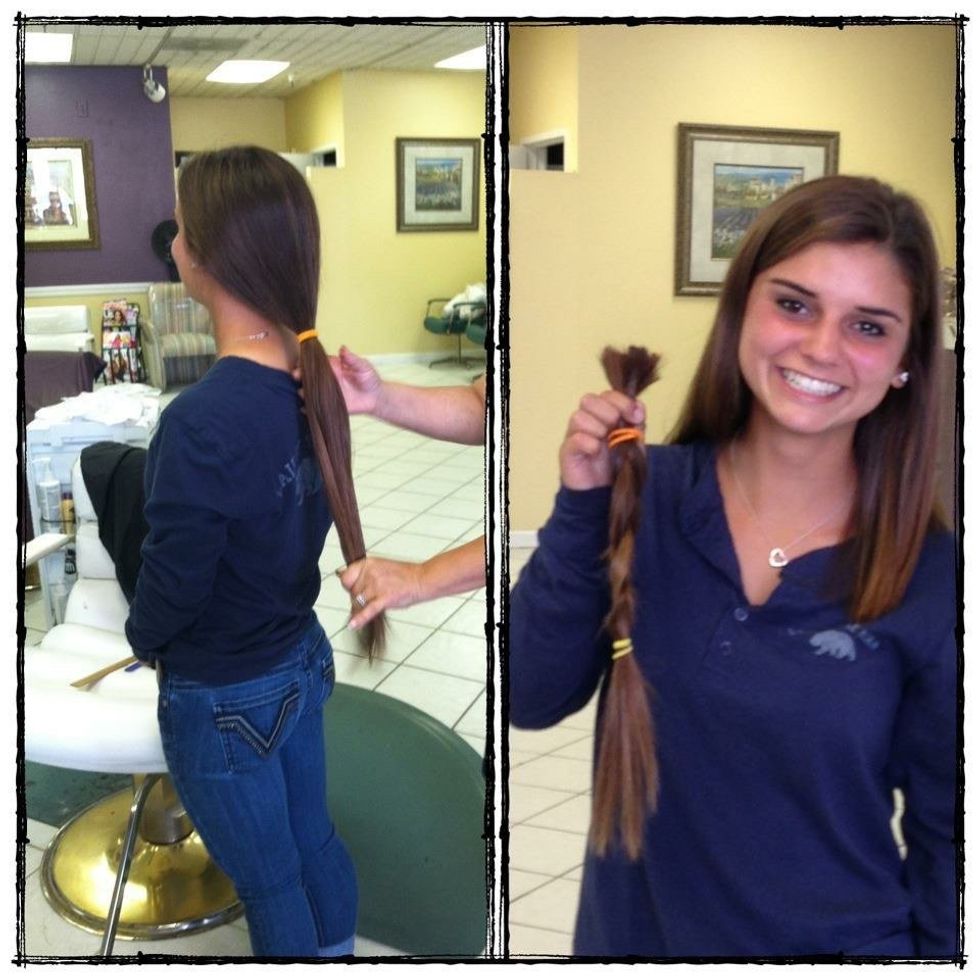
Over the years, my alopecia has been dormant, appeared randomly from time to time. Sometimes, I feel that I can attribute it to stress, while other times there doesn’t seem to be a reason. I’ve had the opportunity to cut and donate my hair twice, and also inspired my sister and friends to do the same. It’s a good feeling to know that you could be helping someone else who may need it.
Although I have alopecia, I don’t let it define who I am. As I get older, I also realize that physical looks aren’t nearly as important as the person inside.