


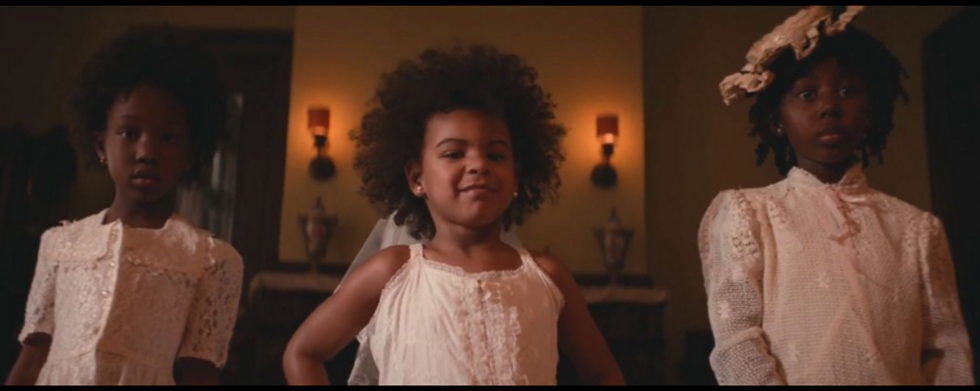
Mainstream society is structured to demean the black woman in the beauty ideals it projects. We are taught from a young age to police our blackness, and part of this is the extent to which we embrace our natural hair. The very label ‘natural hair’ is problematic in itself because it shows the power of this white supremacist mould that we are expected to assimilate into.
Black women are constantly told to “tame” their hair to adhere to a particular standard, or that it is “too nappy” when it has not manipulated with products and chemicals. We are taught to resent the kinks and curls that make up our hair because it is different to the straight and silky hair we are predominately used to seeing in the media. And therefore, ingrained in the minds of young black girls is the notion that straight hair is somehow a requirement to be accepted -- which encourages the use of relaxers and weaves. It becomes an obligation, as opposed to a choice.
The hot comb was the predecessor of the relaxer, before relaxers were as readily and financially available, which goes to show how deeply rooted this forced assimilation is among our community. The natural hair movement lacks support from large sections of our community, though through no fault of our own, because changing our hair to conform to the “typical” beauty standard is a coping mechanism in an attempt to thrive in this white supremacist society.
We need to acknowledge that there is beauty in every hairstyle employed by a black woman. Whether we wear our hair natural or relaxed, whether we are rocking bantu knots or a sew-in weave, or whether we have bright blue crotchet braids or are sporting a bleach blonde afro, we are beautiful. And the key is to use our hair as a source to empower ourselves.
Intersectionality is important for both feminism and the civil rights movement, and the recognition of the issues that are faced by black women is integral to their success. Until black women learn to embrace their “baby hair and afro” and society stops defining these features as something less than, we cannot move forward as a culture. We can’t ignore this problem with white feminist rose-tinted glasses. It is an issue for us all.
Because when children as young as two years old are experiencing pain, chemical burns, or hair loss by putting sodium hydroxide on their hair because society taught them not to appreciate its natural thickness, we have a problem.
The solution? Not just reminding black women that their hair is beautiful, but teaching society to believe it.

















