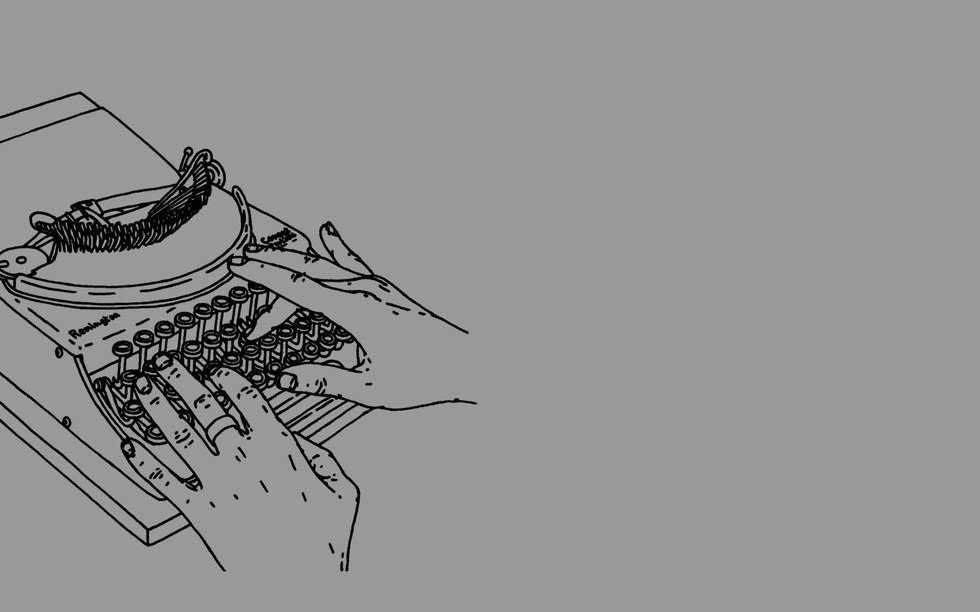
My right hand is usually calloused and smudged with graphite while my lap is covered in flesh pink eraser shavings. Very often I find myself scrambling to my tablet at three in the morning to type a line or two. Writing is something I was drawn to at a very young age. I was a timid child and spent the majority of my time alone and reading anything and everything: manuals lying around the house to the novel Jane Eyre. It was not long before I began writing my own stories. Afternoons were reserved for writing. I would sit in my room with a stack of wide-ruled paper or a notebook and write. There were no plans at that time. I simply wrote what I now know to be flash fiction. Looking back at those days, I believe it disciplined me to sit down and start anywhere. Sometimes it is very easy to see writing without a plan as a barrier, but I know from experience that some of the best things I have ever written had no clear beginning or end. It is impossible to pull anything out of the blue and write from scratch because no person ever has a clear head.
The most vital part of any story is the characters. I will never meet everyone in the world but writing certainly gives me the freedom to imagine. My characters are collages of myself, family, friends, and even strangers on the subway. Once they are crafted they deem where a story goes. I have thrown out entire chapters of my novella Moons By The Heart because the story line and the characters were as likely to pull together as two magnets of the same polarity. Writing about imaginary people also gives me a place to explore my emotions. From 2003 until 2009 my father went back and forth from Iraq and Afghanistan and if it were not for my character Amethyst, I think it would have taken much longer to come to the realization of how much of a toll my father’s deployment had on me emotionally. I was able to pour in my raw emotions, have my characters act them out and gain honesty with myself. Creative writing has given me the skill of expressing my emotions well.
I believe it is important to mention how television and what I read influenced my writing. Fairy Tales and the children’s books I was expected to read in elementary school bored me. The characters were too nice, too agreeable, and there usually was a happy ending. I tended to be drawn in by history documentaries, investigation shows, dystopian novels and television series. The New Zealand children’s show The Tribe presented me an alternative. The issues were never easily solved, death happened to children, and not every mother felt an instant connection and love towards their newborn.
The Tribe was my first informal education on crafting characters, female characters in particular. There seems to be a great amount of pressure on writers to put more strong and brave female characters in the forefront of their work. If she falls short and is not outspoken enough she is deemed as not a good role model for young girls. That train of logic is just as flawed as the belief that all women belong in the kitchen. There is nothing wrong with a timid, shy, cruel, strong, standing on the sidelines, or right in the middle of chaos female character. If I am going to write, I will do it honestly and craft all kinds of women. I will write about female characters that blurt out obscenities, are polite, or speak very little. There is no mold. There never was one.
In the spring semester of 2013, I took my first creative writing course. It was a playwriting course taught by Professor Mercer, and in the beginning, we read various plays. My personal favorites were For Colored girls by Notozake Shange and Dream on Monkey Mountain By Derek Walcott. It was the second time I was writing a play but this was the first time I had studied the craft in more depth and employed the traditional format. In the beginning, writing a one-act play in one semester seemed like such an insurmountable task. Moving out of my comfort zone of writing novels to plays seemed like such a stretch. I was accustomed to having the space of writing paragraphs of details; facial expressions, what they are wearing, and descriptive settings. When I began the first draft of the first half of my play I felt restricted. How could I successfully tell a story with so many limitations? Although my play would not be performed, I had to imagine if it were to it had to stay within the realm of possibility. That meant no overly ambitious sets and long cast list. In novels, all the “visual” aspects are possible because the world is beamed directly into the readers’ imaginations, which in essence is limitless.
When writing creatively I plunge right in to generate ideas and experiment. Even with larger projects like novels, however, with my play I felt the need to plan. I was in unfamiliar territory and needed a map. I had decided to use my novella Moons By The Heart to write my play. I feel such an attachment to this work because writing it had helped me through particularly difficult times in my adolescence. Since it was written roughly eight years ago I brushed upon complex issues and this time around I intended to go past the surface and into the core.
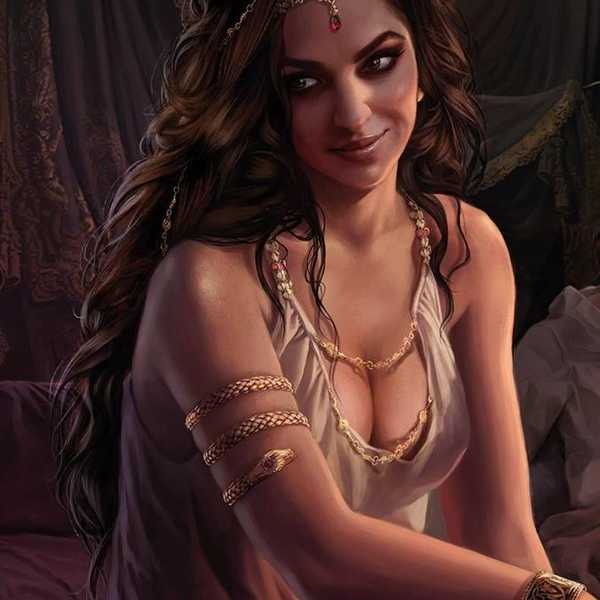
The plot is about two territories in a war over land and resources. The protagonist, Amethyst becomes a prisoner of war after being shot with a flame arrow, an arrow shaped like writhing flames that cause extensive damage to muscle and tissues going in as it does coming out. Her injuries are believed to be too severe, so she is left to die by her comrades. She is then captured by enemy forces and mere days after her capture she discovers she has a sister from the opposite side. Both women are generals in their respective territories and believe they are fighting worthy causes. They have deep-rooted prejudices about one another due to their upbringing and loyalties. When I went back to my novella, I discovered what idea I was touching upon I centered my play around the quote from the novel Betrayed by P.C. and Kristin Cast that embodies it so perfectly: “Remember, darkness does not always equate to evil, just as light does not always bring good”(109). I knew from the beginning that my audience would join Team Amethyst and empathize with her because she is a prisoner in three-quarters of the play. I wanted to challenge that allegiance and get the point across that even the good guys have done terrible things. It is not a good versus evil story but rather two equally important stories.
In the novella version, the characters were originally a bit of a caricature of good and evil. When writing my play I made it my goal to make my characters more relatable instead of two extremes on either side of a spectrum. I gave each character that spotlight to show their admirable traits as well as their faults. A good story will give the reader at least one small feeling of empathy for even the most abhorrent monsters.
The draft for the first twenty pages took two weeks to produce and the planning was relatively simple. Using a Sharpie pen and post-it notes, I divided my chapters into scenes and described the settings in short sentences and put dialogue I especially liked in brackets with pencil. I had also decided to title the play The Vermillion General. After I had gotten my draft back with comments I realized I would need to strengthen my dialogue. I no longer had the luxury of Amethyst’s thoughts. What she said was now more important in moving the plot forward. I spent a few weeks on scene six. It is a pivotal part in the play where the audience discovers Amethyst is also a guilty party.
If I were to include everything from the original novella it would span two acts. I did a lot of cutting and repurposed a few characters to give myself more than enough room to accomplish telling the story in one act. One character, in particular, Dan became more than just Zircon’s henchman but far more complex and dark. He had a strong relationship with one of the soldiers Amethyst killed. Instead of simply showing just the anger he felt towards her and seeking vengeance, something the audience would be expecting he has a plethora of questions for her with a lot of barely contained anger and pain behind them. I also used three scenes to reveal what he sacrificed to fight and is capable of being caring a gentle. He also had a sadistic side and could be very sarcastic. Even toward zircon that he loves deeply. In scene 6 he is shown dressing Amethyst wounds but, at the same time saying sexist things as well as questioning her. In this conversation, the cultural differences between bluebirds and Crows are revealed as well as the reasons the war began. My goal was to make it difficult for my audience to pick a side. Dan fascinated me more in the play adaption than the novella version. Writing this play pushed me to take a risk and not care who I offended or disturbed.
The second half of the play was the most difficult to write. In the novella, it can only be assumed that she has killed people but the play it is stated explicitly. Amethyst was a general who had murdered over a dozen people. They were soldiers the opposite side and there was a war going on but I did not want to gloss over that fact nor did I want it to play out like an episode of Law&Order where she had to answer for all her crimes in one tense scene. In scene six she admits to what she had done but shows no remorse. I wanted the evidence and her side of the story to peel off like lettuce leaves, each one leaving her more exposed and vulnerable. Amethyst needed to arrive at a point where she reveals her wounds so she can heal and move forward. Showing that transformation in her language and actions was one of the biggest challenges in writing the play The Vermillion General. I made a couple appointments with Professor Mercer for some direction in writing the second half. They proved to be very helpful. They revealed to me the favoritism I have for Amethyst and pushed me to make it difficult for her so she would not be a stagnant character but one with growth. She could not be exactly the same after the tragedy that befell her.
After I had finished the second half it still felt incomplete. Amethyst had admitted to what she had done, she told someone in confidence why she did it, displayed remorse and, a new beginning was clear. It was not until the night before it was due until I realized what was missing. What about the family and friends of the soldiers she killed? How would they react to her presence once the war was over? So, I did something I had never done in any of my works. Amethyst was murdered herself. It is not revealed by whom but with the use of a voice-over of an emergency call and the employment of police and ambulance sirens it was made clear. It was a difficult decision but it felt right. It did not seem plausible that she would have little consequences for her actions and live happily ever after. If anyone were to read my play I hope that they understand that Amethyst was not a victim. I do not write stories about victims. I write stories about people with circumstances, experiences, that make choices and sometimes they are the wrong ones. Amethyst was more than her end...she also had a beginning and middle that are just as important.
When I reflect upon my experience of penning my first one act play it gives a great sense of accomplishment of not only completing it but also growing in the aspect of being able to tackle more mature ideas and transition between genres. The experience also taught me to be economical in many aspects. When I cut the number of characters I was able to focus more intently on their development. I also was able to see my development as a writer and it greatly motivated me to write more often. Currently, I am working on a new novel titled Roe and Merand. It will be my first Murder Mystery.
The original novella and the sequels The Night Sky Hunting, The End of Moons and Shattering The Constant Night will always have a special place in my heart because I spent years writing them. They are the first body of work that I dedicated so much effort and time on. I started when I was twelve and finished when I was fourteen for the first one alone. Writing also gives me a great deal of responsibility. Amethyst helped me deal with some of the confusion and feelings of abandonment and fear I felt after 9/11 and when my father was deployed. I want help others deal with these kinds of emotions and at the same time show the good in all people. When dealing with these emotions I barely talked and it was with my characters that I sorted through everything and constantly asked why. Writing is constantly asking why and trying to the best of one’s ability to answer the questions. It is my hope that I can answer my reader’s whys and relieve some of their pain.