


When the showing of "American Sniper" offended a Muslim student organization on the University of Maryland campus, the film's showing was postponed.
When a racist and threatening email written by a fraternity man was published, that man was removed from his fraternity and suspended from the school.
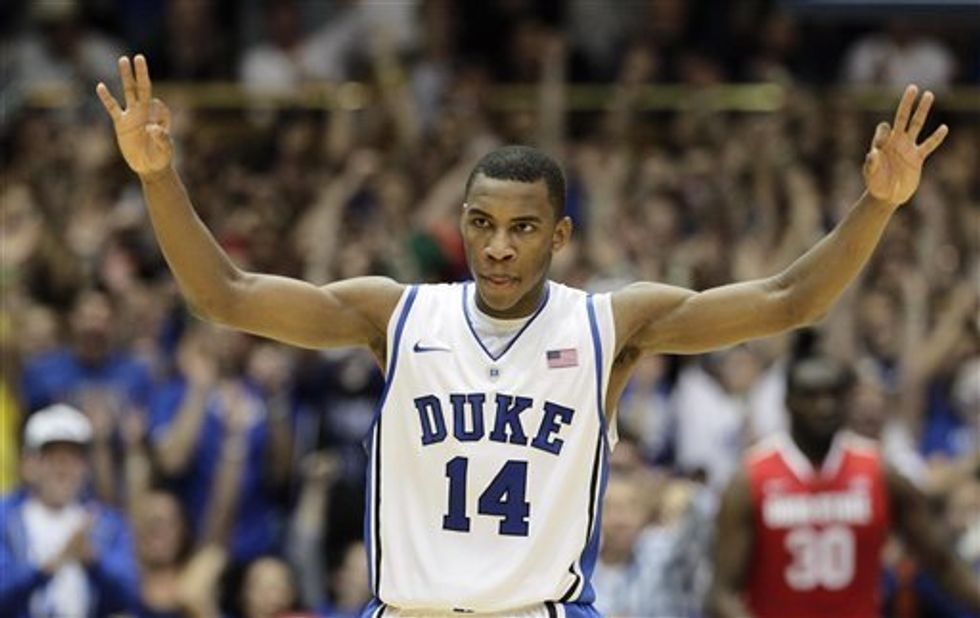
When a Duke basketball player was accused of sexual assault on two separate accounts and removed from Coach Mike Krzyzewski’s team, though, the University of Maryland welcomed him with open arms.
It’s times like these that I am ashamed to say I go to the University of Maryland, which I don't say often or with ease. Rasheed Sulaimon’s presence on campus offends me, as well as many other women, on a much deeper level than any anti-feminist comment or catcall could. His invitation to play and attend the University of Maryland is a direct message to the women on campus that even if this man is a rapist, it’s okay because his basketball skills and potential revenue generation for the university are more important.
This is not the first time I have felt unsafe at the University of Maryland.
In the fall of 2014, President Wallace Loh attempted to alter the university’s sexual misconduct policy to lighten the punishment for intimately touching another student. Essentially, he wanted to separate the degrees of assault, labeling unwanted sexual penetration as sexual assault, and anything less as “intimate touching,” so that if an offender of intimate touching is found guilty, he or she would not bear the burden of assault on his or her record. President Loh stated, that if somebody touches somebody else nonconsensually, that constitutes an assault? You are demeaning the word assault. You're trivializing it ... you should punish the person for unwanted touching, but it should not be assault.
While it would be untrue to say that men do not experience sexual assault, it would also be unfair to say that they experience as much as women do. When word of this possible alteration to the sexual misconduct policy caught my attention, all I could think about were the times a man had grabbed, touched or groped one of my female friends or me, and how that would no longer be considered an assault. There is no grey area when it comes to consent, yet Loh seemed to be implying that there was. It shouldn’t take a man forcibly inserting himself into a woman for the word assault to apply. Fortunately, this alteration was ultimately not made, but it was made clear to me that the university was not on the side of survivors of sexual assault, and I again realize that with the arrival of Rasheed Sulaimon.
As I said before, Sulaimon’s presence offends every fiber of my being, but it also invalidates the stories of the women he allegedly assaulted. It discourages survivors of rape to seek justice against their perpetrators because their allegations may mean nothing, like in this case. Sulaimon might have been kicked off of Duke’s basketball team (and become the first player Krzyzewski has ever removed from the team) but he was then offered a spot on another D1 team. If he sexually assaults a woman at Maryland, what happens then? Can the University of Maryland even defend itself and say it did everything it could in its power to prevent this?
As a sorority woman on campus who feels the brunt of the backlash Greek life receives with reference to sexual assault, the immediate acceptance and excitement about Rasheed Sulaimon’s coming to UMD -- to put it simply -- stung. It felt like everything I have worked for to educate others about sexual assault and everything the Greek community has done (Ten Woman/Man Plan, Alpha Sigma Phi’s Sit Down to Stand Up Against Sexual Assault event, Delta Gamma and Sigma Psi Zeta’s Sexual Assault Awareness panel, Sigma Delta Tau and Zeta Beta Tau's Safe Smart Dating event, just to name a few) to show that we do not tolerate sexual assault was all for nothing.
Despite all efforts by the students of the University of Maryland to eradicate sexual assault on campus, it seems administration is not following suit. For President Loh, it would seem money ultimately speaks louder than students' concerns.

















