

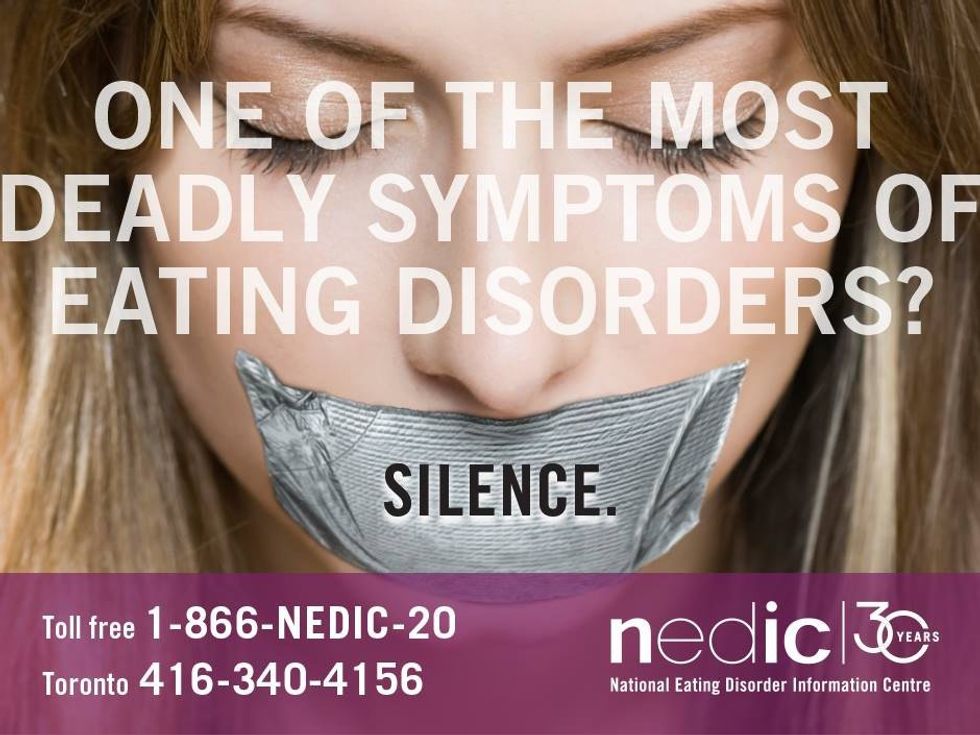
The phrase eating disorder usually only brings to mind anorexia and bulimia. While it's still incredibly important to be aware of these two, there are more eating disorders that also need attention. What may seem like strange eating habits could in fact be a life-threatening illness.
One of these lesser known eating disorders is binge eating disorder (BED.) It's characterized by recurrent episodes eating large quantities of food (often very quickly and to the point of discomfort); feeling a loss of control during the binge; experiencing guilt, shame and distress afterwards; and regularly using compensatory measures (ex. purging, laxatives) to counter the binge eating. Behavioral characteristics include eating in secret, hoarding/stealing food, lots of empty containers/wrappers, and creating schedule changes to make time for binge sessions. Though treatable, it is severe and life-threatening. It's important to note that the body types of individuals who have binge eating disorder vary in shape and size. Weight gain may or may not be associated with BED; those with BED aren't necessarily overweight and those who are overweight don't necessarily have BED.
Another one of the lesser known eating disorders is other specified feeding or eating disorder (OSFED.) It causes significant distress and impairment, but doesn't meet the criteria for another eating or feeding disorder. Examples of OSFED include atypical anorexia (individual is not underweight), bulimia with less frequent behaviors, binge eating disorder with less frequent occurrences, purge disorder (purging without binge eating), and nighttime eating syndrome (excessive food consumption at night.) Though OSFED symptoms aren't as severe as the other eating disorders, it's no less important.
Though not an eating disorder itself, chewing and spitting is a behavior that sometimes accompanies eating disorders and may be an indicator of deeper problems. It's exactly as it sounds: The individual places the food in their mouth, chews it, then spits it out. This allows the individual to enjoy the food without the guilt of eating it and gaining weight/consuming calories. However, it's not as harmless as it seems. According to this article, people receiving inpatient treatment for eating disorders who engaged in chewing and spitting restricted food intake more often, exercised more excessively, had increased use of diet pills and laxatives and had higher levels of depression, neuroticism and body dissatisfaction. People who engage in chewing and spitting risk suffering from improper nutrition, becoming addicted to the behavior and developing ulcers.
If you or anyone you know is struggling with an eating disorder then please contact nationaleatingdisorders.org or call their helpline at 1-800-931-2237.