

Every time you turn on the news or check your social media feed, it is rampant with stories rooted in some form of social inequality. Rather than trying to understand the underlying causes of these issues and create a meaningful discourse, the media chooses to focus on one aspect or another in an effort to pit one group against the other. This solves nothing and creates unnecessary animosity, which is exactly what the media wants, for a house divided against itself cannot stand.
University of Maryland Sociology Professor, Patricia Hill Collins, introduced the concept of the matrix of domination in her work "Black Feminist Thought: Knowledge, Consciousness, and the Politics of Empowerment." This concept calls for individuals to begin thinking of the dimensions of inequality as interlocking and mutually reinforcing, rather than separate factors. This means looking at inequality as a combination of factors instead of just one. She calls for intersectionality, which is the study of the intersections between forms of oppression, domination, or discrimination. It means looking at how gender, race, sexuality, religion, and a multitude of other factors all come into play in these situations.
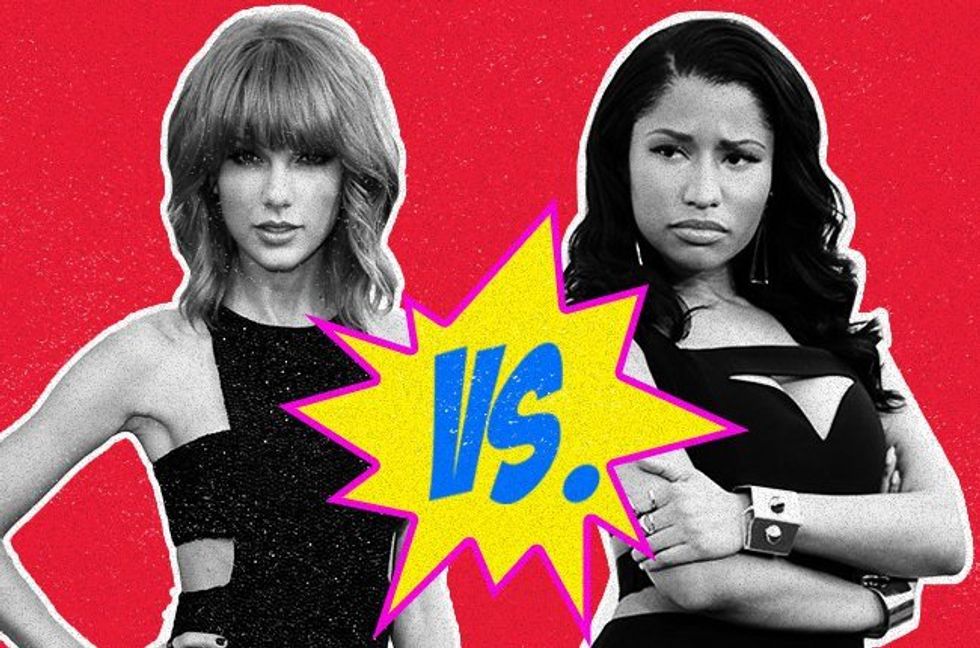
While this may seem hard to grasp, this issue has recently had a lot of attention drawn to it by the Twitter debate between Nicki Minaj and Taylor Swift. Minaj took to Twitter to express her frustration at not having her “Anaconda” music video nominated for the MTV VMA Video of the Year Award. Minaj felt that it was dismissed by the music industry due to its unadulterated celebration of black women with full figures.
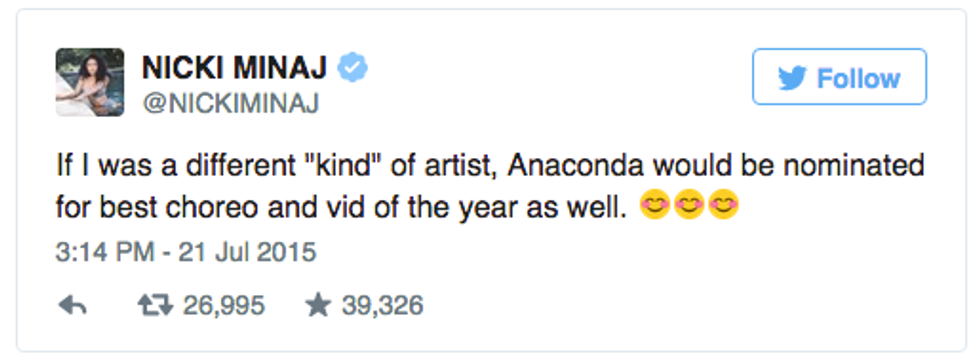
Photo via GMA.com
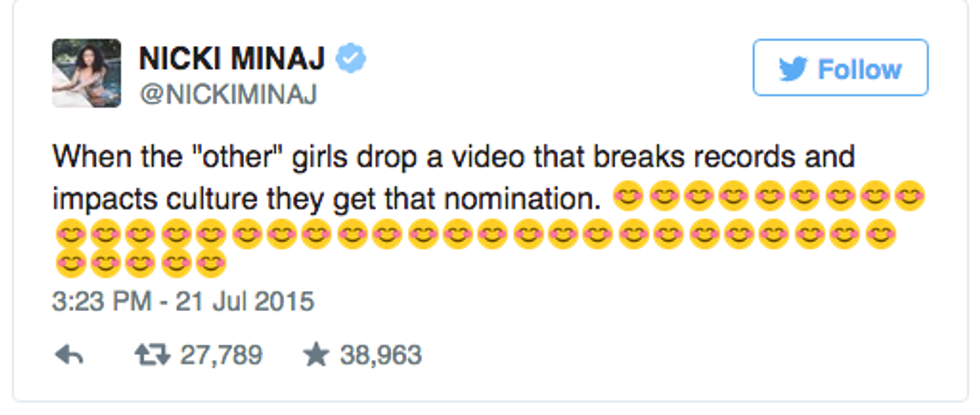
Photo via GMA.com
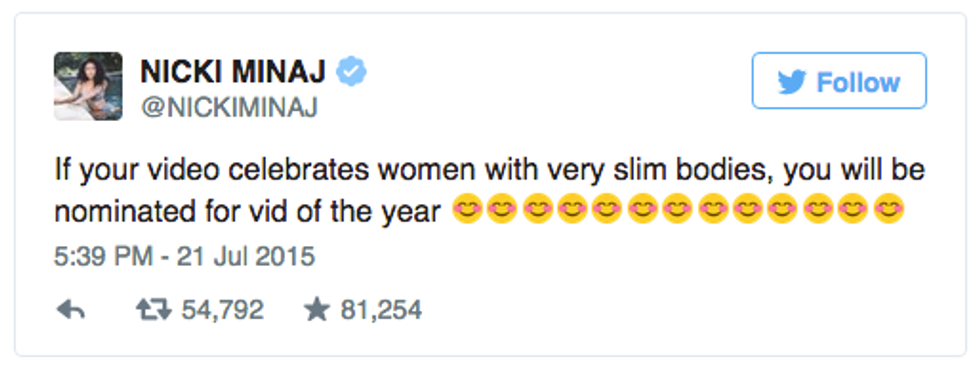
Photo via GMA.com
After the following tweets, Taylor Swift took to Twitter to defend herself from what she felt was a “call-out” for her own video nomination. Feeling personally attacked, Swift attempted to refocus the issue on sexism in the music industry, rather than look at it as a multidimensional problem of gender, race, and body politics.
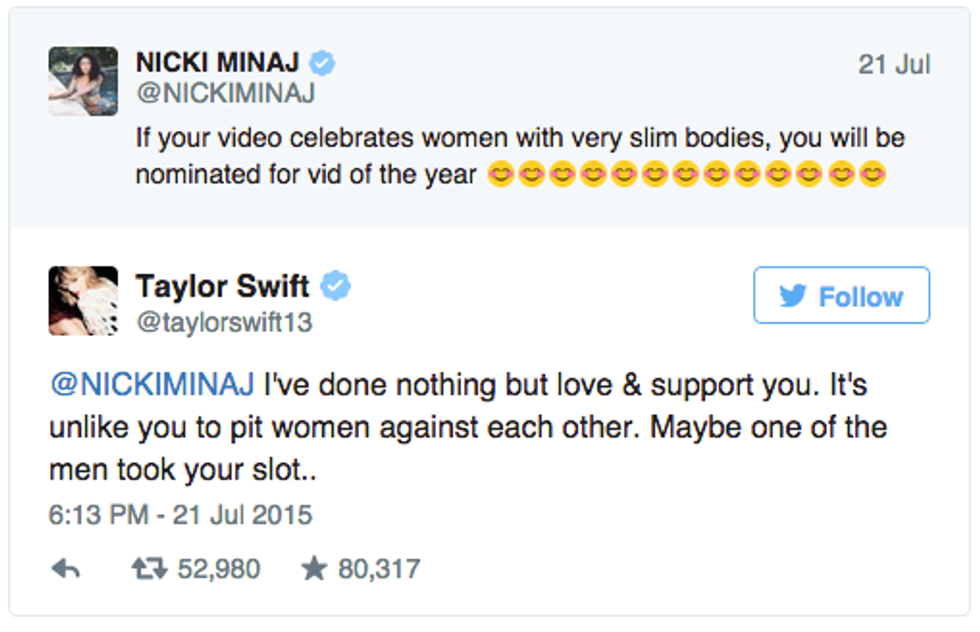
Photo via Huffington Post
This Twitter exchange sparked a major discussion about some of the failings of “white feminism." This brand of feminism narrowly looks at issues in terms of gender and ignores the concept of intersectionality. White feminism is holding onto the idea that women make 78 cents to a man’s dollar, when in reality, women of color make far less than both men AND white women. Swift suggested that Minaj’s nomination was taken by one of the men, which, while valid, also fails to grasp the point Minaj wanted to make.
Minaj and her supporters merely wanted to create a dialogue about the need for intersectionality when facing situations of inequality. For Minaj, the problem wasn’t just about being a woman slighted by the music industry, it was about being dismissed for celebrating black women and their influence on pop culture. Instead of letting the media demonize her for her opinion, Minaj kept her exchange with Swift respectful and even encouraged her to join in on the discussion of how body politics, racism, and sexism all affect the careers of female artists. Whether Swift likes it or not, she is favored in a system that glorifies slender, light skinned, pop vocalist women, and her voice is important in helping dismantle it.
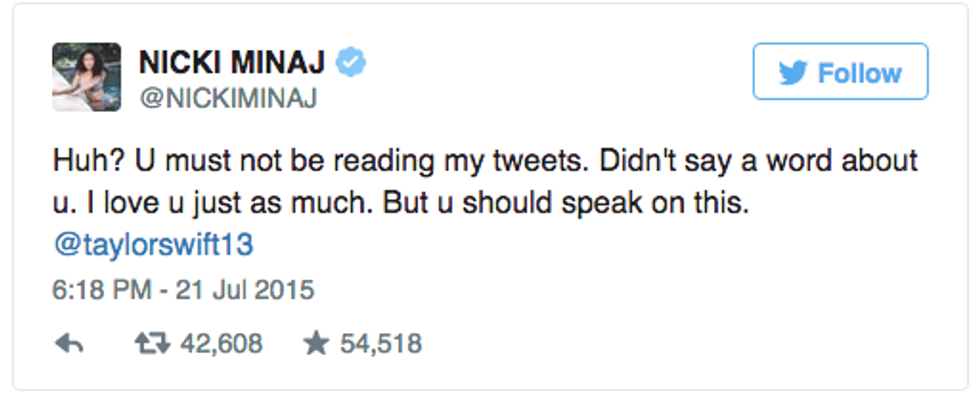
Photo via Huffington Post
Since the initial Twitter debate started, Minaj and Swift shared a phone call where Swift apologized for missing the “big picture” Minaj was trying to paint. These artists are now responsible for opening a dialogue about understanding the many facets of inequality of representation by the media.
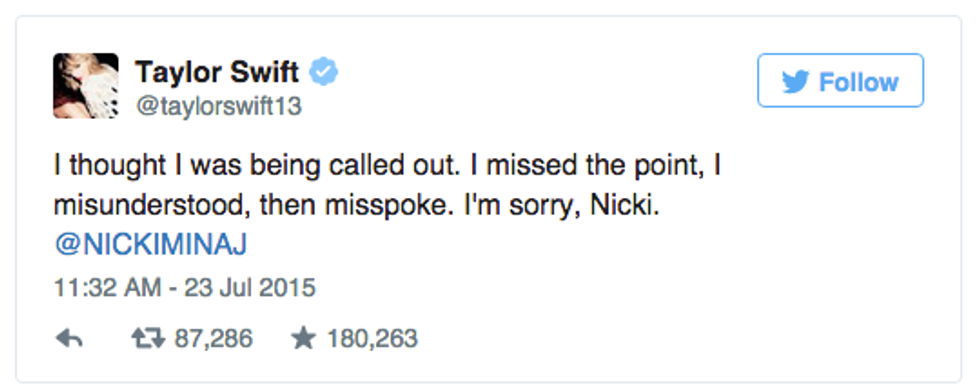
Photo via USA Today
If one thing is for certain, Minaj’s fans and supporters have heard her call for intersectionality loud and clear.