

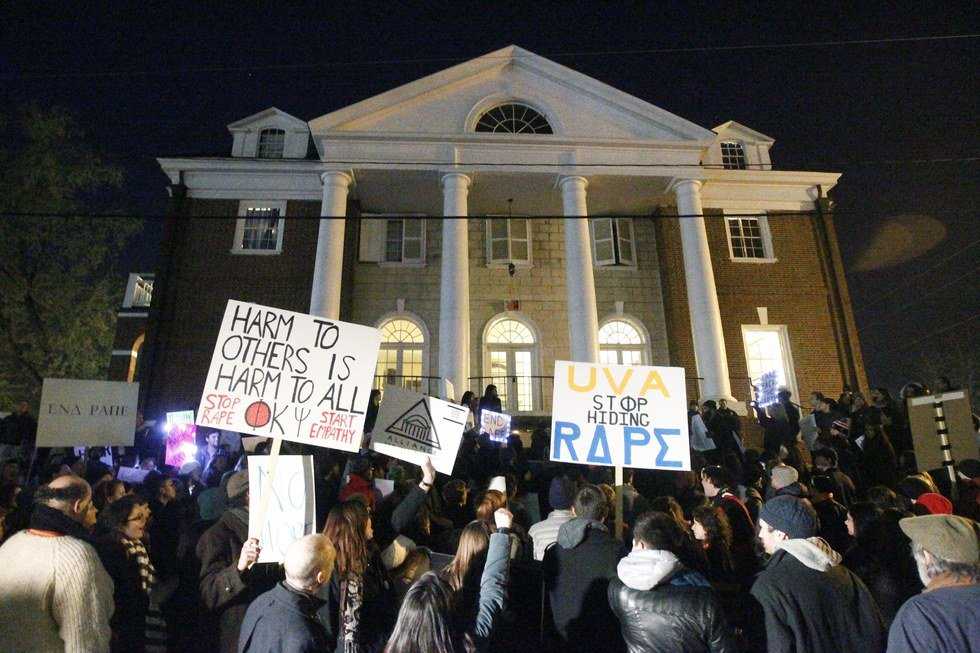
Recently, the Chicago Tribune reported new findings about the alleged rape that occurred by a University of Virginia fraternity, a story that was originally published by Rolling Stone in November 2014. The accuser, who is called “Jackie” in the story, stated that she was gang raped by boys in a particular fraternity. On January 9, 2016 the Chicago Tribune stated that Jackie did so in order to gain attention from her friend, Ryan Duffin. Jackie had romantic feelings for Duffin, but Duffin did not feel the same way. He apparently told Jackie this, and she reacted by creating a man named Haven Monahan, whom she said was a junior at UVA. According to Jackie, Haven had a crush on her. Jackie told Duffin that Haven had forced her to perform oral sex on five men, but then told Rolling Stone that nine fraternity members gang raped her. Irresponsibly, Rolling Stone printed the story without verifying any of Jackie’s statements and caused a campus (and nation-wide) uproar regarding Greek life and rape culture. The article was later redacted.
There are two important things we can learn from Jackie’s false accusations. First, there are stereotypes of Greek life that need to be eroded. Second, there are serious consequences for lying about a rape because it can have a negative impact on real victims of rape as well as on those who are falsely accused. For Jackie’s case in particular, the entire UVA Greek community was also negatively affected.
Looking back on the UVA case after knowing the truth, it is crazy that the entire campus was so quick to judge the UVA fraternity without bothering to verify facts or listen to the fraternity’s side of the story. I can understand why most people blindly trusted Jackie--a girl who apparently told friends about her rape, but was silenced. Most students saw an injustice, and for them it wasn’t hard to believe that some rowdy fraternity boys committed this horrible act. But why did they feel this way? Sure, fraternity boys around the nation are (unfortunately) mostly known for drinking and partying, but does everyone really believe that most fraternities encourage rape? This stereotype is just as sickening as any other stereotype because it’s simply not true.
Although there have been cases (albeit few) of fraternities committing sexual offenses, such as the case of Kappa Delta Rho at Penn State, these fraternities cannot be constituted as the norm. Fraternities such as these have caused some in the media to suggest banning frats. Yes, the (few) fraternities that commit sexual offenses should absolutely be punished and suspended, but banning fraternities will not solve the problem of campus rape. In fact, fraternities recognize that campus rape is an issue, and have chosen to take a stance. For instance, several fraternities were the first to support the White House’s sexual assault campaign, “It’s On Us,” which involves extensive training regarding sexual assault, hazing, and drinking.
It is particularly upsetting to think about the consequences of Jackie’s false accusations. Jackie has now made it more difficult for real victims of rape to be heard. Since Jackie’s story was so popular in the media, almost everyone now knows of the college girl that falsely cried rape. True victims of rape already find it difficult to report the crime, and now the fear of not being taken seriously may make it even more difficult for them. No victim of rape should feel this way, and it is unfortunate that people like Jackie decide to lie about such a horrible crime.
In addition, Jackie’s lies negatively affected the accused fraternity as well as Greek life as a whole. The UVA fraternity was put on blast by the media, and the fraternity’s house was even vandalized with writings such as “UVA Center of Rape Studies.” However, the fraternity was innocent of the crime all along. Greek life was also affected because the president of UVA quickly suspended all fraternities and sororities for over a month, although none of the sororities had been accused of any wrongdoing. Further, the media jumped onto the bandwagon regarding the idea that Greek life is horrible, dangerous, and that fraternities encourage rape. It’s important to remember that the media reports on stories that will grab viewers’ attention, and unfortunately what grabs our attention are negative news stories.
So the next time you read a story in the news that shames the Greek community, think critically about if this story is representative of all Greek organizations, or if it is even truthful. Jackie’s false accusations are a wake-up call to those who constantly criticize Greek life and believe everything the media tells them without verifying information for themselves. Campus rape is a problem, but labeling fraternities as the cause without much tangible evidence is not the appropriate answer.