
The Last Lecture by Dr. Andrew Conteh
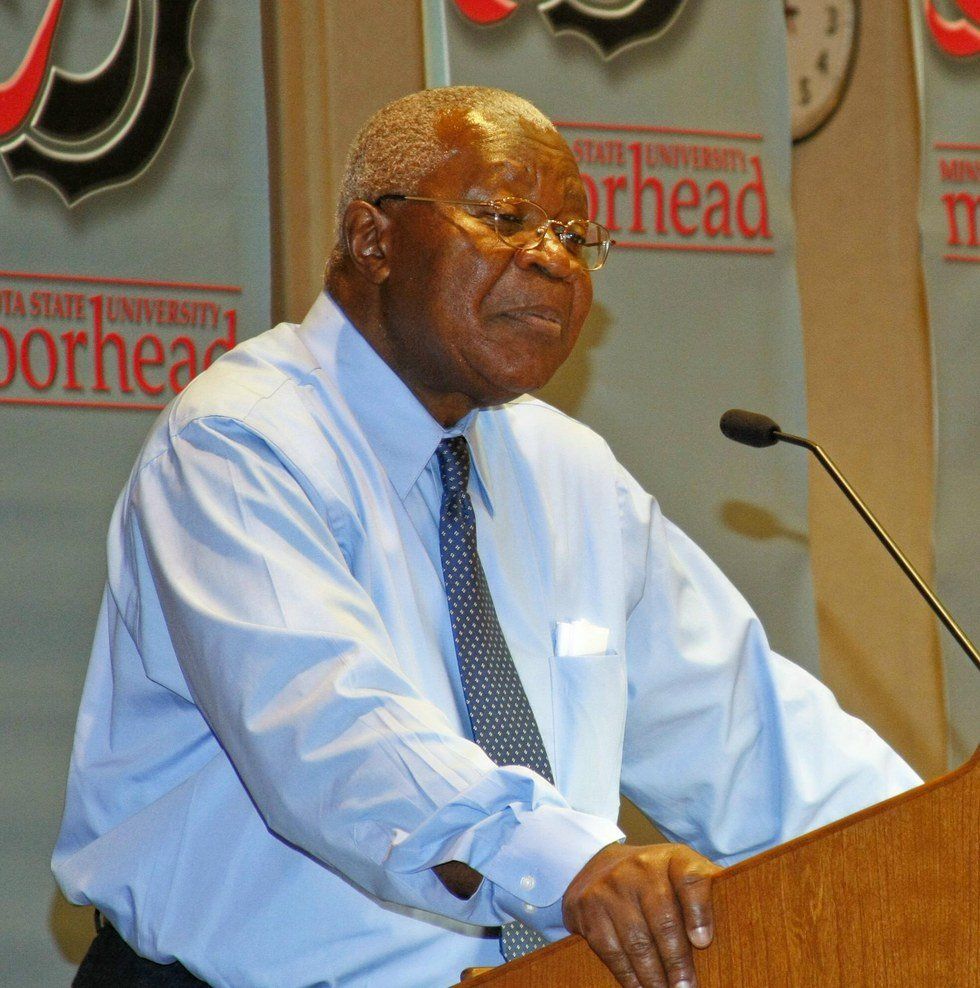
This event took place on the 30th of November at the CMU Ballroom at 4:30 p.m. It was organized by the Interdisciplinary Center for Diversity and Social Justice Department of MSUM to recognize Dr. Andrew Conteh, professor of Political Science, for his passion, strong voice and dedication to diversity and social justice not only at MSUM, but in the world.
Introducing the event was Karen Braden, a faculty member of the Sociology and Criminal Justice Department. Braden thanked everyone for coming and introduced the student committee members; Chief Diversity Officer: Dona Brown, Black Student Union President: Lexi Byler, Office of Diversity and Inclusion: Olivia Matthews, the Program Director: Jerry, Head of the Psychology Department: Olivia Melroe, Director of Women’s and Gender Studies: Creel Falcon Kandace, Social Work Department: Miedema Janelle.
Braden continued her speech by saying, “We are presenting an award to Andrew Conteh because of his lifetime commitment to diversity and social justice, not only at MSUM but all over the world. Trying to find an appropriate award for somebody like Andrew Conteh has been difficult, even giving him a certificate in a frame was not quite good enough. We wanted to listen to him speak which is something that is important as well. Conteh will always be speaking about diversity and social justice, and we think the best way to recognize, award, and acknowledge him is by listening to him speak not with our ears, but with our hearts; we can show him how important he is to us by taking in the wisdom he has to offer, so today let’s take it in with our whole hearts”
Dr. Andrew Conteh greeted everyone and thanked the faculty and staff, the award, and his supporters. He concluded his thank you speech by saying “In the beginning of my teaching here, I never knew I would be leaving with tears.” He continued by describing his topic which he titled, "The Rights of Indigenous People." The topic was selected because of his trust and beliefs of human rights. “Human rights are not only the rights of individuals, but are rights that are enjoyed by persons irrespective of their race, beliefs, colors, and backgrounds." he said.
Conteh said “First and foremost, we need to ask ourselves: Who are Indigenous people? Secondly, what do the Indigenous people want/what are their human rights? And finally, the significance of the UN Declaration of Indigenous People.”
He explained Human rights as those rights enjoyed simply because they are human, irrespective of their race, color, or background. They are fundamental rights, indivisible, interdependent. Human rights do not know any geography; the ideas of human rights are enshrined in the Bible, Quran, and are also found in many philosophical ideas, etc. After WWII, Human rights were enshrined in the United Nations Charter, namely: The preambles of the Charter, articles 1, 2, 55, 56, 72, and 76. Though the UN Charter does not expand on the concepts of human rights and the UN Charter is lex imperfecta, meaning an imperfect document.
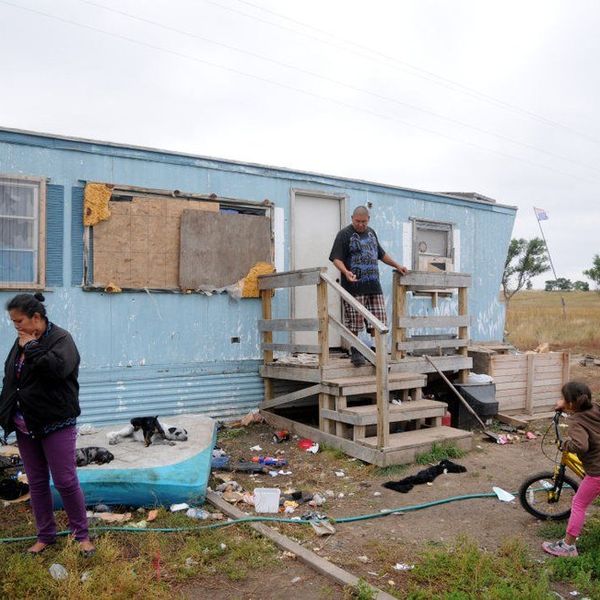
Conteh continued by explaining the question, “Who are Indigenous persons?” Because of the diversity of Indigenous people, we do not have a definition. They are those individuals who resided in a particular territory before the arrival of the settlers. Secondly, they are individuals that have self-identified themselves as Indigenous persons, people who have strong links to their territories, surrounding natural resources, and they are different from the dominant groups. Indigenous people worldwide are about 370 million people who reside in about 70 countries worldwide, they live in the USA, Canada, New Zealand, Japan, and in Africa. To distinguish by facing continuous injustice, they suffered from the consequences of historical injustice including colonization and dispossession of their lands, territories, and resources. Smoking and substance abuse are more common Indigenous persons; even suicide rates are higher among the Indigenous people.
Furthermore, he explained that Indigenous cultures are threatened with extinction. About 90% of all Indigenous languages will soon disappear, their languages are dying, and their local knowledge and beliefs are not valued and considered to be intellectual property rights. Indigenous people are denied their rights to own a land. What Indigenous persons want is to be recognized for who they are; as they are distinct groups with their own unique cultures they want to enjoy, and pass on to their children their history, cultures, traditions and morals of internal governance. They also want the government of the countries they live in to respect their properties. To let them determine for themselves their own destinies and rights to self-determination is so important. They want to be autonomous, they are not looking to secede from the government or the states, they want their children to be educated in their languages, traditions, and worship in their own ways. They want to enjoy their own rights without any discrimination of any kind, they want to be regarded by everyone as full and equal human beings, and they want to be protected from genocide, arbitrary execution, torture, and enjoy their rights to express themselves free. They want their rights to lands that they have traditionally owned, participate as equals in resolving conflicts, do not want zones of conflicts to be on their grounds, and want people to respect their lands as well as their resources.
Finally, Africans and African governments accept themselves as Indigenous because before European colonialists invaded, the people in Africa wanted to be protected and provided for. This is all they want and the matter has been taken to the UN, and they responded on September 13, 2007. Some nations voted against the Declaration, but today they have told the UN that they support what the Declaration is trying to achieve. The Declaration is the most comprehensive instrument now for dealing with the rights of Indigenous people and international protective rights of Indigenous people.
The Declaration is not legally binding. Conteh explained the elements of the Declaration which are: provision for self-determination of Indigenous people; it recognizes their rights to land, territories, and resources like water; it provides for economic, cultural and social rights of indigenous people; enjoyment of collective rights; and addresses the issue of equality and non-discrimination. The importance of the Declaration is that it addresses the issue of equality and non-discrimination. The Declaration is not a treaty, but what is needed to adopt an international agreement to elevate the rights of Indigenous persons. He said, "The African commission on human and peoples' rights is actively engaged in protecting the rights of Indigenous persons, and the rights of Indigenous persons are human rights.” Conteh ended by saying, "I want to seize this opportunity to appeal to everyone that we should include the education of our young children the topic of Indigenous persons. It is incumbent upon us that as we globalize the university curriculum, we must not forget about the rights of Indigenous persons. Their rights are human rights.” He was given a round of applause.
After his speech, Braden encouraged people to ask questions. The first person asked if USA, Canada, and New Zealand signed the convention and Conteh replied by saying, “I didn’t say convention, but declaration, and not convention that a declaration differs as a non-binding instrument, but convention is a binding document that has to be signed and ratified. The document was never signed but voted for.”
Another man said as a cultural anthropologist he would like to thank Conteh for his answer and everyone should be aware of the rights of Indigenous people. Conteh said, “Global learning is important, it has helped me in life, it has made me who I am, I like what I do, I do enjoy it, and I will never give it up; the only time I give up is when I kick the bucket, and I hope that won’t come soon.” He encouraged everyone to enjoy what they do and if they don’t enjoy it they should ask themselves how they can change it because the young ones are looking up to us.
Lastly, a lady asked him to share how he learned and gained wisdom and his reply was, "I am not going to hide it. If I have an opportunity to teach, I will even if it is in high school.”