Killer Whales are some of Earth’s most majestic, intelligent and beautiful creatures. I can understand the allure of going to see them preform for masses of people. They’re a creature so magnificent and smart that seeing them is a once in a lifetime opportunity. Only for us, though. For them, they’re just doing what the trainers have taught them to do. To humans, they are an anomaly. They’re not everyday pets. For these animals, it’s torture. Every day, they do the same things. Every day, they eat the same fish. Every day, they swim in a mediocre enclosure. Every day, they suffer. Killer Whales are not creatures that we should be keeping in a glorified fish bowl. They are not creatures we should be holding hostage from the ocean, their home. These are 10 reasons why Killer Whales should no longer be held captive by our desire to be amused.
1. For a long time, scientists have told us that Orcas live longer in enclosures. This is not true. In the ocean, male orcas can live anywhere from 60 to 70 years, 80 to 100 for females. In an enclosure, the maximum life expectancy falls to around 13 to 15 years. By keeping them in these enclosures, we are drastically cutting down their life expectancy. These creatures were made to roam the vastness of the ocean, not the 80 foot deep pool we’ve given them.
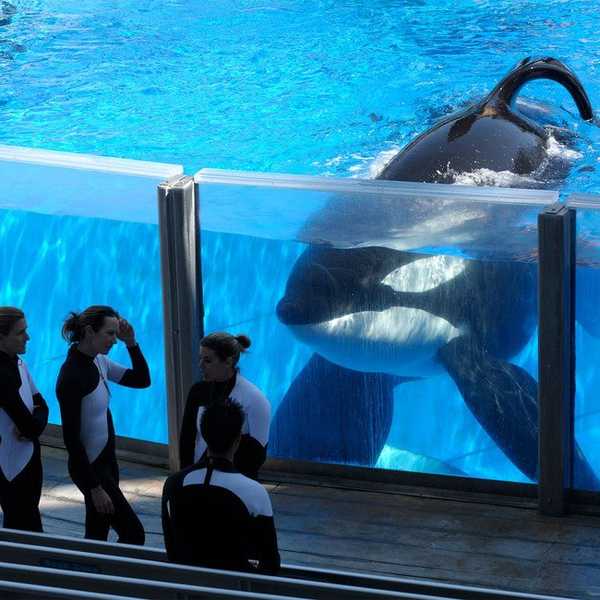
2. There is not a single instance in all of recorded history of violence between orca and man in the wild. Not a single whale has harmed or hurt a man in its natural habitat. Enclosures are a different story. There have been 157 injuries/deaths to humans because of killer whales since 1967. One of the most famous Orcas, Tilikum, has been a leader in injuries to humans. He was captured from the ocean when he was very small. He was abused by several different owners. He often stayed in a small pen all by himself, because the females would batter him and severely injure him. There are days when he didn’t come out of a small, dark pool. One night, a drunken man snuck into SeaWorld, got naked, and jumped into Tilly’s enclosure. Needless to say, Tilikum ravaged him. He tore several of his limbs off and ate his genitalia. Because of his massive size, SeaWorld bred him in captivity. If you breed an aggressive whale, you’re going to get a bunch of new aggressive whales. Because we wanted to be entertained, we demolished the life of a whale. We made him into something to be feared. The fault is not Tilikum’s, the fault is ours.
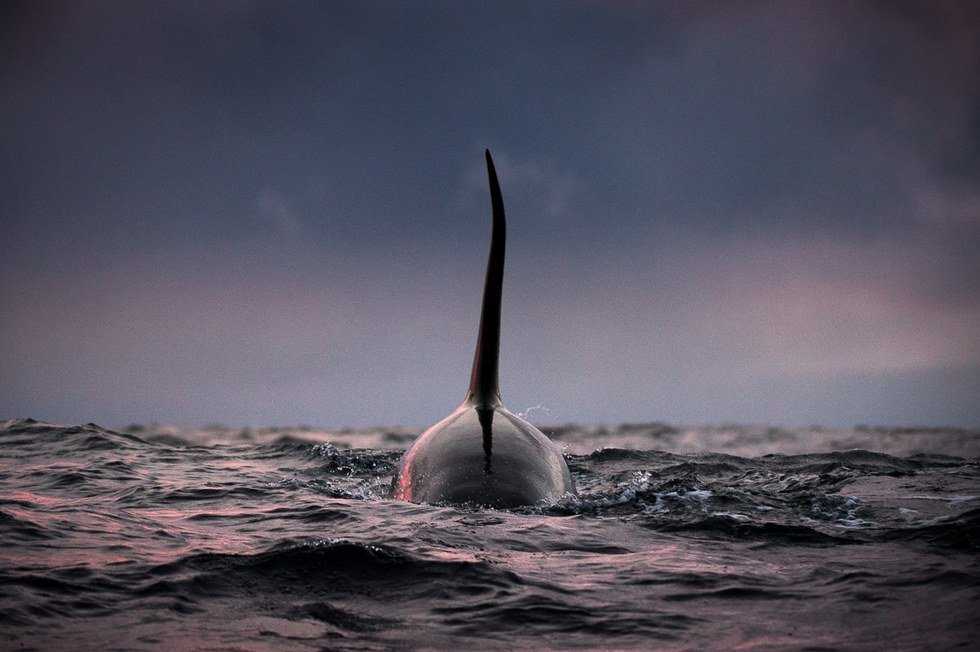
3. All captive adult Killer Whales in captivity have collapsed dorsal fins. The fins collapse because they don’t have near enough water to support the fin. Male dorsal fins can reach 6 feet in length, and without a sufficient amount of pressure, it will collapse. The fin is not made of bone, therefore it is essential that the whale have enough space and speed to uphold the needed pressure to keep the fin standing. Scientists have said that dorsal fin collapse is normal in the wild, when really, less than 1% of killer whales in the wild have fin collapse. Fin collapse is a sign of an unhealthy, struggling whale.
4. SeaWorld and its affiliates do not give Killer Whales the space to be active and healthy. In the wild, they can swim up to one hundred miles a day. They would have to swim over 1200 laps a day to equal the amount of swimming they would do normally. These tanks are the equivalent of a swimming pool for us. We’re forcing these creatures to live in an extremely confined space, and it’s absolutely disgusting.
5. Fighting between Killer Whales in nearly inevitable in captivity. Most of these whales aren’t from the same pod. They aren’t the same species. In the wild, these orcas form very intricate familial bonds, similar to that of humans, if not stronger. These bonds are essential for a happy, normal life. These whales need the attention and the care they receive from their pod. In the wild, fighting rarely occurs. When they do, they have space to flee. In captivity, they have nowhere to hide. They can’t escape. They’re forced to battle it out, leading to severe injury and death.
6. Killer Whales live off of an unhealthy diet of dead fish and gelatin. Gelatin is not a natural substance to these animals. The Gelatin is used to attempt to hydrate the animal, because it cannot get water from the fish it would naturally hunt in the ocean.
7. Due to anxiety and stress, the whales chew at the metal bars and some have been known to purposely ram their heads into the concrete walls. This results in the loss of teeth and very invasive dental surgery, without any anesthesia, I might add. There are no walls in the ocean, and tooth loss is not a natural thing for these animals.
8. Family is extremely important to orcas. When they are taken from their families, they are placed in a tank with other whales from other parts of the world. These whales don’t sing the same songs. They don’t use the same language. These animals are constantly being shipped to other parks for performances and breeding. Some calves never leave their mothers. Pods can reach numbers as high as twenty, and as little as two or three.
9. The removal process induces extreme stress. Hundreds of people with loads of money come into the ocean with massive nets and excessive amounts of force. The young whales are separated from their family by way of herding. There have been instances where the young whales have died in the process, rendering the removal unnecessary. In captivity when the orcas are taken from the mother, mother and child both sing the saddest of songs. As shown in the riveting documentary, Blackfish, a mother whale is forced away from her baby and all she did for a long time was screech and search for her stolen child. That scene broke my heart.
10. The ocean offers an immense variety of other sea life. There is always something new to do. There is always new food to eat. The whales have constant interaction with other life forms. They need the interaction to have a healthy mind. In captivity, the pens lack excitement. They’re exceptionally dull. Enclosures have to be treated often to prevent the animals from getting bacterial infections, which can be life threatening. Even with treatment, which would kill smaller fish, the bacteria still manages to take the lives of these whales.
These animals were not created to do tricks for us. These animals were not created specifically to entertain human kind. We keep them in small spaces, we eviscerate years of their lives and we demolish any sense of originality these animals may have had. We steal their entire lives happiness, just so we can spend 30 minutes of our lives entertained. Shame on us.
Sources: https://awionline.org/content/wild-vs-captivity
http://www.seaworldofhurt.com/features/8-reasons-orcas-dont-belong-seaworld/
Blackfish