

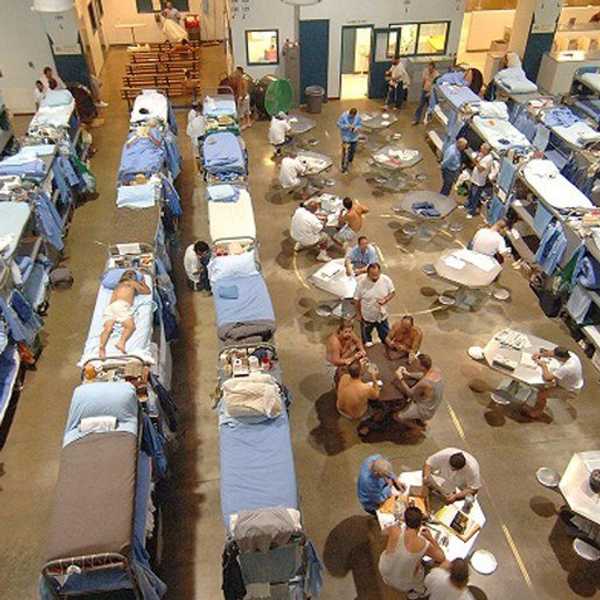
According to VERA, the institute of justice, in the year 2010 alone, taxpayers spent a total cost of 39 billion U.S. dollars on prisons, jails, and correctional facilities, “5.4 billion more than what their corrections budgets reflected.” 335 million of those tax dollars go to the healthcare of prisoners across the nation. Another fiscal fun fact is “the average annual taxpayer cost… [is] $31,286 per inmate.” There are over two million prisoners in state prisons and facilities alone, and over 200,000 prisoners in federal prisons across the country. In the year 2013, Michigan had over 60,000 prisoners, costing Michigan taxpayers almost two million dollars per year.
The questions are, what kinds of people are taxpayers supporting in our prisons and jails? Is there another way to handle the crimes that these people have committed? According to the Department of Justice Statistics in 2012, only 8 percent of inmates were in prison for dangerous and violent crimes, whereas 48 percent, almost half of the nation’s federal prison population, are being held on drug-related charges. In 2014, the number of drug-related offenders rose to being 50 percent of the prison population.
People have begun to wonder if incarceration really is the best way to handle these offenders. I recently watched a documentary on women in prison, and one woman really stood out to me. She was being held for 13 years on a drug-related charge. She was a loving wife and mother of three young children when she suffered from a severe car accident which left her reliant on painkillers, for which she soon grew a tolerance. This woman, a victim of a tragic car accident, then turned to heroin for relief from severe back pain. Because of her addiction to heroin she was forced to serve 13 years in a state penitentiary. By the time of her release, taxpayers will have spent more than $100,000 on her time served. American prisons are filled with men and women of similar background and stories. Are we to view these people as criminals, or should we view their actions as sad side effects of addiction?
Not only do we imprison people for long periods of time based on small drug charges, but by doing so, we increase the rate of re-offending by the way our prisons are run. The New York Times recently wrote an article about the many differences between American and German and Dutch prisons. According to the article, “Germany and the Netherlands rely heavily on alternatives to prison—including fines, probation and other community-service programs—and they impose much shorter sentences when there is no alternative to incarceration.” While European prison systems would not work as well when it comes to violent offenders, they use these tactics to work with drug-related offenders.
Some states in the U.S. are trying to work these programs into their state and rely less on state prisons. “Georgia has increased its investment in specialized drug and mental health courts... While other states like Colorado, Mississippi and Maine are working towards reforming their state’s solitary confinement practices.” Not only do European prisons aim toward creating inmates who will be able to be strong participants in society after they are released, they also spend 50 percent less tax dollars than Americans do on their prisons and other facilities used in their countries each year. This is in part because they incarcerate prisoners for much shorter periods of time. An American inmate on average is in jail for three years at a time, whereas in Europe, they try to keep prisoners for much shorter sentences, around a 12 month time period.
If America wants to truly reform their justice systems and help create productive members of society within jails, prisons, and other facilities, it might be time to start looking toward Europe for some tips on how we can better improve our justice system.

















