

Six months. In a county jail. This is the sentencing that 20-year-old Brock Allen Turner received after being found guilty of three counts of sexual assault in the rape of a woman at Stanford University. But with "good behavior" he could possibly serve as little as three months in jail. As if six months wasn't a light enough sentencing, he now has the chance to get off the hook even easier as long as he has good behavior. Last time I checked, his actions proved that good behavior was not his forte, even in the free world. So why would Judge Persky offer him a deal like this? Oh yes, because of his privilege, outstanding achievements as a student athlete, and because he was afraid of what a longer sentencing in a state prison might do to Turner. And as much as this blatant unfairness infuriates me, the problem with special treatment towards athletes spans far beyond just this case.
While I commend Stanford University for stripping Turner of any and all affiliations with their institution and using their power appropriately by showing proper disciplinary actions, our justice system has failed to follow in suit. And unfortunately, this has become the exception and not the rule. Just because a someone shows discipline, perseverance, leadership, good work ethic, etc. in a physically demanding activity does not mean they exhibit those characteristics in their daily life as well.
I come from a small, southern town where our local high school's athletic achievements are something our entire town takes pride in, and while most of our athletes were overall good kids who stayed out of trouble and tried to set a good example, I would be lying if I said that there weren't times that the rules weren't bent for a certain few. I specifically remember a situation where one of our student-athletes did something that any non-student athlete would've received out of school suspension for, or a couple of days of in school suspension at the very least. But since this particular student was "absolutely crucial" to an athletic event the next day, they just got a firm talking to. After all, exceeding in the next day's event and bringing home that win was much more important, right? If something is a poor reflection of us, we can just sweep it under the rug in order to save the attention for our good deeds, right?
You see, this type of preferential treatment isn't just happening in our legal system and universities. It isn't even limited to the high school level. This obvious favoritism and leniency with athletes has become an issue in our culture, but when our own justice system, which sets a standard for others, decides to turn a blind eye as well, that is a problem. When our society says that it strives for equal treatment for all, I guess that only refers to rewards and not punishment.
Though I'm a firm believer in second chances, you can't expect anyone to genuinely understand the severity of their actions with just a slap on the wrist. And while Brock Turner's father thinks this whole ordeal is a "hefty price to pay for 20 minutes of action", there are people in prison serving out much lengthier sentences for crimes that are pale in comparison to his son's. You wonder why our generation lacks respect, manners, and common decency? This is it, folks. Because we've stopped enforcing the idea that wrong is wrong and replaced it with the idea that, yes, wrong is wrong, but it's not really that wrong if we focus more on their spectacular achievements and convince everyone that, deep down, they didn't have bad intentions.
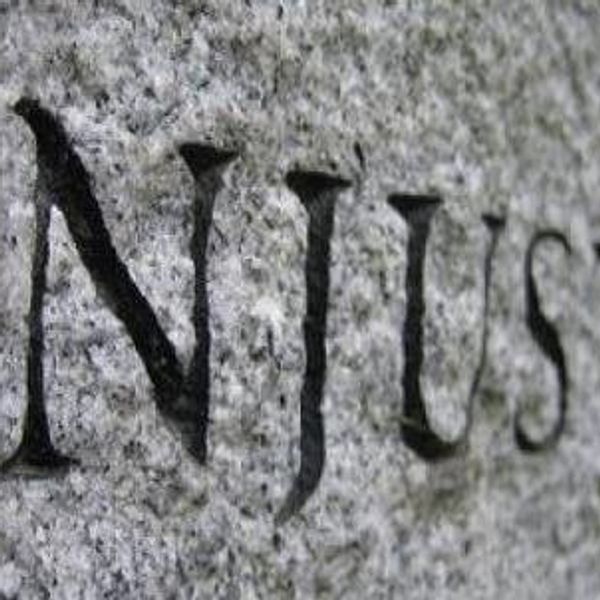
However, justice is not about loopholes or looking at someone's record rather than the actions that put them in their predicament. Justice is not exempt from those who feel a sense of entitlement. Justice is about looking at evidence and the cold, hard truth without excuses or denial. Justice is something we have forgotten the meaning of.






 man running in forestPhoto by