
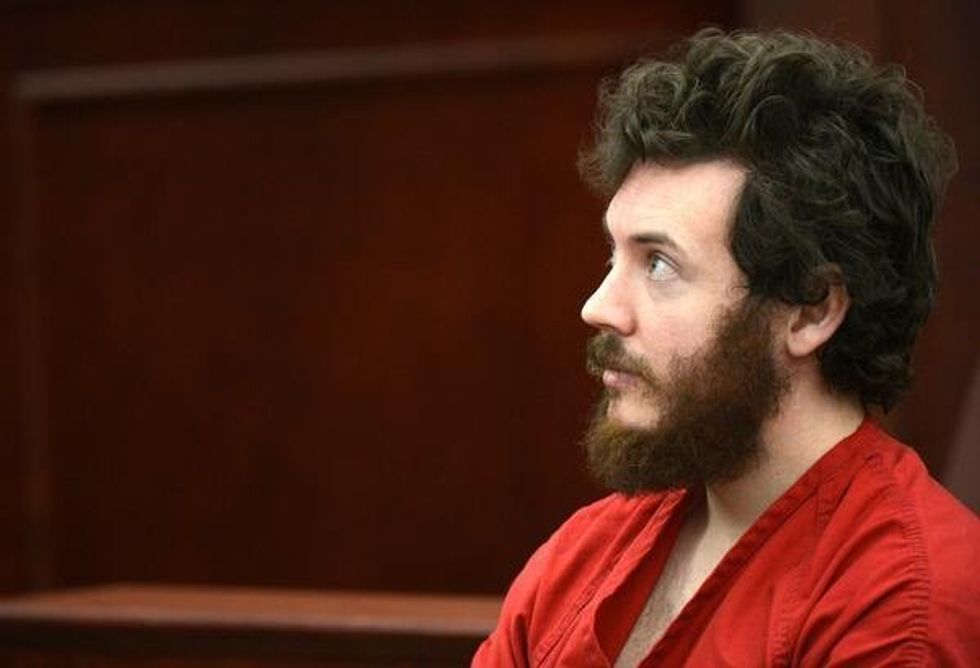
James Holmes, who killed twelve and injured seventy others, in a shooting at a movie theater in Aurora, Colorado, has been sentenced to life in prison with no chance of parole after being found sane at the time of the shooting: guilty of over one hundred and fifty charges, including the premeditated murder of twelve people.
The jury consisted of nine women and three men. They were unable to reach the unanimous agreement needed for the death sentence, with one juror refusing to sentence Holmes to death. The disagreement stretched into the twelve counts of first degree murder and twelve counts of murder with extreme indifference. He was tried for first degree murder, since plans for the shooting made months prior to the shooting were found in Holmes’ possessions. Though Holmes was found sane at the time of the murders, and able to ‘tell right from wrong’, he has been diagnosed with schizophrenia by twenty different psychologists.
Holmes was reported to have been expressing homicidal thoughts to his psychiatrist, Dr. Fenton, enough to prompt her to alert his mother, though his mother denies ever being told about this. She claims that, had she knows of these thoughts, she would have gotten him more help. Shortly after Dr. Fenton had to break the patient confidentially contract, his insurance stopped covering his visits. Though Fenton offered to continue to see him free of charge, he refused. Before the shooting, he mailed his notebook, containing his plans, to Dr. Fenton, though she never received it. It was found undelivered in the mailroom. Additionally, less than an hour prior to the murders, Holmes had called a helpline. The call lasted nine seconds before he hung up.
The trial took place over sixty-four days and saw 2,692 pieces of evidence, as well as, 302 witnesses. The defense never denied the murders, instead focusing on Holmes’ mental state, and pleading that the death of a mentally ill man was not just. Additionally, the judge reminded the jury several times to come to a decision based on the facts presented about Holmes, rather than any emotion felt towards the victims.
Trying to keep the sentence based on fact and not emotion, the defense attempted to limit the testimony of one of the victims, a woman whose six-year old daughter was killed, and who was shot in such a way that led to both paralysis and the miscarriage of her other child. Several other victims have stories just as awful- three of those that died did so standing in front of their girlfriends, a single mother, and two servicemen. All these people were victims of bullets; Holmes had fired almost blindly into the crowd. He had purchased over three thousands rounds of ammunition in the month leading up to the shooting, which he used in injuring another seventy people.
One of the main goals of the trial was to bring light to the moral implications of executing a mentally-ill man, especially one who has commit a crime as horrific as this one.
The verdict was met with mixed opinions- some of the family and friends of the victims felt that Holmes should have been killed, while others were just happy that they finally got a sense of justice.