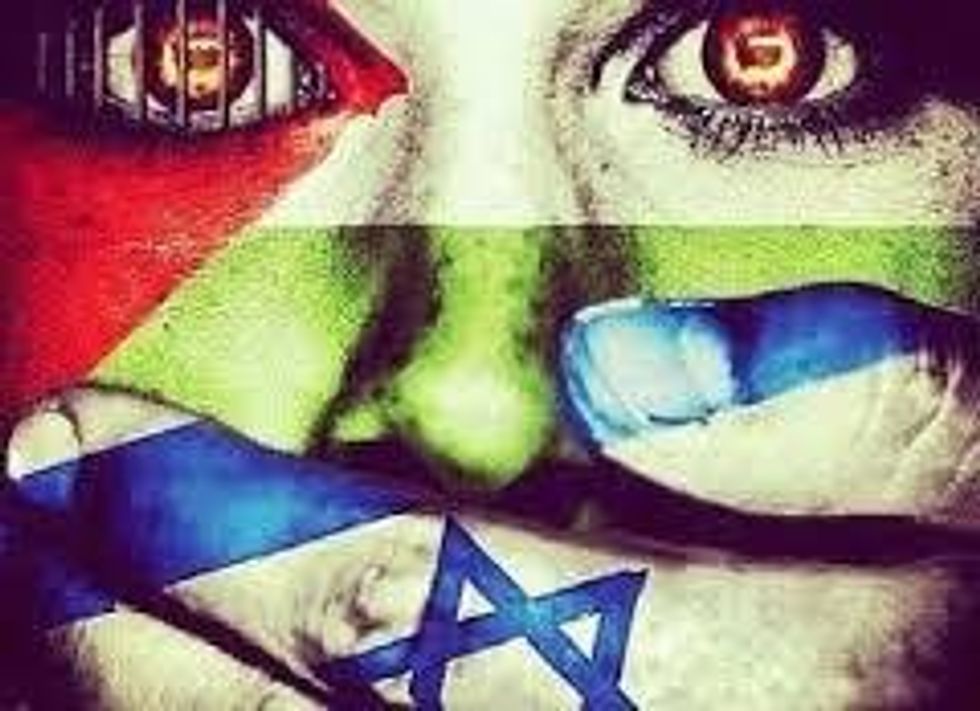
Before I begin, I would like to say that I respect the views and opinions of all those who feel passionately about the conflict between the Palestinians and the Israelis. This article is not to favor one side or the other but attempts to understand both sides and their rationale for their actions. No one side is the right side.
The aim of this piece is to look at the past and present nature of the conflict in holistic terms and to acknowledge the trends of both groups as well as the international community.
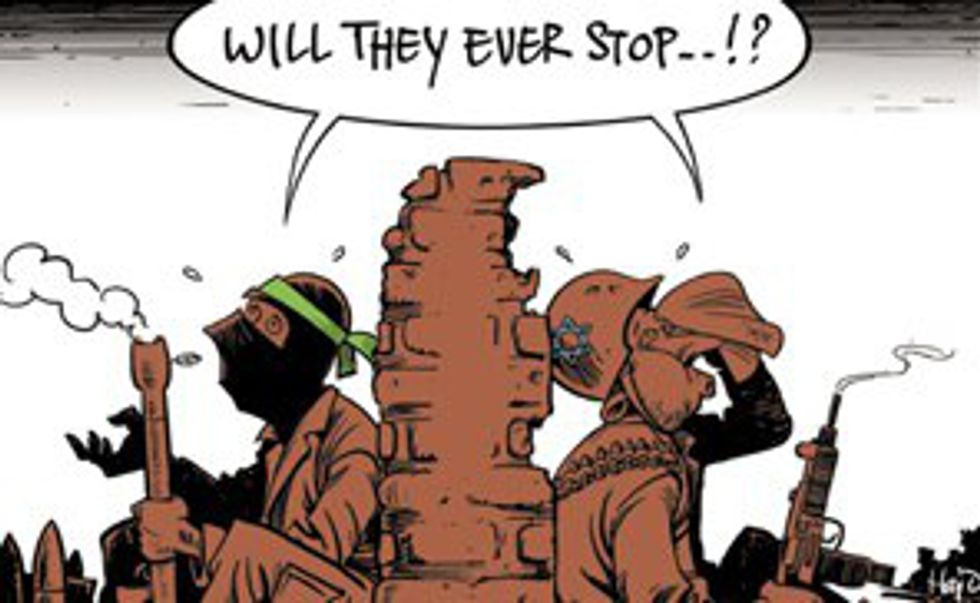
Just last week, reports by the major news networks reported an increase in what seems to be targeted stabbings and violent crimes by Palestinian youth against Israelis in Jerusalem. It’s the rekindling of a cyclical process; one side agitates the other and an all out offensive begins against both sides. Missiles are launched and civilians killed, then a cease-fire comes into effect. It has primarily served as the cycle since the initial war between Israel and the Arab states in 1948.
Since 1948, the conflict ridden region of the world has been on and off again with clashes between neighbors, resulting in little of the way of a permanent peace.
The real reason why these conflicts continue is the perpetual question of land ownership. The land was already inhabited by Palestinians, and the Arabs were promised liberation from the Ottoman Turks if they rose up against their oppressors on the side of the Allies.
However, that promise wasn’t quite lived up to. Palestine, after the Sykes-Picot Agreement and the Balfour Declaration made shortly before the end of the First World War, did not promise the Middle East to the peoples. Due to the Imperialistic ambitions of both nations to control oil and resources, the Balfour Declaration was an agreement promising the territory that makes up modern day Israel to Jewish refugees from mainland Europe as a part of the Zionist movement.
The influx of Jewish immigrants made for a competition of land and resources between the two groups. As more immigrants came, the residing Palestinians felt threatened and tried to hold onto their land and territory.
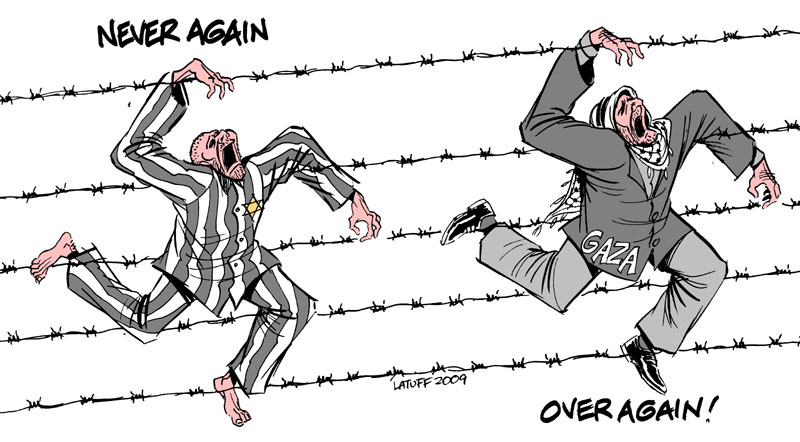
When the state of Israel was proclaimed, the surrounding Arab nations resorted to violence. The Palestinians, for the most part, resorted to violence as well, but not for same reasons as the outside Arab states. They resorted to violence because, for many, it was their only resort since no formal state or organization was able to represent them on the international stage.
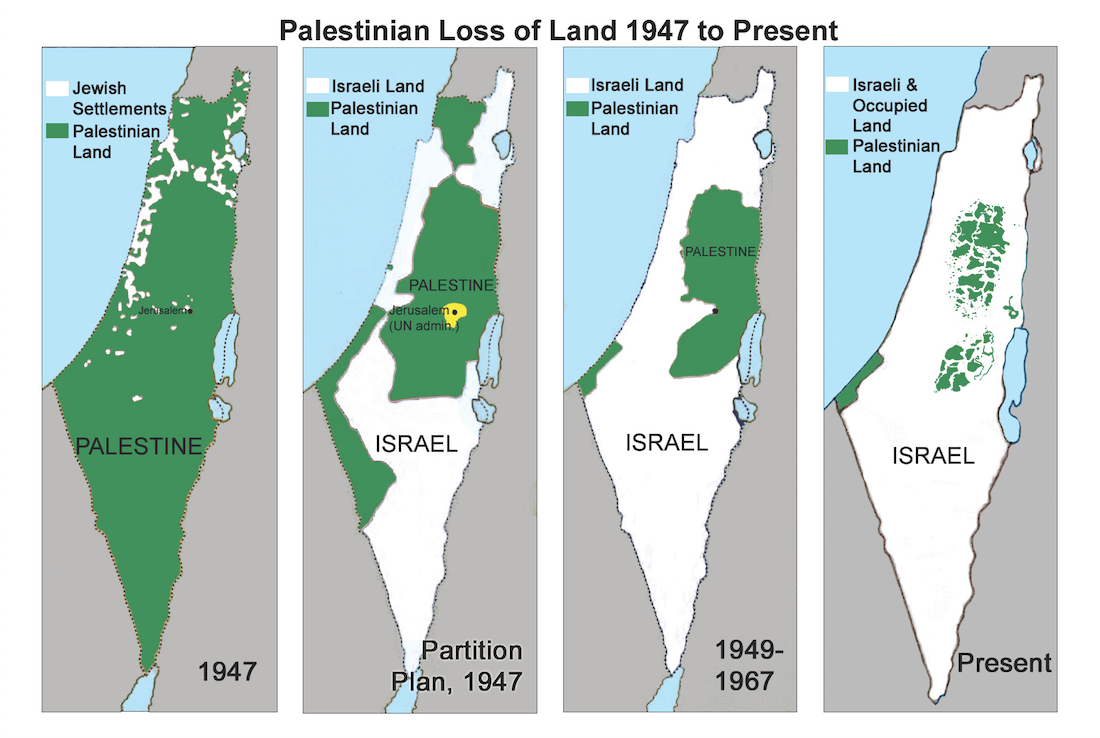
Thus, it is appropriate to recognize that there is no one side that is the “good guy” or the “bad guy.” An outside observer from the west must set prejudice aside and read the history to understand the conflict. Both groups are victims of the condition of Neocolonialism from the last century.
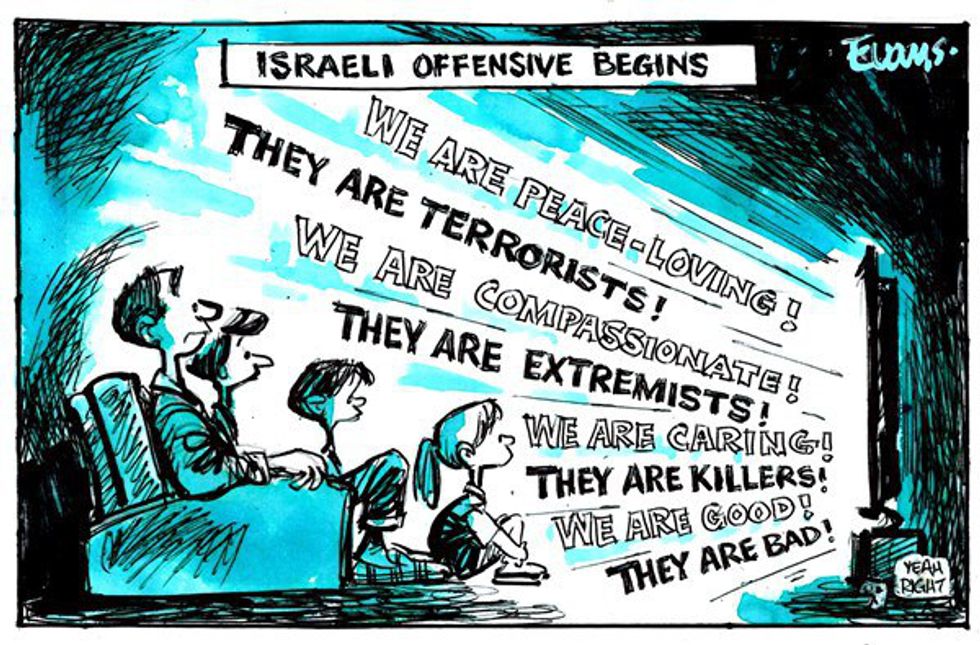
As the decades roll on, the violence continues. The news shows the Palestinian youth stabbing Israelis in the heart of Jerusalem. One has to ask, “Could this violent response be the result of some action from either Israel or local group or state prompting the flames of violence?”
The answer could be similar to the Palestinian response in 1948; the lands of the West Bank (which were set aside for the Palestinian people as apart of a UN resolution in 1947) are supposed to be semi-sovereign territory.

In a recent documentary titled “Five Broken Cameras,” an independent amateur videographer captures the struggle his family and community faces when Israelis push into the lands of Palestinians for settlement. To maintain their self-determination, the villagers peacefully protest until violence breaks out between the two forces.
Some argue that the settlement of the West Bank breaks the international agreement, yet the major news networks commonly leave this out when spikes of violence occur. They are quick to blame the Palestinians as a whole as the ones who agitate and cause the violence. Yet, in the video clips captured in the documentary, it is clear to see Israeli soldiers armed during the peaceful protests.
Yet Israel, the underdog in a perilous situation surrounded on all sides by Arab states, has to use sheer force in order to defend its position and self-integrity. That much is to be understood for the state’s behavior to be on high defense.
The truth is that the modern state of Israel can’t just disappear to the dismay of it’s Arab states neighbors. What we must acknowledge is that the two groups who inhabit the same land are there to stay. It is this commonly accepted fact that leads people to believe the two state solution is the best solution so that both Israelis and Palestinians (once achieving formal statehood for their own) can be recognized as members of their region and the international community as actors attempting to make peace.

The conflict between Palestinians and Israelis is unfortunately manipulated and polarized by the West. American and European powers try to defend Israel by adding their prejudices and their interests, not even considering the other side. The climate between the American government and the Israeli government, by means of financial and military support, helps prop up the Israeli government. If the United States is serious about ending the conflict, then the United States should relinquish support to a government that promotes occupation of Palestinian lands and fails to acknowledge the rights of Palestinians residing in their borders. If the United States is serious in pursuing peace, then more weapons is not the answer.

As we watch the news closely to see the development of violence, we must utilize the past and an non-biased perspective to hopefully one day see the development of peace between these two neighbors. Will this series of violence result in the Third Intifada? Will these attacks prompt a war such as last summer’s missile campaign between Gaza and the Israel? One can only watch, wait, and see.

Maybe one day peace will become a reality.