
In the new, progressive business world of today, ethics have taken center stage. Thus, as a result, the world of commerce has changed for the better in the last few years.
To ensure your business is hip and with it in the ethics-driven world of modern trade, it’s necessary to examine your business’ operating methods. So, in this 5th and final installment in my five-part series involving business ethics, let’s discuss the matter of monopolization.
To begin, what is a monopoly? Merriam-Webster’s defines the business practice as, “complete control of the entire supply of goods or of a service in a certain area or market.” If you’ve ever played the game ‘Monopoly,’ you’ll understand the main goal of monopolization: buy up everything possible, thus blocking out competitors from the marketplace. Although, that’s just a board game – something you play for fun with friends and family – monopolization used to be serious stuff.
During the Gilded Age in the late 19th century, monopolies were a commercial reality. Some of the wealthiest people in history -- Andrew Carnegie and John D. Rockefeller, whose net worth when adjusted for inflation were $372 billion and $374 billion, respectively -- reigned virtually unfettered by regulations and taxes. In comparison, the richest man in the world today is Bill Gates, whose fortune is $76.3 billion. As you can tell from these monumental figures alone, Carnegie and Rockefeller were magnates – in the truest sense of the word – unique in history.
How’d they accumulate such massive quantities of wealth, you might ask? The answer is quite simple, especially when put in the context of this article: monopolization. Granted, other factors contributed to their stockpiling of enormous fortunes – as I mentioned earlier, with little regulations and taxes, they were able to amass wealth quite easily. But, monopolization helped just as much, if not more.
Rather than competing in the free market with other similar businesses, where the best-priced products are most successful, tycoons such as Carnegie and Rockefeller bought up their competition. Thus, no other real choices forced consumers to purchase the products of monopolized industries. Knowing their purchasers have no options, owners of monopolized industries are able to hike up prices to whatever level they so choose.
With no competition, businesses had no need to improve productivity. Consequently, prices soar even higher. So, in a sense, these industries possess an almost private tax, which they impose upon their consumers.
How is this practice unethical? Competition is the rub. By preventing competition, a monopoly has an unfair advantage in commerce. As progressively more firms are bought out by the monopolizing company, fewer and fewer new businesses are eager to enter the market place. So, eventually, not only has all preexisting competition been eliminated, but no potential competition makes an effort to compete.
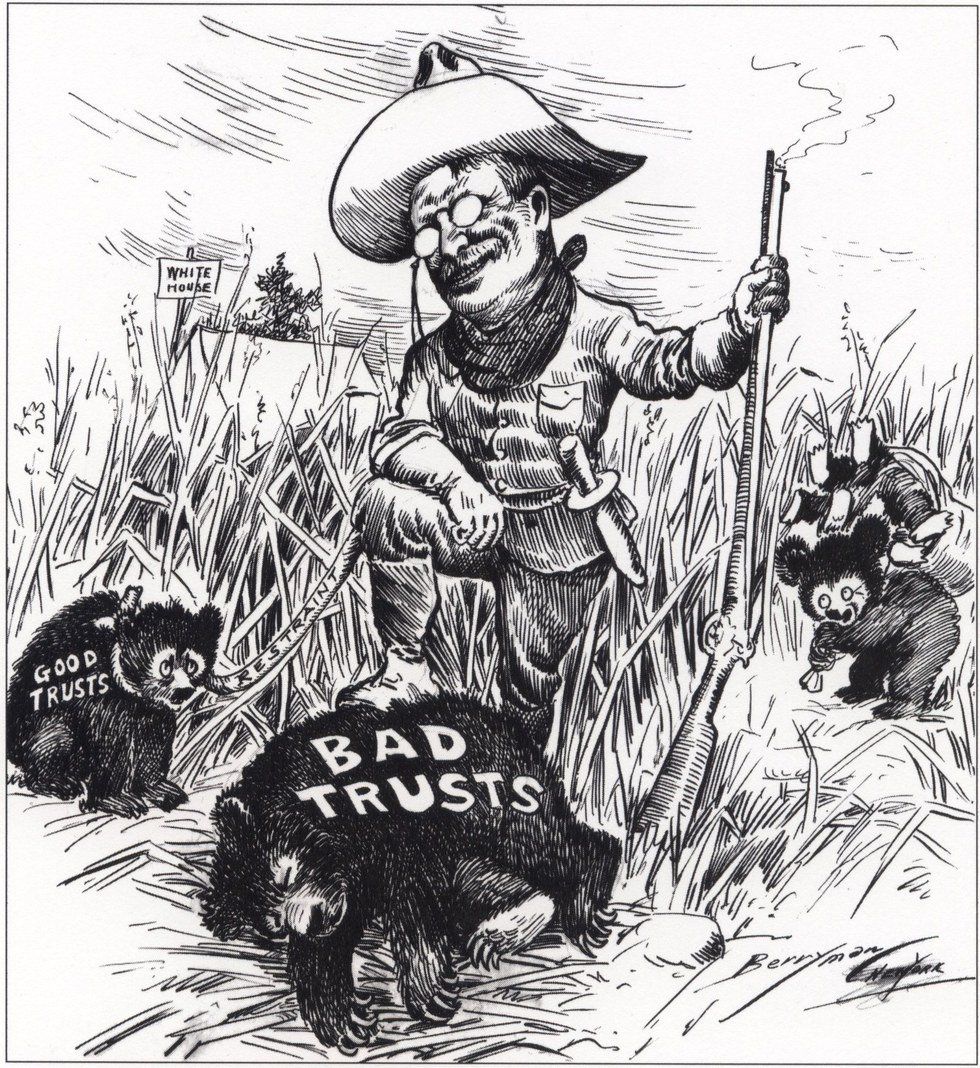
For these reasons, the US government made several efforts to rid the economy of monopolies, beginning in 1890. Through the Sherman Antitrust Act, the federal government made the first step toward monopoly-breaking, banning business endeavors it regarded as “anti-competition.” Since then, the great monopolies of the Gilded Age – such as Carnegie’s US Steel and Rockefeller’s Standard Oil – have been eliminated from the marketplace. Due to practicality and negotiation with the US government, American Telegraph & Telephone (AT&T) existed as a monopoly until the 1980's. But, ultimately, even this dominating communications firm was terminated from the market place.
Today, monopolies are almost a business practice of the past. However, the economy-wide fear of monopolization keeps the lights on at government agencies like the Federal Trade Commission. To be put short, it’s quite frowned upon.
So, if your business operates as a monopoly, you’re just not business-ing correctly. Be fair; although you desire success, so does the other guy! If we were all to be fair to one another, the world would be a much better place.
Fairness is really the point of modern business ethics. That’s one of the main reasons the norms of business practices have changed so drastically over the last century. Whether it’s your labor force or your dealings with other companies, if you have fairness on your mind, you can succeed in today’s ethics-driven world.