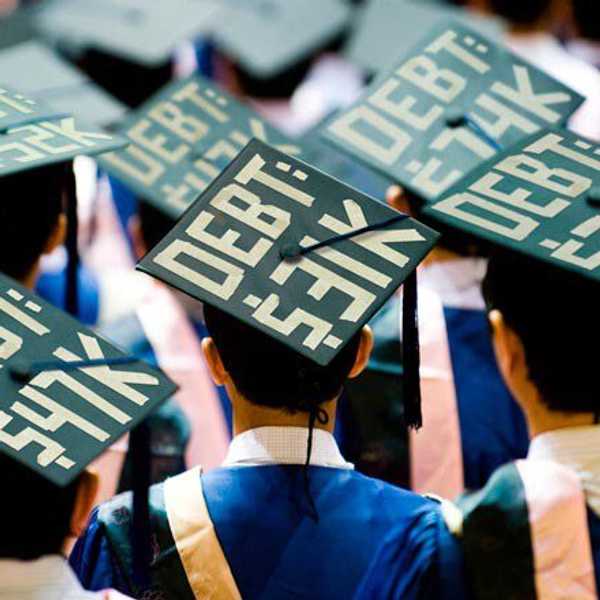
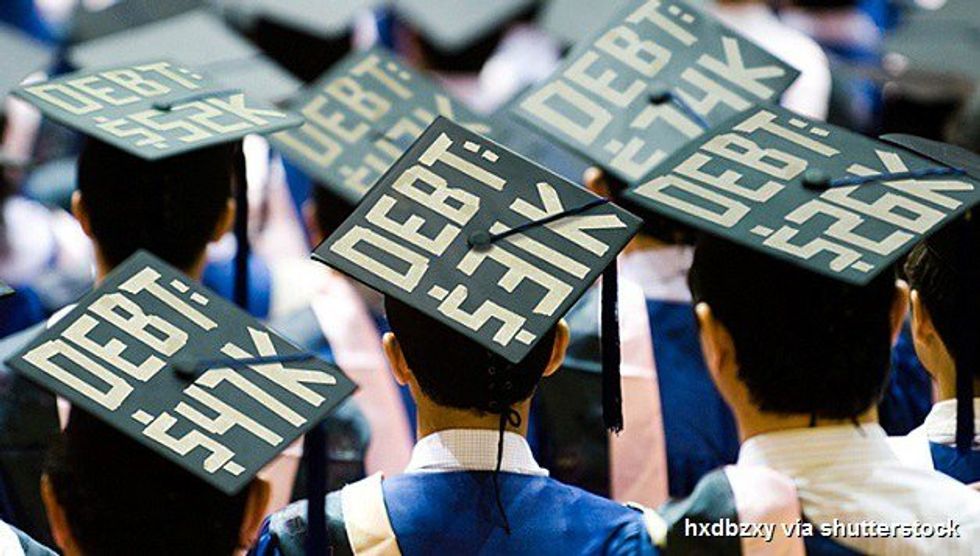
The United States is known as the Land of the Free, but in a capitalist society, there is little which comes our way that is free. One of the first major decisions young adults make is choosing if they want to go to college, and then, where and how they will pay for their higher education. In the coming presidential election, the cost of higher education is a major point of contention with young voters.
Bernie Sanders is the only candidate running who has a "free tuition at public colleges" platform at the forefront of his campaign. While the likelihood of this happening should Sanders be elected president is slim, it speaks to the values and concerns of young adults that Sanders is seeing such support from 18-29-year-old voters – the age demographic who have consistently had the lowest voter turnouts in every presidential election since 1962.
Students feel that college has become a debt sentence, and rightfully so. Nationwide, student debt has tripled over the past decade to $1.2 trillion, and it grows an estimated $2,726 every second. With the promise of an average $29,000 in student loans hanging over the heads of the 70 percent of students who will graduate with debt, and with the price of college growing faster than the price of medical care, there is an underlying question Millenials should ask themselves: is college worth the investment?
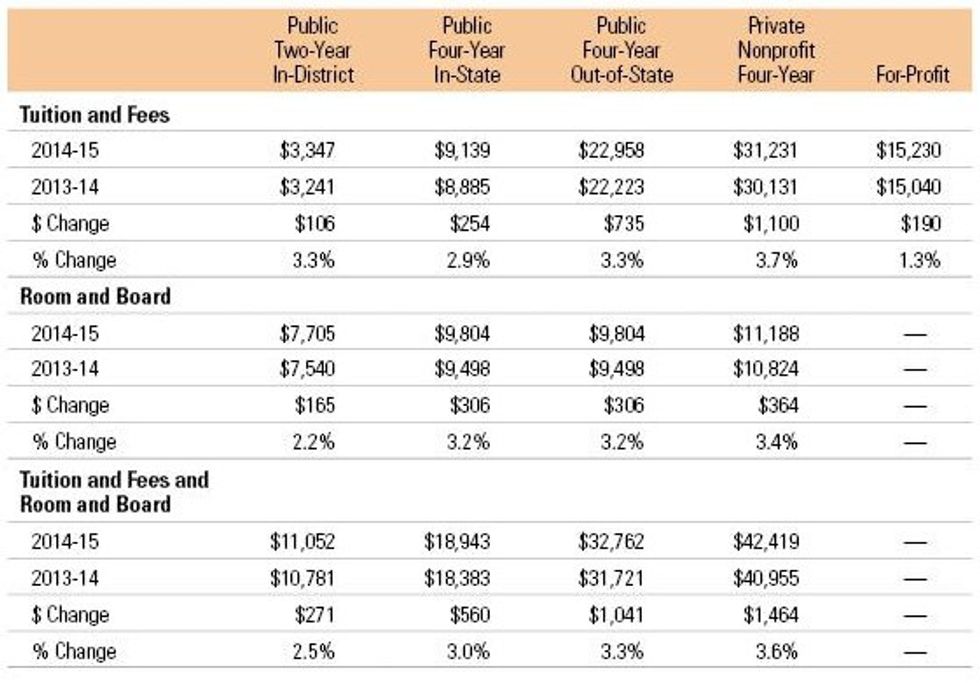
In short, yes, college is still worth the investment. In the course of a person's work life (somewhere around 50 years), if their college degree costs them around $140,000, then if this person makes just $175,000 more than they would have without their college degree, then their college degree has been a good investment. (This figure calculates college costs of $100k, $60k in loans, $20k in interest on those loans, and $20k in inflation.) So, if over the course of this 50 years, if a college degree earns you $1.75 more than you would have made without it, then the degree is worthwhile. For more on this breakdown, check out John Green's video "Is College Worth It?" here.
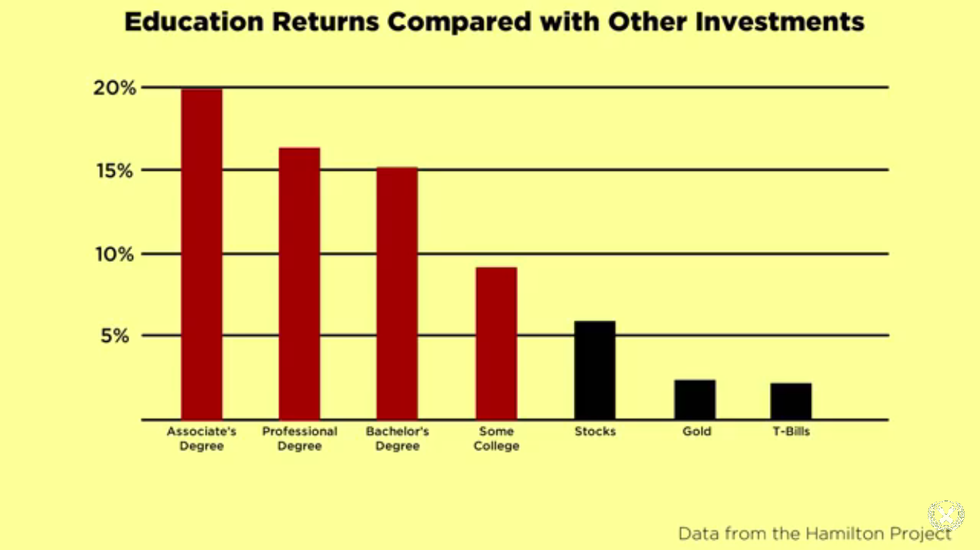
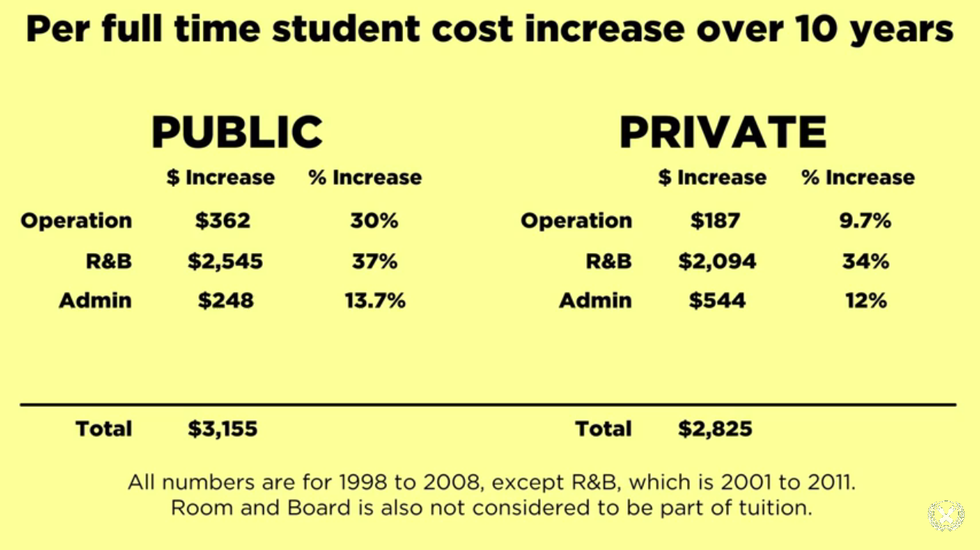
Why is college so expensive? This question is more complicated. The cost of academic instruction is the biggest category of spending for most colleges, but as colleges with relatively similar prices compete with each other for students, these institutions spend more in outlets like student services. Essentially, colleges are trying to sell themselves to students and recreation centers, amazing dining halls, or celebrity guest speakers are the best way for the institutions to do this. At most schools, the average non-academic employee to student ratio is 1:10. However, even with the cost of college at the highest it's ever been (and rising), it remains a good deal, because money spent on a degree yields a higher return in the stock market. For more on why college is so expensive, check out Hank Green's video "Why is College So Expensive?" here.
As student debt soars along with college costs, it is natural for students to wonder if the investment is worthwhile. Though this is a point of contention our government should address, and it is a point of contention our generation should consider when casting their vote, at this moment students can rest assured that their degree is worth the investment.