Kenny* could not see the car hurtling down on him in the rain until it was too late. By the time it clipped his handlebars he was already half way off the road, and the pothole that caught his front tire ended his cycling career forever.
Almost two years later, a busted knee that clicks while he walks is not the only injury Kenny has endured due to the bike delivery service. When he first started working bike delivery out of high school, he broke his hand after getting clipped by a car in Williamsburg. It was the same situation: driving rain, low visibility, and a ten dollar order in his hands.
Kenny's busted hand. He has that injury for life.
 Kenny's busted hand. He has that injury for life.
There was no safety equipment provided before the accident, and no compensation afterward. When I caught up with Kenny at a small restaurant in Park Slope, an area that we used to ride in together, he recalled,“I never got any [safety equipment] from a company. I got a bag from Uber, but that’s about it. [One restaurant] would give you a raincoat at times, but there was never any helmets or vests, or 3M [reflective] tape.”
After an injury, there was no sympathy from the staffing agency. Working on low wages, and sometimes subsisting entirely off tips, riders are forced to either work through an injury or go without pay. Sometimes the work irritates a fresh wound and makes it worse. The only thing employers seem to care about is whether they are filling their shifts.
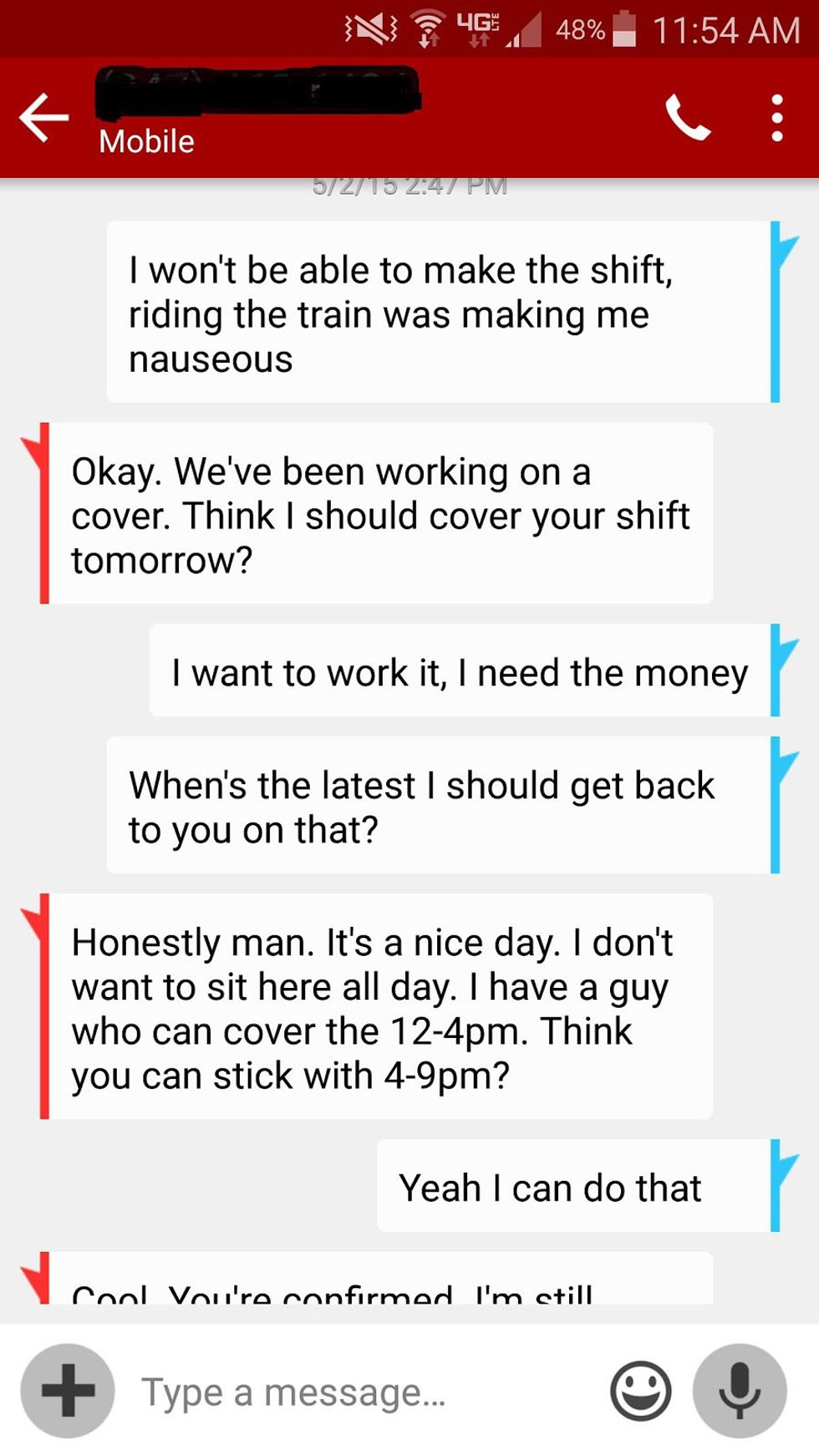
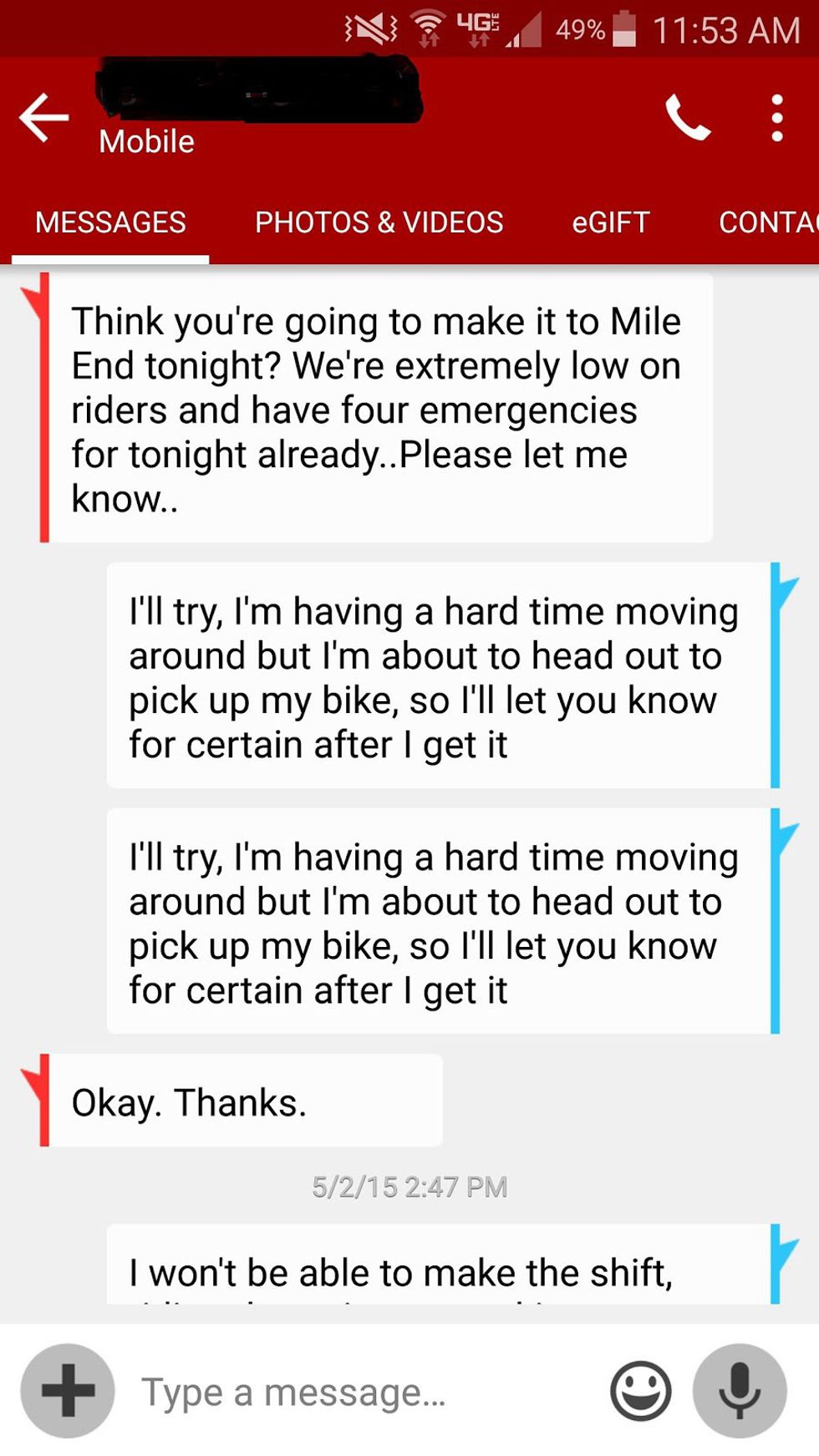
One rider's conversation with dispatch after falling ill on shift.
John, a rider who got put on probation because of a knee injury on the Williamsburg bridge that took him out for a few weeks, explains, “they [employers] never cared. They never followed up to see if I was all right, they never asked if I was okay. They are all about the money, they don’t care about you. That is why I drifted away, they just want you to fill the shift."
"‘Oh you go into an accident,’" he says, mimicking the dispatcher, "‘and you are not going to make it to your shift? [expletive]... now I need to get a new rider. Thanks.’They don’t care if you are okay.”
What happened to Kenny and John is happening to many young and at-risk groups in New York City. They apply and get one of the few low-skill jobs available and are labeled as independent contractors or sub-contractors, leaving the employer’s hands clean from responsibilities like health insurance and minimum wage. Left with massive scarring or permanent damage, they are forced to quickly find work in another field with a set of skills that are not transferrable.
John hopes to leave the bike delivery industry and is working on getting into the Fire Department. When his injury left him destitute and without an income, he knew he had to find something else. He harbors a private fear that the nagging pain in his knee will hinder his ability to get jobs later in life.
The way companies skirt insurance and compensation is by labeling their workers as independent contractors. It is an illegal scheme that has started cropping up more and more after the Great Recession and is being called the ‘gig’ economy.
The staffing agency that John works for makes $10 every time they staff a worker and has 150 to 200 companies with shifts to fill. He got these numbers both from the variance of jobs he was assigned to, and from the owners of some of the companies he worked for. If a company needs two or three riders, a number that can sometimes go to six or even eight in a given shift, and has multiple shifts a day, the staffing agency can rake in over $3,000 a day while workers are lucky if they come home with even $60 in a seven-hour shift.
.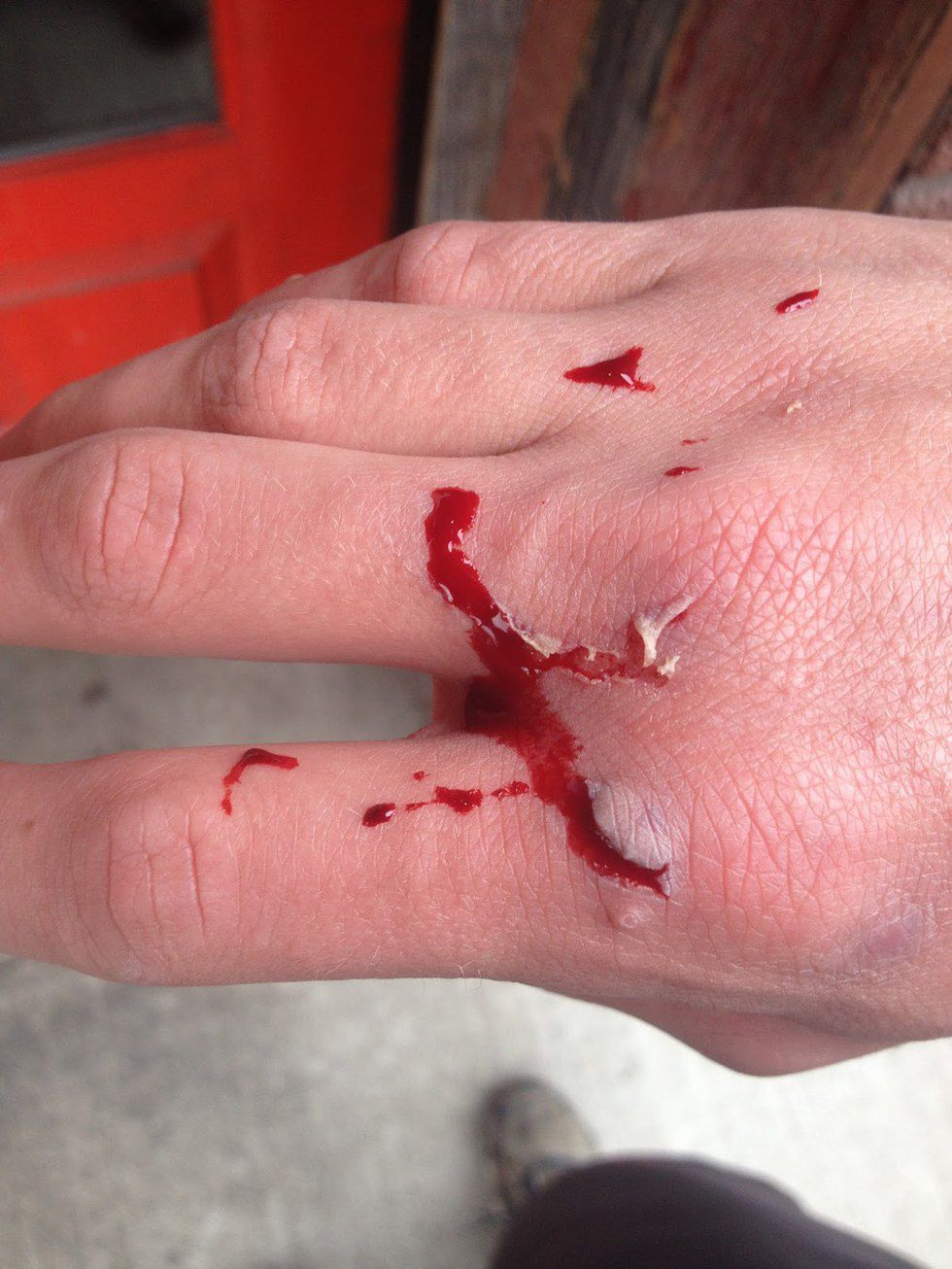
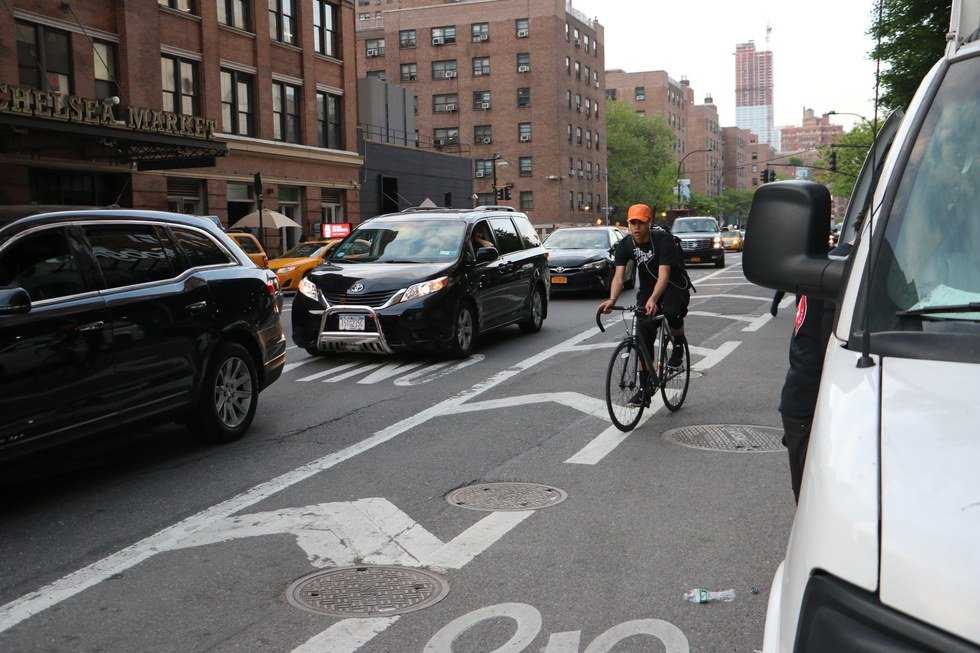
Taken after a car opened it's door into the bike lane on Union Avenue in Park Slope, Brooklyn, New York.
Because the staffing company files riders as independent contractors, riders get paid less than minimum wage. At a base rate of $5 an hour plus tips, and a lack of overtime pay, riders often find themselves struggling to make ends meet. There is no company fund for repairs. Kenny says he generally would pop a bike tube or two a day, which runs about $7 from a local shop, and new tires every two months, which costs about $80. When you make $5 an hour, these costs add up.
I tracked down Rob, one of my old co-workers, at a deli in Bushwick. He had a slight limp. As we were talking about the pitfalls of the job, he brought up the potholes that are all over the streets of Brooklyn. "A pothole will destroy a wheel in traffic," He said, "and each of them costs [$40] to repair. I'd work a day a week just to pay for the damages on the road.
Bikes are only allowed to exist in very narrow lanes between parked cars and the city's constant traffic, and speeding cars will force you into the holes. In a similar incident with a choice between a traffic and a pedestrian, I braked really hard and tore my ACL."
When I asked him to elaborate on that, he curtly said "no."
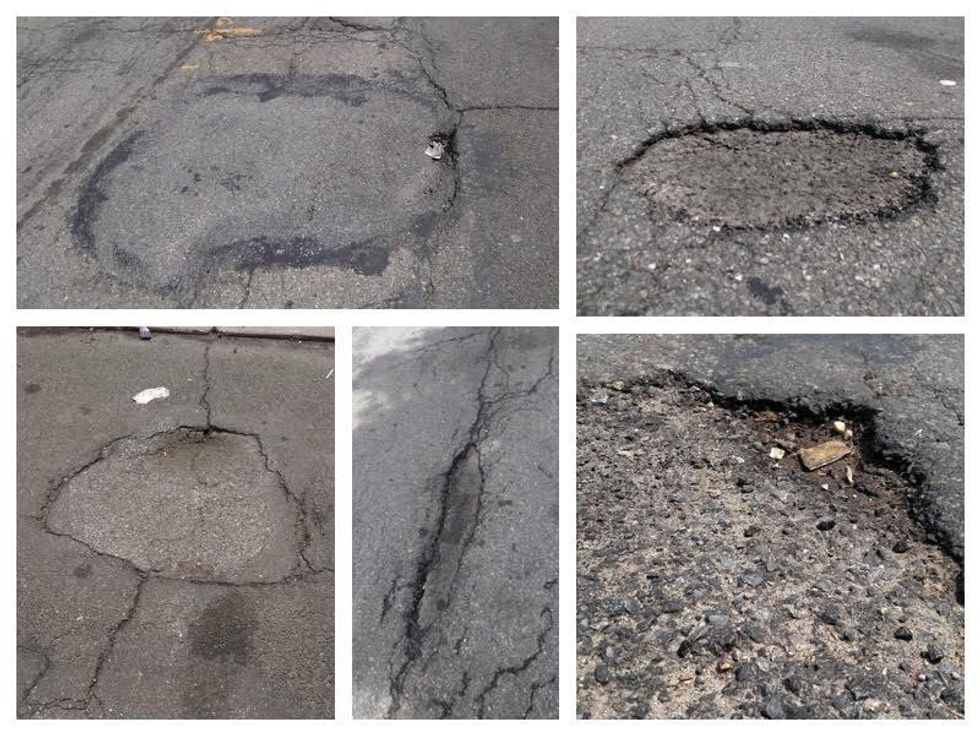
Potholes on Suydam Street in Bushwick. Photo Credits Alexander Tyma and Nathan Solanki.
The classification of employee ultimately comes from the Department of Labor Wage and Hour Division, not from the company. To determine the level of employment, the Department of Labor has constructed a multi-factor “economic realities” test, that includes prerogatives such as: The extent of work performed needs to be integral to the entire business; the worker has an opportunity for profit or loss based on their managerial skill; the extent of relative investment of both parties is similar or greater on the employer’s end; the level of skill required for a job does not eclipse a certain threshold; and the degree of control held by an employer is greater than that of the worker.
The first of the tests has an easy answer: The delivery service and the staffing of their riders are the entirety of the business model for staffing agencies.
Andy, another rider for the same staffing agency, explains, “they are dispatch, they provide me with work, the actual work, but I am doing it myself and the restaurant is paying me. That’s how they wanted it to be labeled. You are not even allowed to get hired by another company. That’s against your contract.”
The level of skill required is minimal, and the investment is determined by the quality of your bike; most riders are going around on second-hand equipment, with parts from a variety of stores to keep it moving. With no chance to set your own wages and no direct control of your hours, workers are left with little bargaining rights. Riders are not even allowed to discuss wages or terms of employment. As Andy says again, “It is against your contract.”
After calling several times and leaving several messages over the course of two weeks I was still unable to get a hold of the staffing company in question.
The rise of independent contractor status has been linked to the aftermath of the Great Recession. In a study published in the Princeton Press by Alan Krueger and Lawrence Katz show that independent contractor jobs have grown by 9.4 million in the last decade, and conventional jobs have declined by 0.4 million. Those numbers indicate that the conventional job market, those who are classified as employees, is shrinking.
Dr. David Weil, the administrator of the Wage and Hour Division, classifies it as a fissuring of the workplace. He states that “employees are often unaware for whom they actually work… The costs in this race to be the lowest bidder are borne by workers deprived of their wages and their rights.”
Push-back and unionization have already started in other fields. In the Browning-Ferris case, the National Labor Relations Board (NLRB) decided that the recycling plant was a joint employer with the staffing agency that provided almost all of the workers. This closed loopholes that prevented decent wages, social security, unemployment insurance, workers compensation, and medicare. As the Economic Policy Institute puts it, “the NLRB is sending a signal that the long period of joint-employer abuse—where the government looks the other way as corporations evade their responsibilities by denying that they are their workers’ real employer—is coming to an end.”
Browninig-Ferris is the first step back to pre-Reagan labor relations. In the late 1990s, there are three cases that highlight the difference in the way we currently look at employees versus independent contractors: Roadway Package System, Dial-A-Mattress Operating Corps, and St. Joseph News-Press. Two out of the three of the cases resulted in changing the label from employee to independent contractor, due to lack of control over the business, and economic dependency. The one that did not successfully change, the St. Joseph News-Press, is because of the amount of control they had over their deliveries. If a customer was deemed unlikely to pay, or if the delivery was economically unfeasible, the rider could refuse to deliver.
When I asked Michael, another rider for the same staffing agency, how much control he had over his deliveries, he said, “I didn’t get to build my schedule. I had to request each week, and getting what I wanted depended on who they also had looking for the shift. When you are there, you can either sit for two hours and get no deliveries, or you can run and sweat all night for $2 tips. There really was no telling. Once you were there, if there were deliveries you were running until they were done.”
Uber recently had to take a $84 million out of court settlement to keep their drivers classified as independent contractors. In a press release posted shortly after the case, they used the testimonials of only two drivers and an explanation of their probation system to try and assuage the concerns of their workers. Their marketing ability still falls short of convincing some lawmakers, though, and the topic will remain a hot debate among drivers for a long time.
I spoke over the phone with Damian Treffs, a labor lawyer, about the issue. One of the points he brought up was the risky nature of unionization in a field with a large number of undocumented workers. He said, "because many delivery service persons are undocumented or have precarious immigration status, there is an extra layer of difficulty there. Once you become an employee, the employers require a complete investigation, where you provide in a verification form social security numbers and stuff like that. If they can't verify your eligibility to work they cannot hire you.
Let's say you guys organized and then the employer says, 'you want to unionize, you want to be employees. We're going to start checking the immigration status of everyone,' and they find half the people are undocumented. Even though we know they fired them because of the organizing effort, which is unlawful, and even though you'll win that case... the case is Hoffman Plastics. It's a case where all of the workers were fired because they were undocumented. They were fired because they were forming a union. We can't force you to hire them back, and you won't have to pay them back pay and things like that. To the extent that it is an undocumented workforce, and that becomes an issue it will likely have consequences on those individuals that rely on this to live."
There are other options for workers to explore if unionization won’t work, due to a lack of solidarity among workers and the large, at-risk groups who can’t afford to lose on pay. Worker’s centers, like the Workplace Project in Hempstead, Long Island, provide alternative legal council to low-wage workers in order to get back the payments they were stiffed on. This council comes free, with the caveat that you must spend ten hours helping out at the workplace project. A small price to pay for the return of years of exploited labor.
On a warm Saturday morning, I took the Long Island Railroad to the Mineola station and walked to the Workplace Project headquarters. No one was in the office or available for comment over the phone, but an anonymous employee of the law firm situated next door confirmed for me that Workplace Project is still aiding at-risk groups.
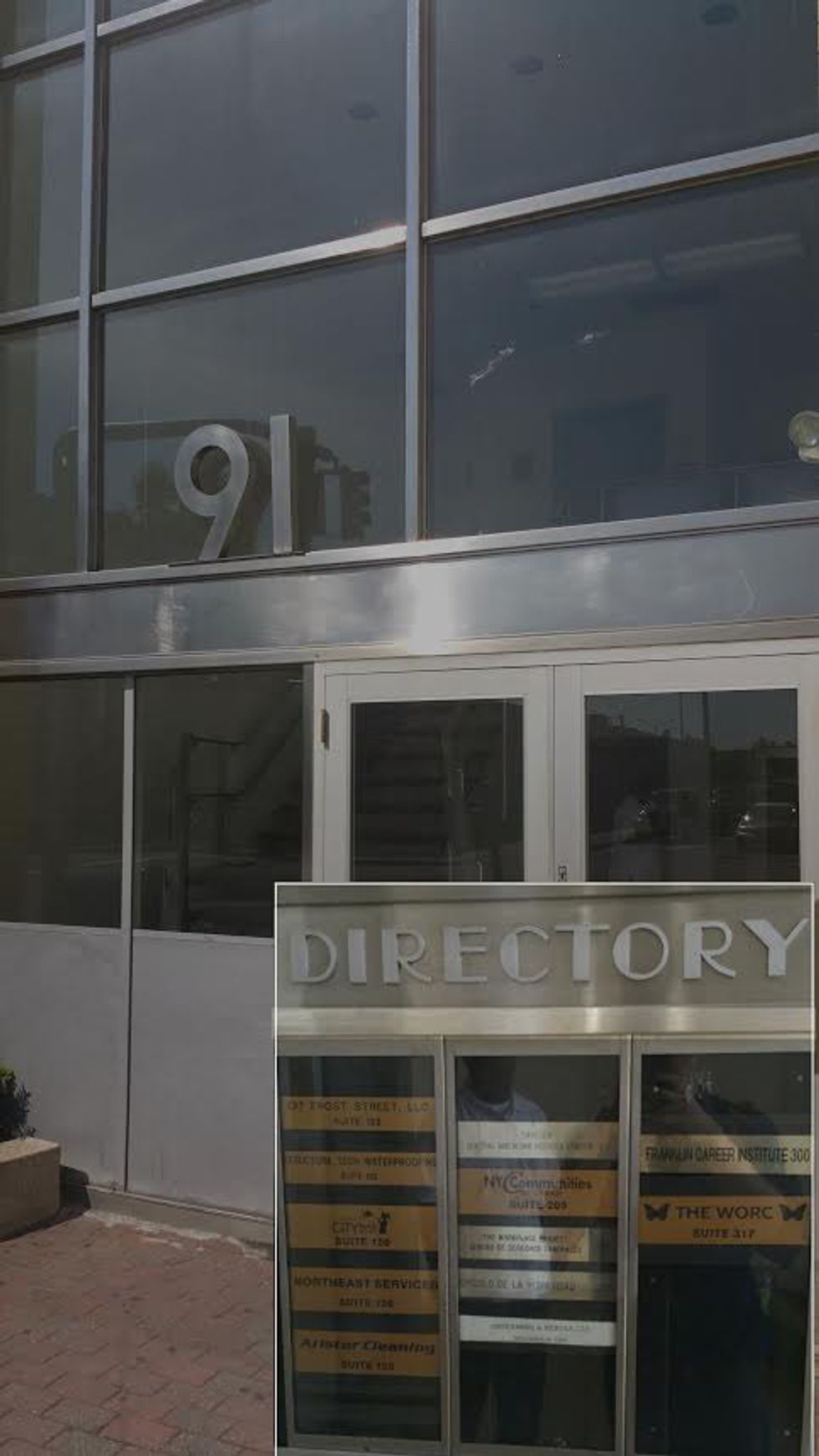
Entrance to Workplace Project, Hempstead, Long Island. Photo credits Nathan Solanki.
*The names of the riders and the businesses are changed to protect their identity.
This investigation is ongoing. The names of companies and workers have been changed to protect their privacy.