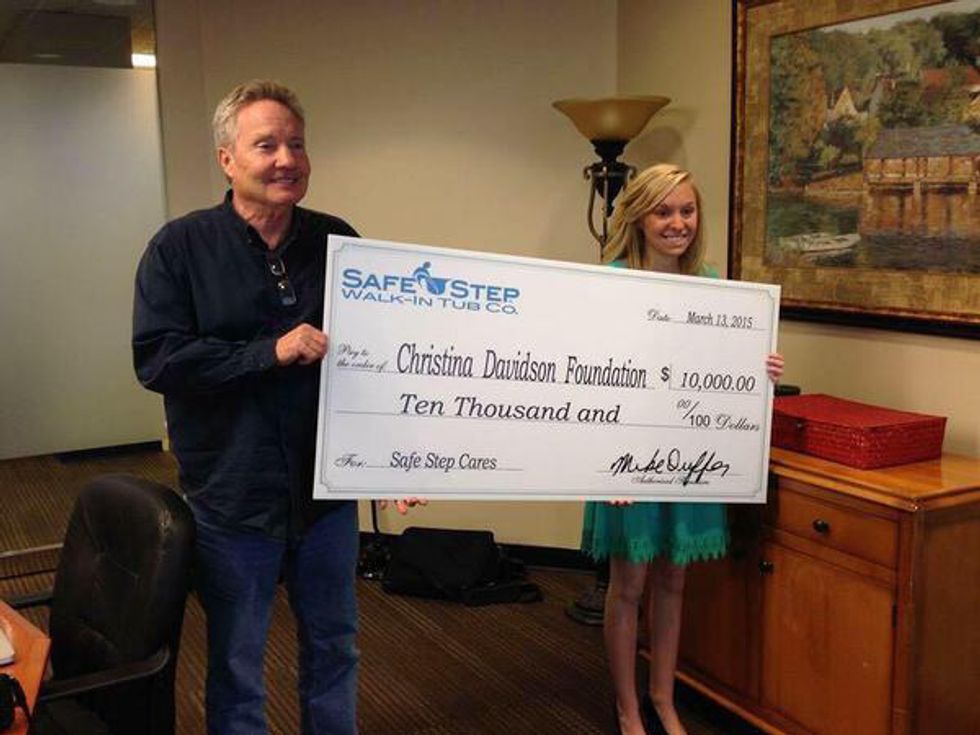
I recently had a phone interview with the lovely Christina Davidson, 24, founder of the Christina Davidson Foundation for Cystic Fibrosis. Christina created this foundation on the basis that awareness of anything--in this case, Cystic Fibrosis, is just so powerful. For this article, I not only wanted to help Christina bring awareness to CF, but help to cease the stigma and discrimination against people with disease or disability.
If you are anything like who I was less than a year ago, then you may not know much about CF. So before I get into our interview, CF is, according to CFF.org, "a life-threatening, genetic disease that causes persistent lung infections and progressively limits the ability to breathe. "
What led Christina on her way to becoming the founder of the Christina Davidson Foundation was a "coming-out" video she uploaded onto Facebook and YouTube, coming out to the world about this disease that she had kept secret for the more than 20 years. The video went viral in an instant with more than 11.6 million views! People everywhere were becoming aware of, not only Christina’s story, but also Cystic Fibrosis.
Describe yourself.
"Before my foundation, ten months ago everyone would’ve described me as outgoing, really, just living life to the fullest, but also keeping it very personable—if that makes sense. I wouldn’t share things; I was always that girl…just pretty much being the spontaneous girl! About ten months ago, when I got the opportunity to start my foundation, I realized that I basically got my drive. Actually, helping people is literally like getting a caffeine rush in the morning without the star bucks. I would now describe myself as, very passionate about helping people who aren’t necessarily like me, but have probably been in similar situations. I have a passion for just helping people understand that they can achieve their dreams even if it’s through something as simple as a YouTube video."
How was your life in high school?
"Everyone one would have described me as really quiet. I had a group of friends that I was decently close with, but I wouldn’t say that I had a “best friend.” I was just, kind of, the girl that was always there, very active in sports, but never outspoken."
Your friends in HS didn’t know that you had Cystic Fibrosis, right?
"They did not, no."
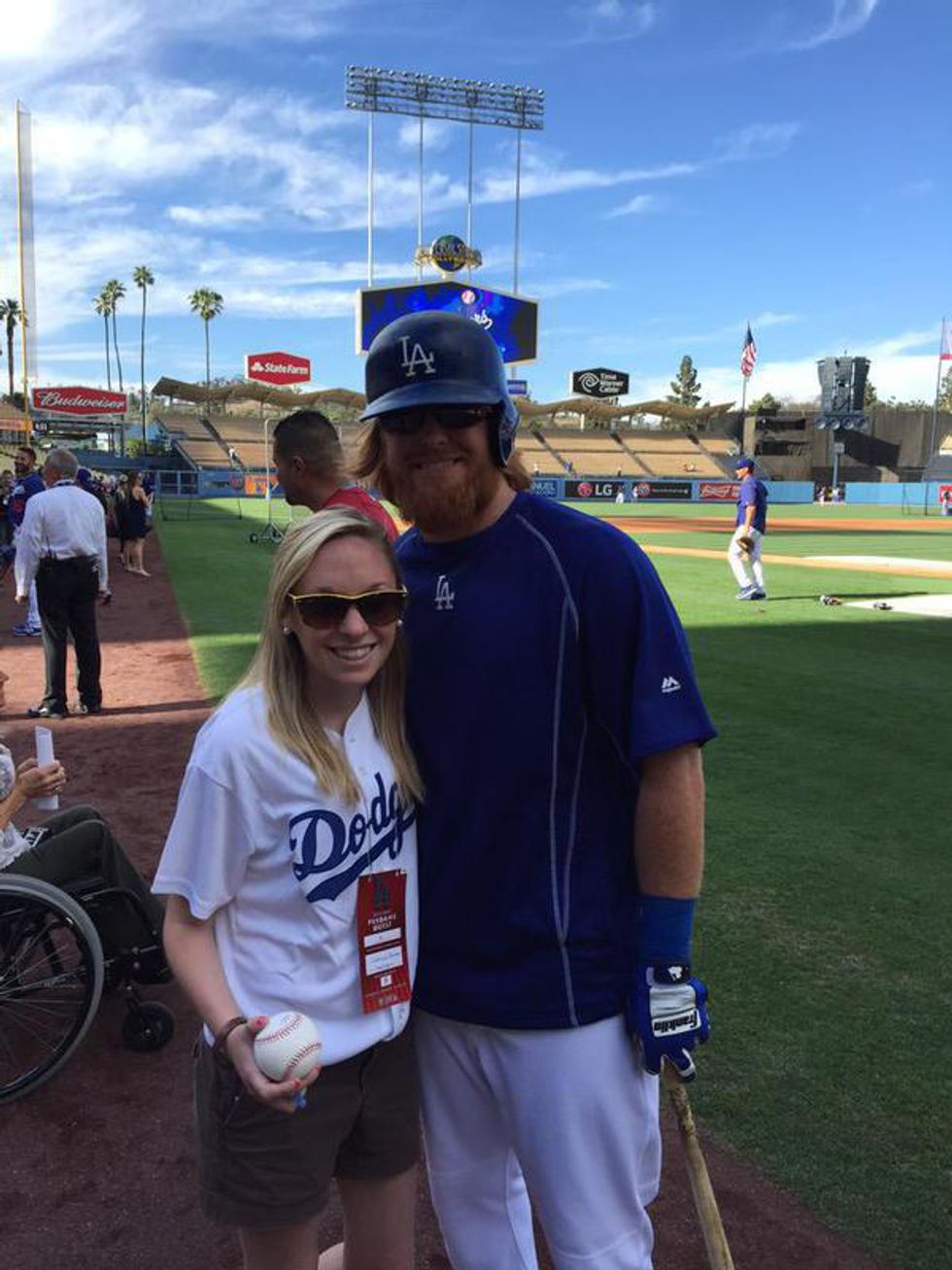
When did you tell everyone?
"A few people found out after college because my health started to decline. But, very few people knew in college. I really came out with it in that YouTube video that millions of people saw. Just sharing that I have Cystic Fibrosis. You’d find people sharing my video with captions such as: “I played softball with this girl my entire life and didn’t know she had this disease!” Even till this day, some people that I work with are just learning that I have this disease, and it’s blowing their minds every single day."
How did you keep up that façade, being hidden?
"It was okay because I had kept it hidden my entire life, I didn’t know life any differently at that point. As I got older it was harder, especially to keep it from my bosses or co-workers that I worked with everyday. When you go in for a job interview, say you’re going in for that big girl / big boy job, especially me, in my situation; I go for a big girl job and not many companies understand having a terminally ill patient who looks perfectly fine. Luckily, I’ve been very blessed with companies that have understood my situation once I’ve told them about it.
Before I came out with my disease, it came a point in time where it was like; I’m going to the hospital tomorrow, for two weeks and I have to tell my company what’s going on. Just for the fear that I may not get that job, or a raise because then I become a risk factor. It’s an awful feeling to know that you’re not a very good financial decision for a company…you want to strive and be the best, and grow with a company, but when you take a step back and realize where you are health wise, and that a lot of companies may not want to invest in you growing with their company because of that."
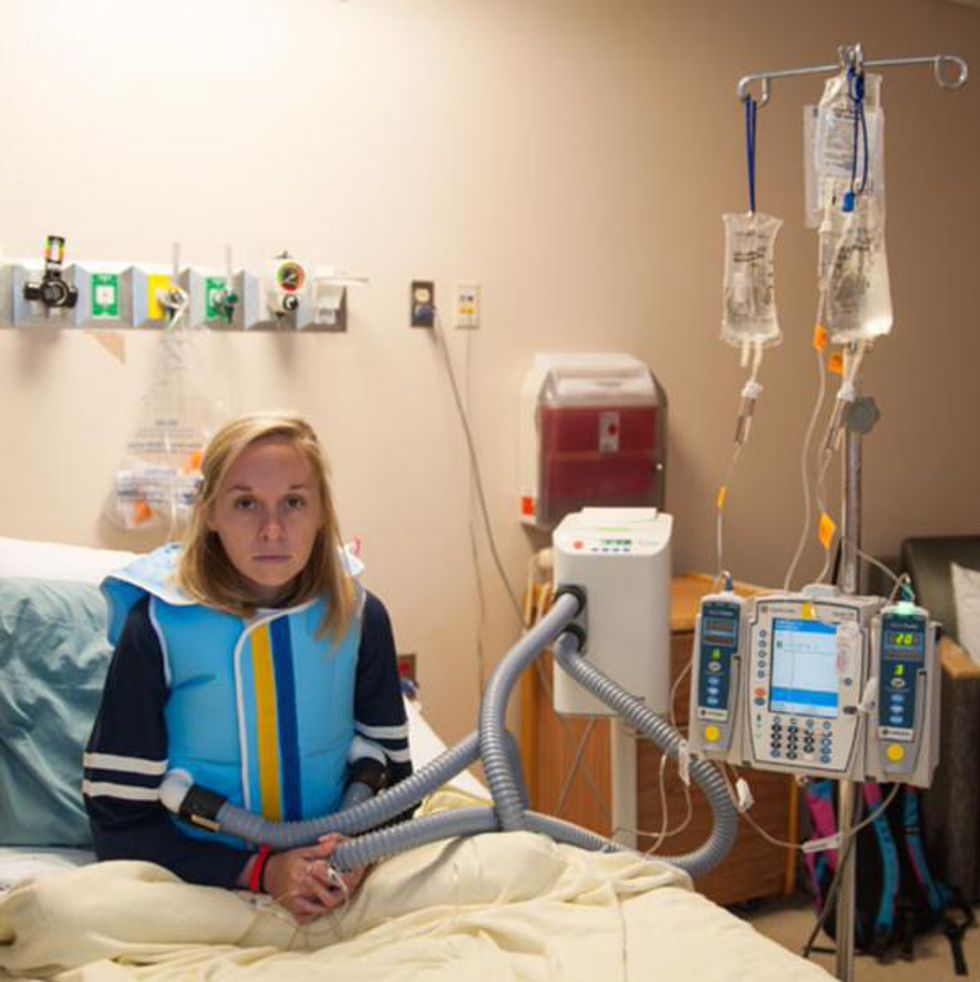
Do you ever wish things were different?
"I wish there were more treatments, I wish there was a cure, I wish, honestly, if I couldn’t have either one of those—and I know we’re working hard on that—but, if nothing else, I wish there was more awareness for it. There are so many aspects where we can change the outlook on CF from negative, and make it positive."
Do you believe that you have a different outlook on life?
"Absolutely, especially since I’ve gotten older, we talked earlier about having kids and knowing that there’s a life expectancy now, even with the job discussion we had…it’s a curse and a blessing, this disease, a curse in a sense that you have to fight this horrible monster every, medications, treatment; but a blessing in a sense that I would say every CF patient surely knows how to live life to the fullest."
Before interviewing Christina, I wasn’t sure where I wanted to go with this article. I juggled between writing an article for the awareness of CF, or for the knowledge of the disease altogether. Soon after our interview, I found this article’s purpose.
I wanted to force readers into a position to realize two things:
1. That discrimination against people for such reasons that they have no control over is uncouth.
2. Though a disease or disability may take up a large portion of one’s life, it is inevitable that they have lives outside of that. We can’t take those lives away by telling people that they cannot achieve their dreams because there are obstacles in the way.
And after all, we can’t hide ourselves in fear that people won’t understand and accept who we are because of our differences.
Check out the website and DONATE. Also, keep up with Christina on Twitter.