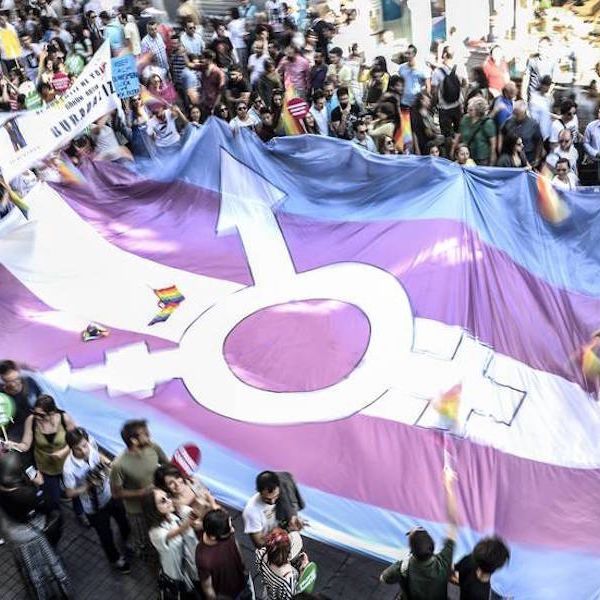

People who are intersex—that is, people who are born with genitalia or hormones that make them physically neither unambiguously male nor unambiguously female—have been forced, in various ways, to conform to traditional standards of sexual normativity. They, like the rest of us, have been molded to fit into the gender and sexual binaries that plague all of our daily lives. The difference in the way intersex individuals experience the pressure to fit into this dichotomy is largely due to the fact that for them, this pressure can be physically invasive and it often begins the day they're born.
For centuries, and this is still true today, the medical community has persuaded parents to approve of invasive modifications to the bodies of intersex individuals. They may claim these surgeries are medically necessary when they are not, or they may claim that the children will face ostracization if their genitalia is left ambiguous.
However, their claims do not seem to hold up when you look at the long-term experiences of intersex individuals. The "medically necessary" surgeries that are prescribed often end up causing more significant medical issues later on and any potential ostracization can be attributed to making intersex people feel that they were born with an unnatural body that needs correction (see http://www.isna.org/articles/ambivalent_medicine).
Despite an overwhelming amount of evidence supporting that these surgeries are problematic, invasive, and often unnecessary, and despite intersex professionals advising against surgeries involving major genital modifications, families agree to them since medical professionals are in a position of power. If a doctor prescribes it, most people will believe it is necessary and important part of living a healthy life.
The advocacy for "normalization" surgeries is not only evidence that this society is clinging to the traditional sexual and gender binary, though. Historically, intersex individuals have been treated as if they already were a specific sex. That is, instead of being a process of assigning these people a gender through surgery, it was a process of uncovering an intersex individuals "true sex". They were thought to already be male or female. In this way, these surgeries not only perpetuate the gender and sexual binary, but they are a direct product thereof. The idea that there are two very distinct sexes caused medical professionals to be wholly unaware that a person might not fit into either category.
The blame should not exclusively be targeted at the medical community, though. Medical professionals are in a position in which they can more noticeably perpetuate this problematic way of thinking about sex and gender, but it's really a symptom of a broader issue. The goal should not be simply to stop doctors from performing and advocating for these surgeries, the goal should be to create a global community that is more informed and sensitive to identities that differ from white, straight, cisgender males.
Specifically, we need to include intersexuality in discourse about LGBTQIA+ issues. We need to draw attention to the issue and stop grazing over intersexuality as if it's an identity of lesser importance than the more talked about LGBTQIA+ identities.
Intersexuality is getting more global attention today. The UN recently released a document condemning "normalization" surgery for intersex individuals (read here: http://aiclegal.org/new-un-intersex-fact-sheet/) as well as a face sheet containing useful information about inter sexuality (which you can also check out http://aiclegal.org/new-un-intersex-fact-sheet/).
Despite global calls to action, however, these surgeries are still taking place in the United States. We need to mobilize, we need to include intersexuality in the engaged discussions we have about other oppressed identities, and we need to attack the sexual and gender binary that spearheads these conflicts.