
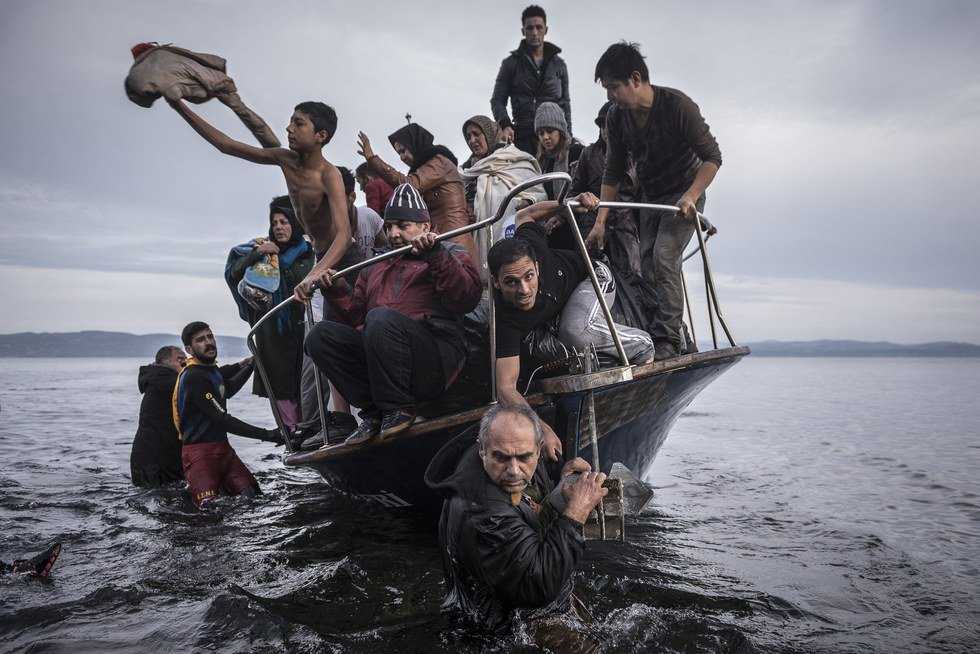
Recently Oakland welcomed Forced From Home to the Schenley Quad. As stated on their website, “Forced From Home is an interactive, free, outdoor educational exhibition presented by Doctors Without Borders/Médecins Sans Frontières (MSF) to raise public awareness about the experience of the world’s more than 65 million refugees and internally displaced people”. I learned about this event on Facebook and read wonderful reviews, so I thought I’d take a look myself.
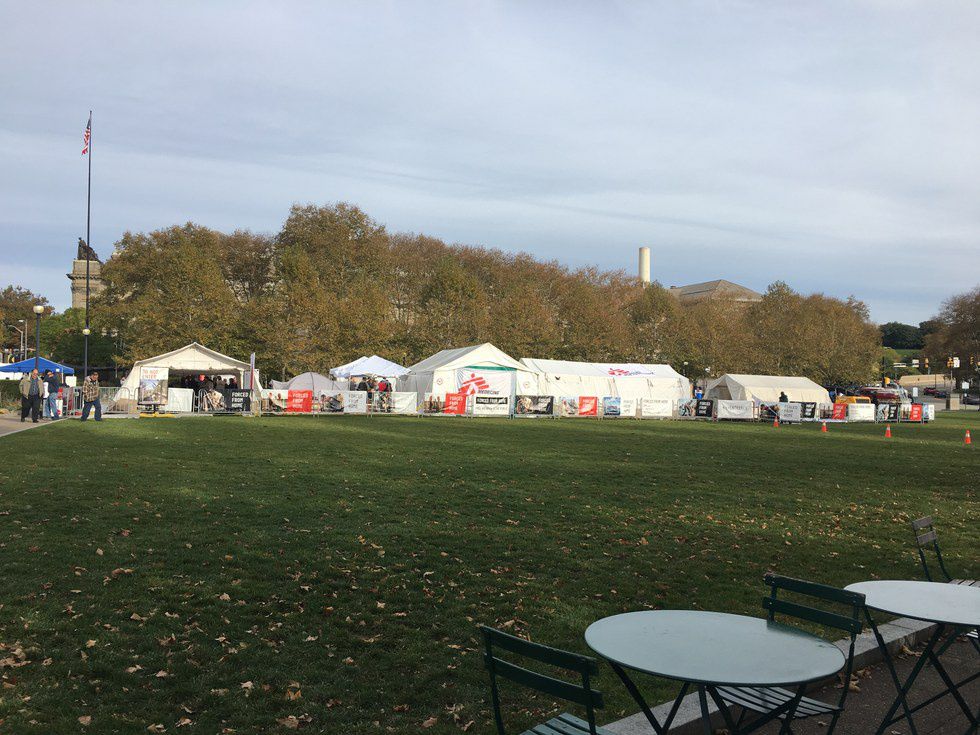
Most of the quad was occupied by this exhibition. An hour-long walking tour was guided by a worker from Doctors Without Borders (or as it’s abbreviated internationally, MSF). Upon entering, each person was given an identification card with your country and status (refugee, internally displaced, etc.) We started the tour learning a little about the organization and then went into a circular tent that showed a 360-degree panoramic video of current refugees in their temporary villages. Visitors felt like they were in the middle of one of these villages.
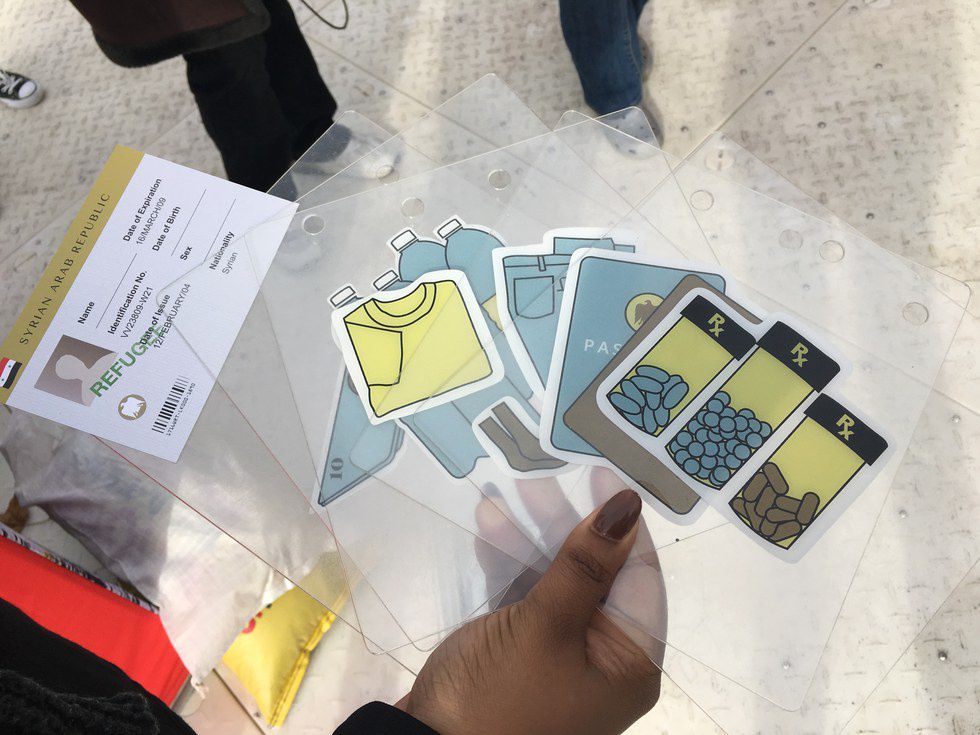
Next, we were shown a wall of laminated items like money, clothing, and a cell phone. People fleeing typically leave on a moment’s notice, so we were given 50 seconds to choose five items to bring with us. Of course we all grabbed the necessary survival items, leaving behind pets, personal belongings, and cell phones.
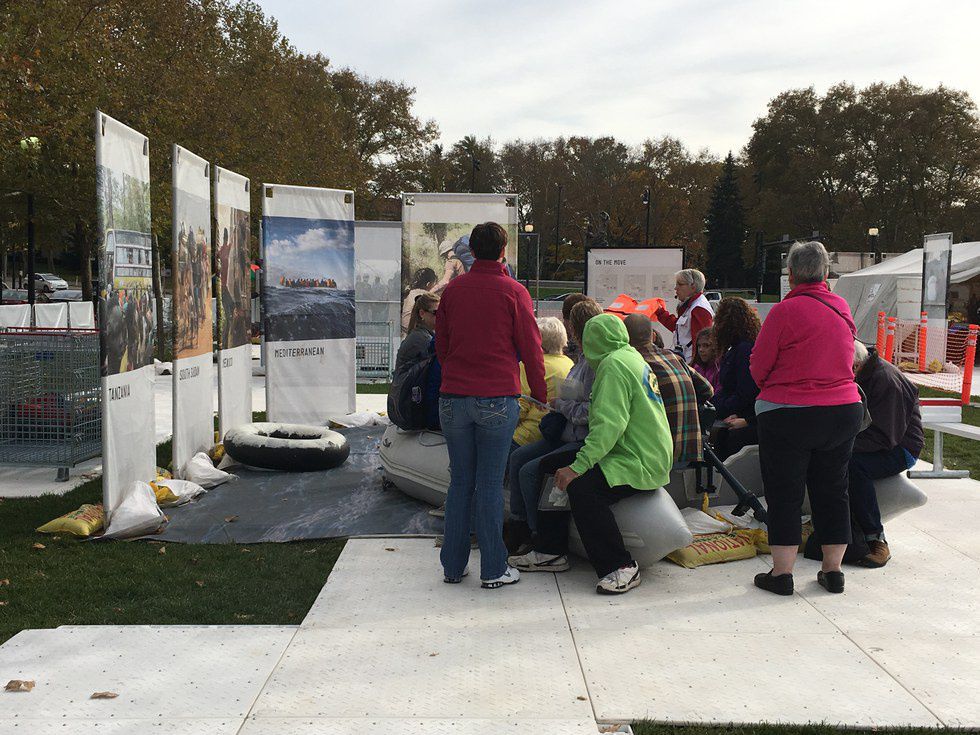
The group then piled onto a lifeboat while the tour guide told us about the smuggling process. It was somewhat difficult to fit all 15 people in the boat, but our guide said that 40 or 50 people may try to cram onto these boats to escape. They do not have life jackets. People pay smugglers very large amounts to get them out of the country, and these smugglers don’t mess around. A refugee can’t change his or her mind at this point, as the smugglers force them onto the boat at gunpoint. I can't imagine facing the elements on open waters for days, basically as a hostage. To symbolize our payment to the smuggler, we were forced to give up one of our five items.
The next station talked about the legal differences between immigrants, refugees, asylum seekers, and those internally displaced. There are different processes for arriving to a new country based on what category a person fits into, some taking much more time than others. Again, we had to dispose of an item before entering our new country. I had to choose between taking clothing or medicine with me.
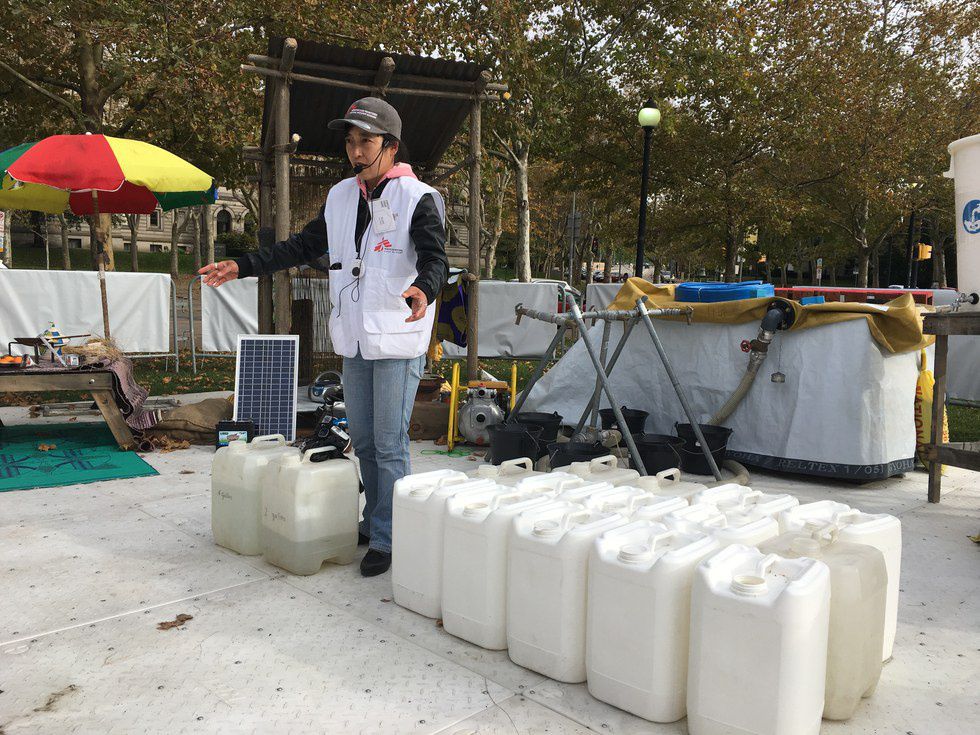
Then we arrived at the refugee camp. The guide explained that MSF gives each person two gallons of water per day for all of their needs (consumption, bathing, cooking, etc.) The water jug to the left of the guide in the picture above is less than a third full, showing what two gallons looks like. The cluster of water jugs to the right indicates what a typical American uses every day. The pipe system in the background is used for water filtration.
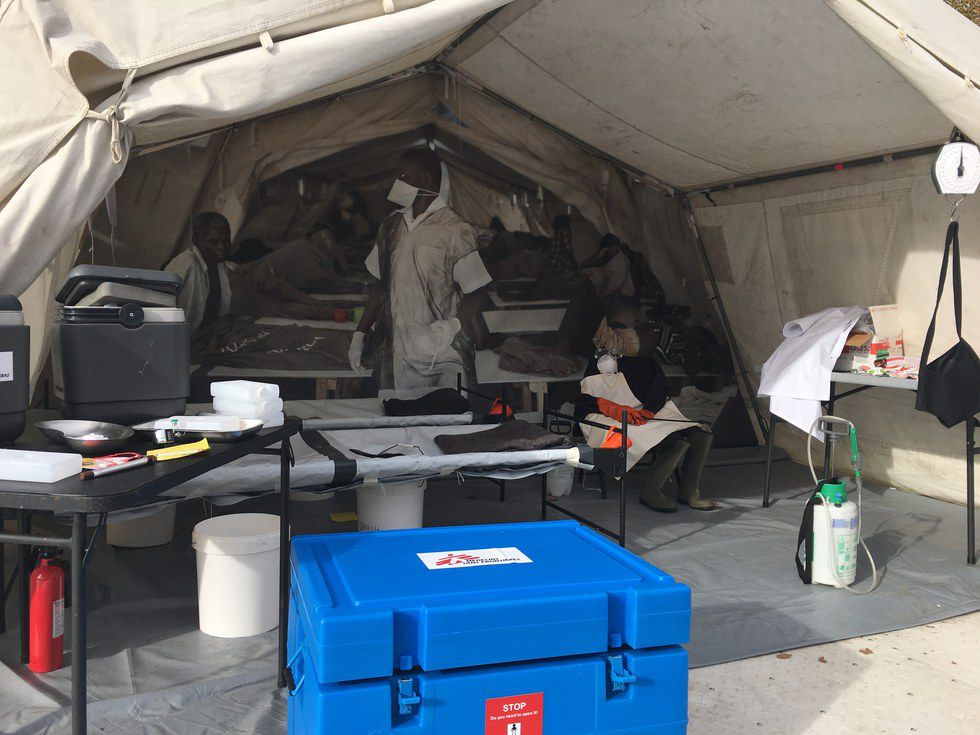
Next was the medical tent. Common diseases seen in refugee camps include cholera, malaria, tuberculosis, and malnutrition. These cots have large holes in them, under which is a bucket to collect diarrhea from those with cholera. Large coolers lined with icepacks keep vaccines and medications.
The living spaces were small tents with one mattress that you were to share with your entire family. MSF cannot legally provide these kind of supplies to internally displaced people, such as the South Sudanese. South Sudan is landlocked, so these people must walk or run to a neighboring country, setting up tents along the way to rest. The only supplies they have are the ones they carry, so their living spaces are makeshift huts made from sticks and tarp. Yet, the creative children's toys made out of found materials show that joy and humanity are still ever present despite the conditions they are facing. Families may travel across South Sudan in this matter for years before they reach a free country.
By the end of the tour, all of our original five items were gone. Visitors were invited to write holiday postcards to MSF workers abroad and experience a virtual reality tour in a camp.
The experience was eye opening, thought provoking, and made us much more aware of an important problem the world faces. I wish the exhibition could have spent more time in different parts of Pittsburgh, but it had to move on to it’s next stop around the country. Always remember how fortunate you are to be able to call a place home. Even if you hate the wallpaper in your bathroom, remember that there are people living without any walls. If your kid’s room is a mess, consider first that people would love to own enough things to create a mess. Displaced people have learned to rely on each other instead of on material items, and I think that's a lesson that we all could use.