I didn't want to go. It was just seven days after my high school graduation. My bags were packed with long skirts, loose pants, and high-necked shirts. I had already passed the arbitrary airport demarcation that prohibits family members from going any further. Holding back tears, I boarded the plane, leaving behind the small mountain valley in Montana where I grew up.
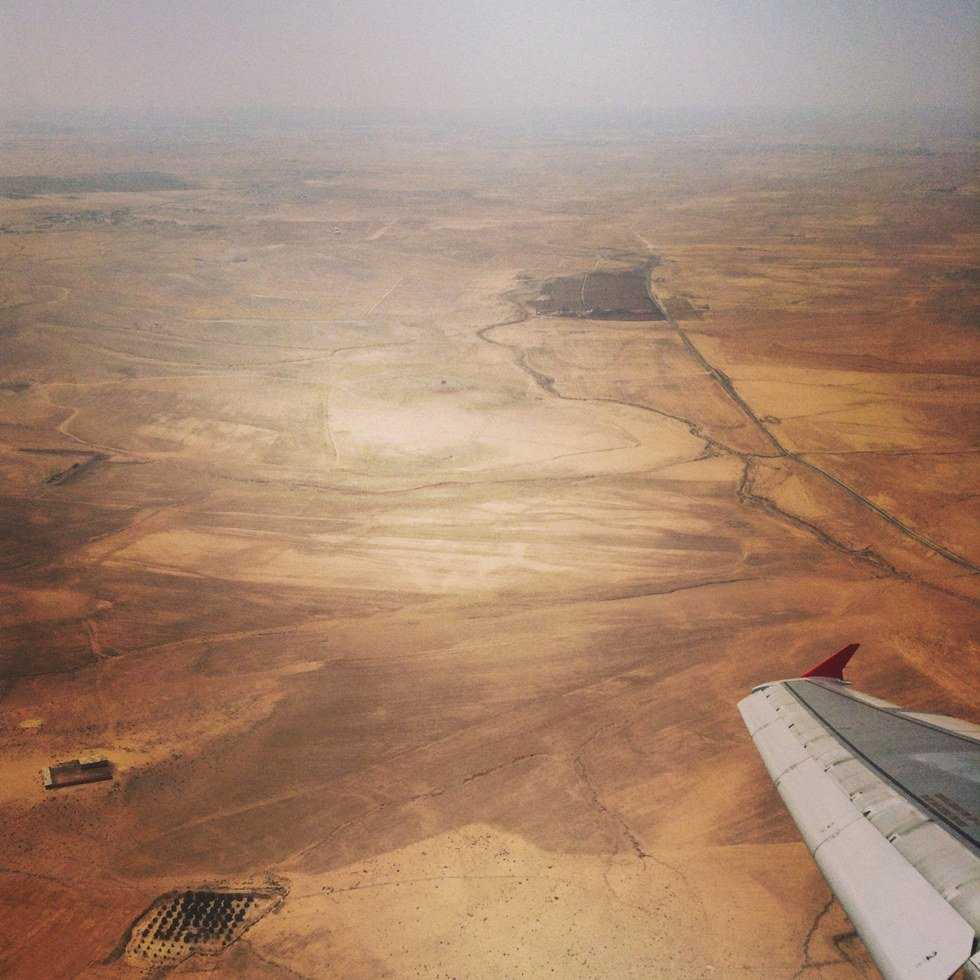
Two days later, I arrived. At first, all I could see for what seemed like an infinite number of miles in all directions was desert. This land was parched, caked with chalky brown sediment, cracking like my father's heels in arid winters. Then, entering the city, hills appeared, mosaicked with sullied white buildings. Outside, I kept my eyes downcast so as to attract as little attention as possible. Amman, Jordan. I had never felt more strange.
I sat with two dozen other American high schoolers in a hotel lobby. We were waiting for our host mothers to pick us up. Suddenly orphans in this foreign land, conversation was stifled and ceased all together when our mothers began to arrive. One by one, the only people I knew in a country thousands of miles away from home left. Finally, my host mother arrived. She had a loud laugh and large eyes that were only made larger by her tendency to jut out her neck when addressing me. Her black eyeliner was contrasted sharply by her golden-brown Hijab. I wanted to say thank you. I wanted to tell her that I was so happy to meet her. I wanted to be friends at once, desperate for someone to know. But I barely knew the letters of the Arabic alphabet, let alone how to address my host mother, express my gratitude, and relay my simultaneous feeling of fear and excitement. After speaking emphatically in Arabic, she opted for the little English she knew. “Don't scared," she said to me in her accented voice.
Six weeks later. I had held the hands of my Jordanian sisters, spend hours at the family table dilling vocabulary words with my host brother, receiving “tsks" and “uhs" for my work, which I had learned mean no and yes. I had felt the mouth-watering stickiness of dates at the evening call to prayer, alongside my host father, the delicate sand of the desert, the poignant sting of the Dead Sea. The already-brokenness of this country made it feel more whole, more stable, more comfortable with itself than any other place on earth. This country really seemed to know itself and to help those who frequent it to know themselves, as well.
I didn't want to leave. I stood on the roof of our apartment for the last time, watching the sun paint the hillside's white buildings as it lowered itself behind the many mosques that steeple the city's horizon like giant, silhouetted pieces in the game of chess. The hill was a dusty pink, then periwinkle, and finally, in the last burst of brilliance, the city was the golden-brown of my host mother's Hijab.
We took a taxi to the airport. The driver was friendly; we spoke about religion, his childhood, and what Islam meant to him. We laughed, smiled, spoke easily. I almost forgot that I was communicating meaningfully in a tongue that had been completely foreign to me six weeks earlier.
This is why I study abroad. To challenge myself, to know myself, to grow myself. But also to communicate intimately, meaningfully, and deeply with those around me. Through sounds, feelings, and finally through spoken language.
In a week I will board a plane once again, this time to Morocco. As I prepare to spend two months in a homestay studying Arabic, once again, I look fondly back at last summer, filled with gratitude for the sense of place and sense of self my host family gave me last summer.