A friend of mine approached me, apologizing for not being able to post a story about personal fears surrounding the new immigration ban. The person is an international student and cannot risk jeopardizing staying in the U.S. or the safety of family abroad. I had never been more aware of my privilege than in that moment. But together we came up with a solution for everyone to still find out firsthand how the immigration ban affects people of international origin.
Below is my friend's story, published in my name with no identifying information:
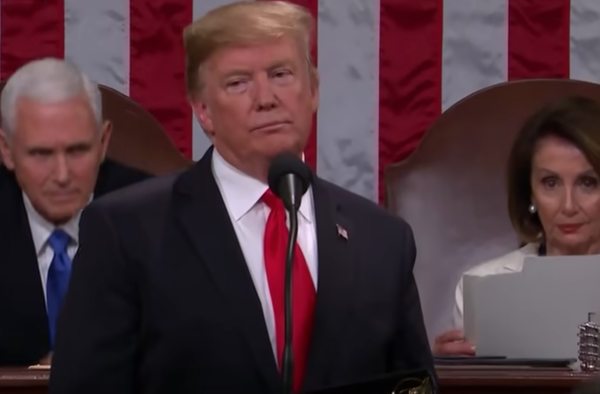
President Trump signed a piece of paper this last Friday at 4:42 pm. That paper changed many lives and left chaos and suffering in its wake.
An executive order to halt Syrian refugees from entering the US and to ban others from seven specific countries. That was the paper Trump signed.
As students, emotions typically arise when we’re reading and learning about world history. A mixture of astonishment and angst as we read through documents and accounts of events like the Holocaust, the Berlin Wall and Apartheid. “How could they do this?” we often ask ourselves, “How could anyone think that was acceptable?”
Well, that was the feeling of many around the world as Trump’s executive order became practice, just hours after it was signed.
“The first casualties of this bigoted, cowardly, self-defeating policy were detained early Saturday at American airports just hours after the executive order”-The New York Times Editorial Board
All throughout Saturday, since I first started seeing headlines about people being detained at U.S. airports, I watched my news feed anxiously and constantly for more information about the order and how it could affect people.
Then it got worse.
There was news stating that airports had started to actually refuse people entry. A refugee family bound to Ohio, with a house and a life waiting for them, were barred from entering their sanctuary. The U.S. was not letting them in. That’s when I started to feel scared.
“Promise me you’ll delete all your posts about the Women’s March and Trump,” my mother said to me in a frantic phone call, “I saw they started to check international students’ social media before letting them in.”
I’ve only seen my mother cry once, when my sister fell down the stairs when she was little and passed out. I remember her driving and crying at the same time. She was crying now as she spoke to me on the phone.
“Be safe, don’t take risks,” she told me, “stay put, and keep studying.”
As someone with a valid visa myself, I wouldn’t have to worry much about this executive order. I did all my interviews at the US embassy, paid all my fees, had all the documents ready. Not only that, but I’ve been studying in the US for more than a year now, “there is no chance of me ever getting barred,” I thought.
Then the stories got scarier.
An Iranian scientist, Harvard-bound, got denied entry even after earning a research grant and fellowship to study cardiovascular medicine. He has so much promise and potential to do something big for medicine, only his visa was suspended by American authorities.
My heart was breaking as I read many other stories like this scientists’. My mind just kept spinning and going back to what he probably sacrificed to try to move to the United States. He probably sold his house, quit his former job.
As the hours passed, there were articles about students flying to the United Stated to continue their studies who also got denied entrance. That’s when my heart broke.
You see, many international students and their families usually put so much hope in studying abroad. They see well-funded research centers and amazing lecture halls as the best way to use all their potential and intelligence. And they hope that this education will pay off in the future when they make their family proud and send back a cheesy photo holding a degree.
They hope all the struggle, culture shock and discrimination they suffered studying abroad will be worth it. They hope all the all-nighters, study sessions and hours of extra readings will pay off in a final written in a language that is not their first. They hope all the times people didn’t understand their accent will be nothing compared to getting a proper education abroad.
We, as international students, hope to live to all our potential and make a difference in this world.
I couldn’t imagine what I would do if I got denied to live up to my potential like this: I read that a student at MIT couldn’t return to her studies at one of the most prestigious schools in the world, all because she was Iranian. A brilliant mind denied its potential. I got lucky because I came back to the United States before the executive order, but so many weren’t.
This paper Trump signed shut the door on so many people who had hopes, people just like me, just like everyone else. It made so many people lose hope completely. It made me scared to publish this under my name.
But another thing we history lovers learn is that history never stops, and people always find a way to find a little hope. Hope to survive, and hope to thrive.
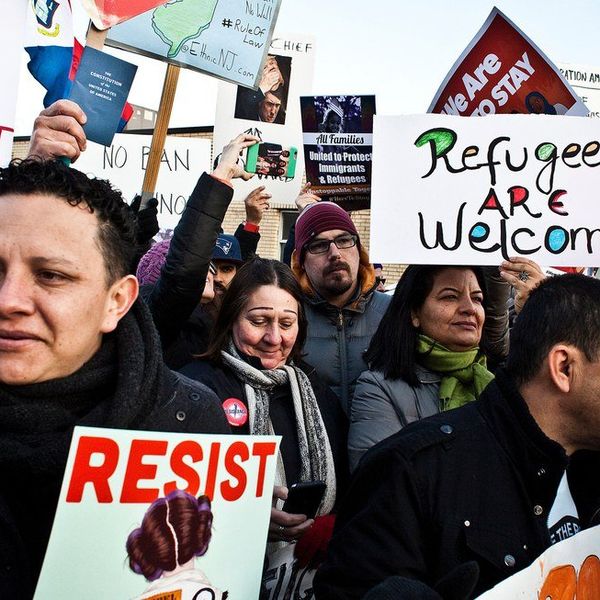
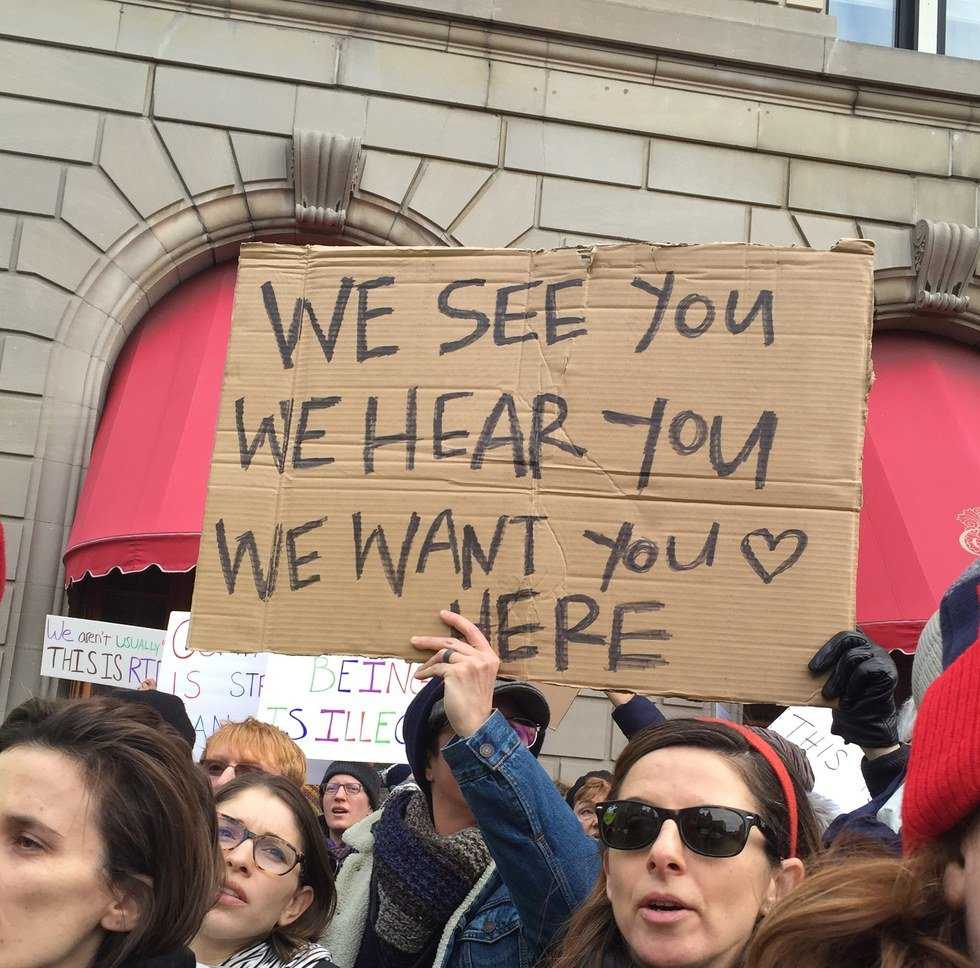
My heart broke yesterday with all those stories and consequences of a single signature, but it has already started to mend again. With every message from my American friends saying that “Everything will be ok,” and even “I’ll marry you so you can keep studying here.” Other stories about Elizabeth Warren screaming while standing on top of a chair at Logan Airport on Saturday together with many protesting the Muslim ban. My heart kept mending as I saw so many people at Copley Square protesting that same executive order. People are not accepting this, they are not complying nor defending this discrimination, and they’re protesting this.
“There may be times when we are powerless to prevent injustice, but there must never be a time when we fail to protest.”-Elie Wiesel
There’s always a little hope that future history students will not be ashamed of this when reading their textbooks. That hope is to see how many people are against this blatant discrimination and how much there are protesting this