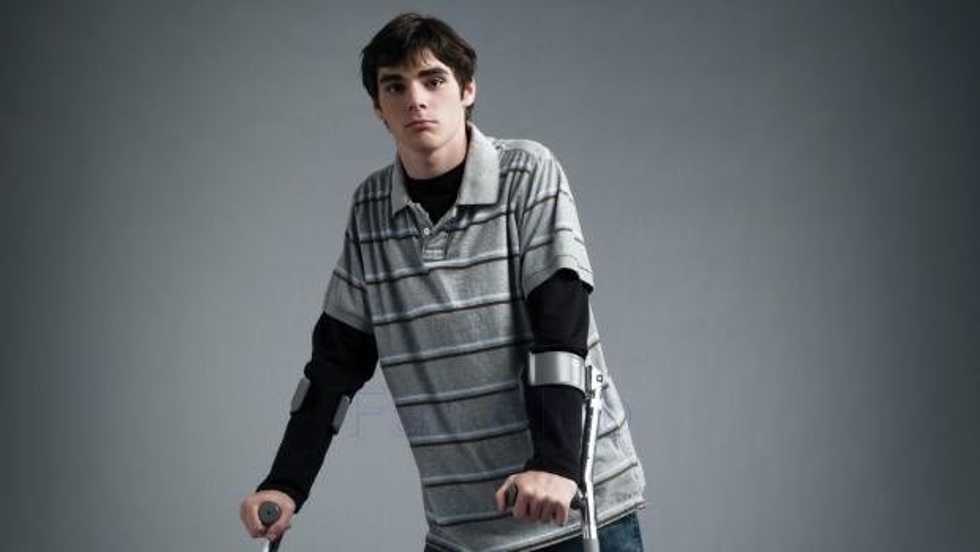
Just the other night, I got the privilege of interviewing RJ Mitte, best known as Walt Jr. on "Breaking Bad." He just so happened to be speaking at Allegheny College’s own Shafer Auditorium about his journey with cerebral palsy, his accomplishments, and how he overcame what he has to do what he did.
Interviewing a person in a very objective manner is the most effective means of gathering the type of information the Undergraduate Research, Scholarship, and Creative Activities (URSCA) is looking for and it is easy to anticipate certain answers based on the way a question is framed; however, I find myself occasionally embarrassed, occasionally confused, and occasionally blown away. These are the types of interviews that blow me away.
URSCA is very interdisciplinary by nature, obviously consisting of research (science stuff), scholarship (English, communications, etc.), and creative activities (art). My brain had recently been fried by a different interview with Alex Urban, one of the men working on the team that discovered gravitational waves. Though he was one of the nicest, humblest, mostgrateful people I got to talk to for URSCA work, I’m not sure he knew that I’m not anywhere near comprehensive of astrophysics. For the sake of my interview with RJ Mitte, I hoped to stick to questions regarding the media, and specifically representations of diversity including those with physical disabilities.
I didn’t have long to get to know Mitte, and there were three other people with me that were also asking him questions. But some of the words he spoke hit hard. I went in with a few questions for Mitte. I first asked him about how he felt being cast as Walt Jr, seeing as both he and his character have cerebral palsy. Ever since I began watching "Breaking Bad," I thought it was pretty cool to include an accurate representation of a physical disability in a mainstream television show. His answer seemed almost honorary at the time
“'Breaking Bad' gave me a job!” Mitte said this with pride, joy, and frankness. Though I was hoping for a dense, cushioned, academic answer, his ease and, honestly, was charming.
My next inquiry regarded where he saw himself in 10 years. “I have no idea,” Mitte said, briefly lost in thought. “Anything that keeps me working and anything that helps me cross the boundaries of my comfort zone is good.”
I pressed a bit further into this line of questioning and asked what obstacles he could identify for himself and how he planned to overcome them. “I have a lot of obstacles I have to overcome. None of them involve my disability, though. None of it involves my work either. I suppose I want to work on being more confrontational.”
I was taken aback by this answer. It was heartwarming to know that Mitte does not see his handicap as an obstacle, and on another more personal note, I identified with his difficulty with approaching situations in a confrontational manner. I fumbled with my words as I tried to come up with a question that didn’t directly relate to his cerebral palsy.
“Umm -- I thought it was very empowering that you don’t see your handicap as an obstacle, but I just wanted to clarify your feelings on your opportunity to work on 'Breaking Bad.'”
Mitte reiterated his prior answer. “'Breaking Bad' gave me a job! The thing is, people have a fear of who they are. People bow down to this fear, when you don’t really have to settle for your situation. You can change it, and you are the one that has to.”
I found that Mitte never even saw "Breaking Bad." He said to the fans, the show is art. To him, it was a job that included traveling for work and waking up at 5 a.m. to be on set. I found irony, and even some humor in what he said.
Upon later reflection, I realized that it makes perfect sense that Mitte sees "Breaking Bad" as a good job, rather than some work of art. He stated in his talk that he was actually cast as Walter Jr. due to his cerebral palsy, even describing the requirements of brown hair, tall, and mild cerebral palsy for his audition. In this sense, his handicap worked to his advantage.
“If it weren’t for my cerebral palsy, I wouldn’t have been cast for 'Breaking Bad,' and if it weren’t for 'Breaking Bad,' I wouldn’t be able to travel 10 months out of the year speaking about my journey. Everyone has obstacles. In this sense, I am disabled, but so is everybody.”
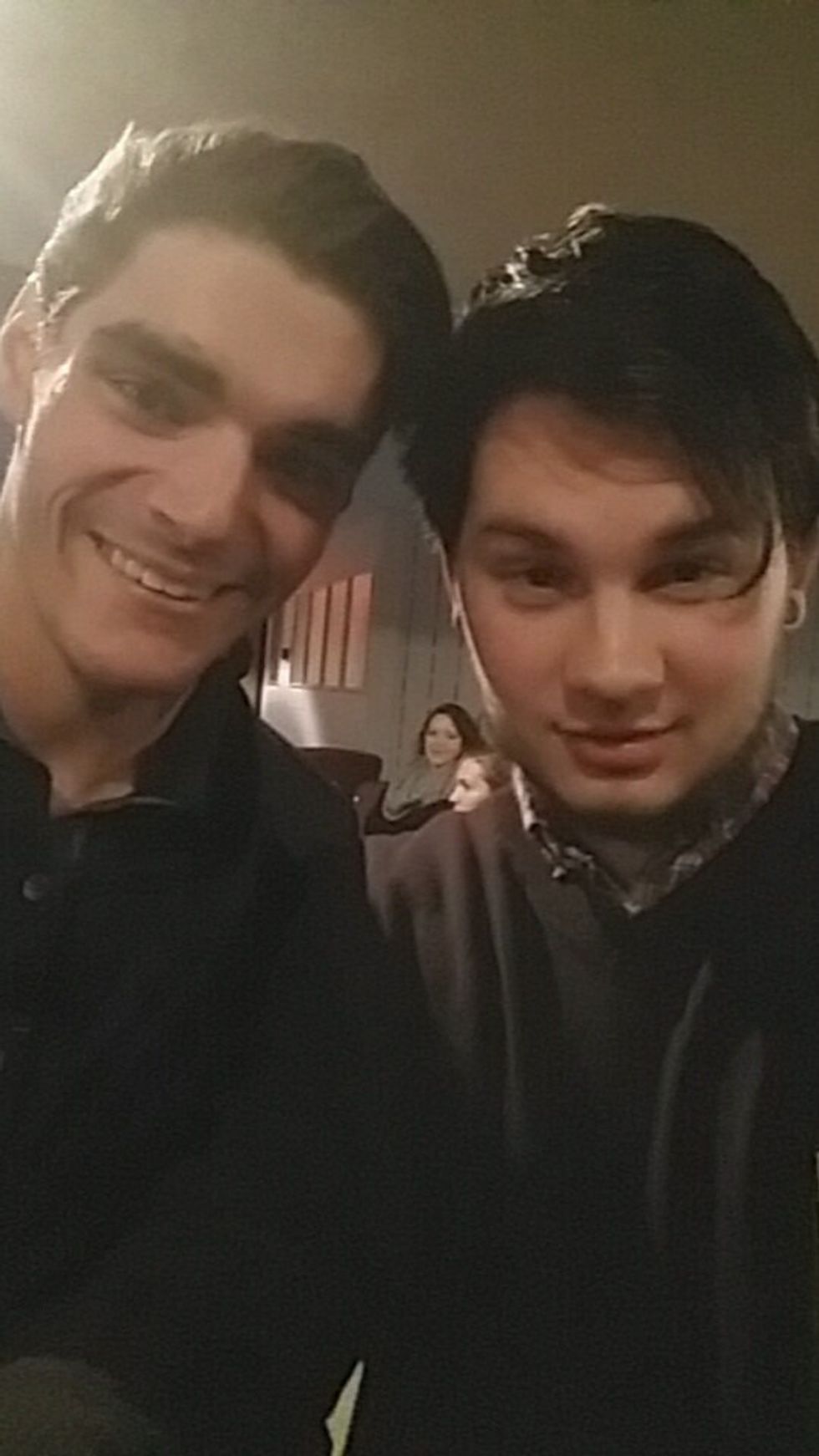
This just about wrapped up the interview, so I thanked him for his time, shook his hand, took a selfie, and sat down to hear his talk. It was truly inspiring to see how Mitte has been able to accomplish so much by turning his hardships into advantages, leading him to Allegheny College where he can speak about growth, self-adjustment, and his humble journey.