
When first presented with the idea of writing an article on the various profiles of my fellow students at the University of North Georgia, I was also told that the main focus of the interviews should be on social injustice.
Recently, social injustice has become a highly trafficked topic in the media. Everywhere you turn someone is sharing an article on Facebook about racism, or the news is showcasing a story on police brutality, or someone has written another thesis on sexism in the workplace. All of this conversation is glorious. I am proud of the voices of my generation for stepping up to the plate, getting involved, and fighting for what they believe in. I agree it is these kinds of movements that create pathways of change for our society, our country, and our world. However, I also think there are dangerous consequences in utilizing social media as a means of discussing important issues like social injustice.
What we don't want is to make these subjects seem trivial because of how popular they become. We don't want anyone to sport a t-shirt that says "feminism" just because it's what is trending and not because it's what is important. We don't want the real issues that plague the people of our Earth to feel equivalent to what's fashionable or simply what's "in."
That is why I decided it was important to include stories from people without ushering their words into trending hashtags or lumping their perspectives on a bandwagon of millennial angst. I want to tell stories for what they are; I want people to take and interpret what they want from these stories.
Brandon Stanton, the original creator and photographer of the famous photo blog, Humans of New York, and the inspiration of many similar photo blogs including this one, sums up my goal quite perfectly:
"So what I am always looking for is, I'm always looking for something that that person has told me that nobody else has told me. It is normally not an opinion, and it is normally not a philosophy. It's almost always a story. Because we all share similar philosophies, we all share similar opinions on a lot of different issues, but all of our stories are our own.”
No strings or labels attached, two students resident to the foothills of our humble mountain town of Dahlonega, GA share their stories, thoughts, and experiences from their time spent here at UNG:
Julia Kien
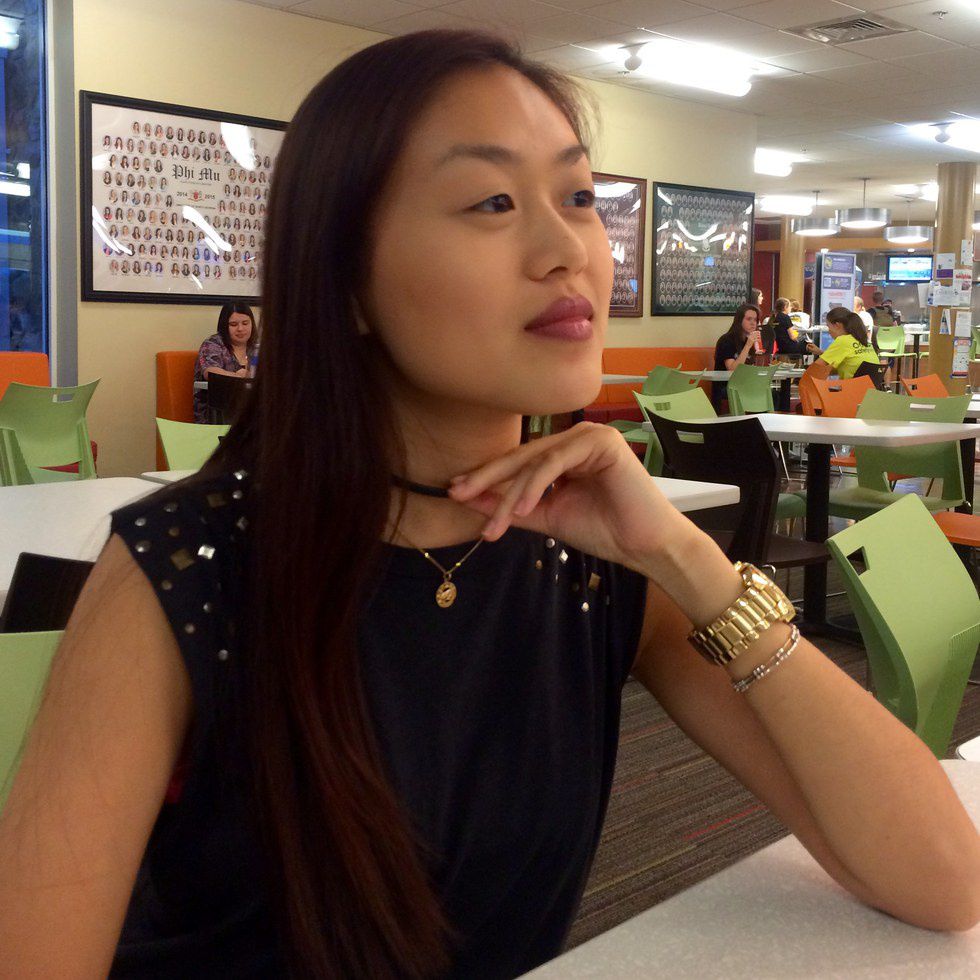
Julia is a math education major. She is also a sophomore and a member of the Honors Program. Born in Gwinnett county, her mother is Vietnamese, while her father is part Cambodian and part Chinese. Although she has plans to finish out the year here, she will be transferring to UGA next fall for her Junior year.
"I guess you could call me a jaded Asian. I have experienced being Asian in a white community my whole life. I'm used to being the only Asian in a White class. Sometimes here people will assume I don't speak English which I totally understand because we have a lot of foreign exchange students that come here but still, it can be frustrating. They take one look at me and put me into the 3% Asian box. People don't give me a chance."
"You should never jeopardize who you are to fit in. Most people here are very Christian, conservative, and athletic. It's very homogeneous here -very crunchy granola. And I'm just not those things. When I first came here I wanted to give some of those things a chance because I wanted to fit in. I went to Wesley to see what it was like but it just wasn't for me. I also found myself wearing my Northface all year. But Ive decided that that's just not me. Chacos are not who I am. I'm sorry I don't wear a t-shirt and norts everyday."
"When I wear my choker necklace people look at me so judgmentally like I'm a goth. I like this necklace and it's trendy!"
"I think the South just really loves tradition in all things. That's not always a bad thing. It just means people are going to take a longer time to change here than in other places. Tradition is all they know. When they're confronted with something they've never encountered before, they tend to dislike it. I don't understand that. But they are just new to tolerance. And they feel like it's a threat to who they are. And they don't want to change who they are."
"The thing that UNG lacks the most is diversity. That is one of the biggest reasons I'm transferring to UGA. That and they don't have enough puppies here."
Kyle Patterson
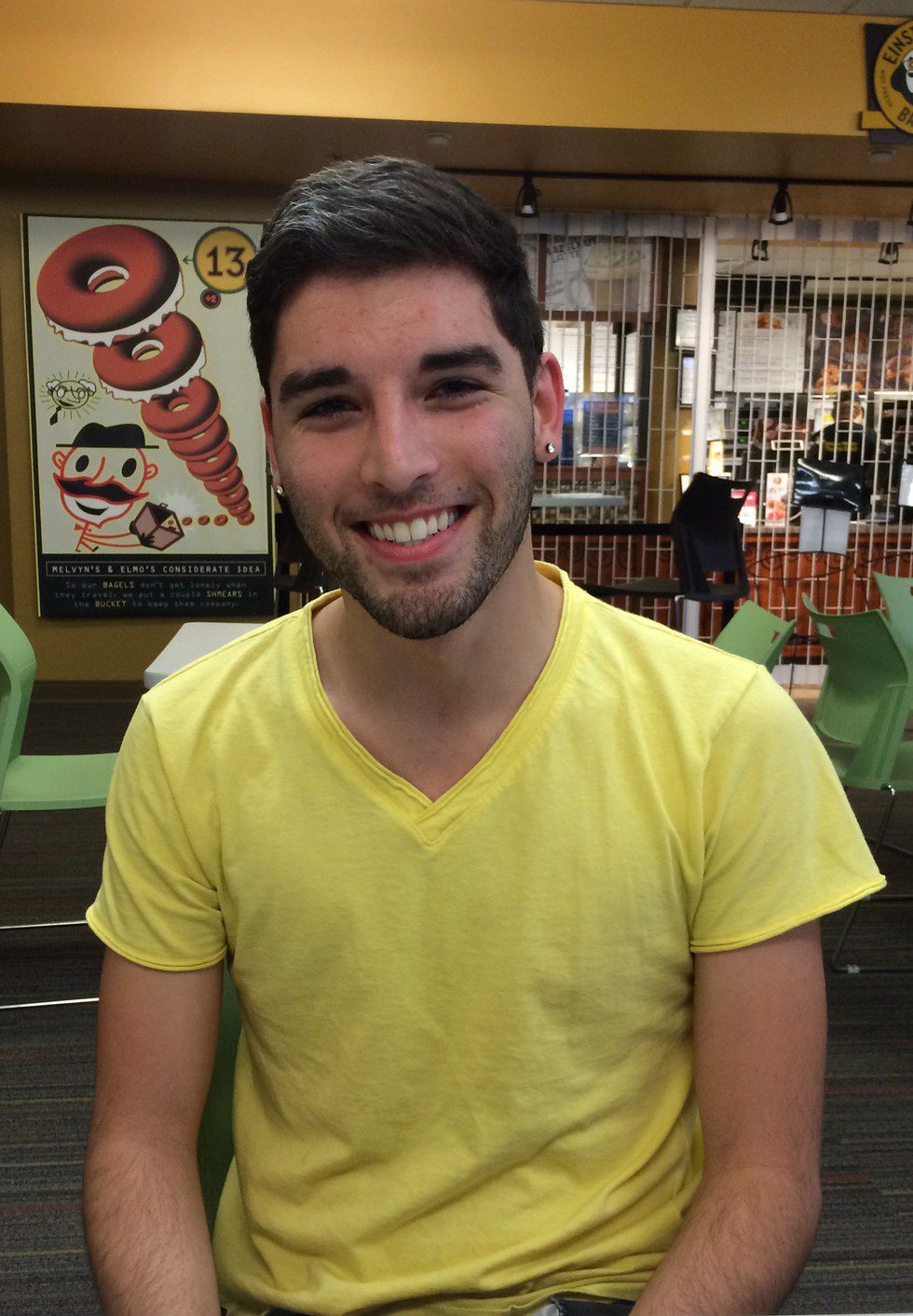
"When you're in a minority here, you can't find people like you as easily. It's like a hunt. For sexual orientation, race... You can easily make friends here but you can't find people similar to you. Thats what UNG lacks the most probably. Diversity."
"My favorite thing about UNG? Probably how you have the ability to form a strong bond in your department. It's a small school so you get to know your teachers and the students who are in the same major as you. Its nice."
"One time I was holding hands with a guy and someone honked their horn. I turned around and the guy said 'No. Not you faggot.'"
"Another time I was at work and I was helping these three guys. For whatever reason I couldn't help them and they said that thing that guys would say a few years ago. Some people still say it now: 'Ahhh gayyyy.'"
"I want people to understand that when you use 'gay' as an insult, human beings identify as these words. When you're saying someone is gay and your equivocating it with 'stupid' or 'bad', that is identifying these people as stupid. It's the same thing as saying 'retarded' as an insult. I hate that."
"Whenever I meet people I kind of have to change how I would normally act. Its like I put on a straight persona to see if the person is trustworthy because of the reactions I've had before. Its something I do automatically now because its something I had to hide for years when I was younger. It's like I have to test the waters." <Isn't that exhausting?> "You get used to it. Now I don't really have to do it nearly as much because I've grown in my department here. They don't judge me. They all know me. Its like my sanctuary."
<What's the gay community like here?> It's tiny and we all know each other.
"I came out August of my freshman year here at UNG. I came out to my family and friends and my hall and I had a really good reaction actually. Honestly it could have gone bad. But at that point I was so tired. I was always thinking 'What are they gonna say?' What are they gonna think?' And I just decided if it's out there, they can't whisper."
"I grew up in the church and I am still a Christian. I do have a personal relationship with God. And it's tough sometimes because I'm told in church that what I am and what I am thinking is wrong. Some may call me a hypocrite. But it's not black or white. The most important thing for me is that I know I am saved. And once you're saved you can't be unsaved. Christianity is about having a relationship with God and I know I have that. My relationship is not just about going to church."
"In high school I had a boyfriend but I also had a strong relationship with God. I went to church every Sunday and walked to youth group on Wednesdays even though my family didn't go. My youth pastor told me one day that I had to break up with my boyfriend or I couldn't go there anymore. And I remember being baffled. He said 'We don't want the church to misrepresented.' But I remember thinking the church isn't for the sinless. There was only one person on this Earth who was sinless. The church is for all sinners. How can you tell me I don't belong here? Everyone belongs here."
"What we hear, what we see affects us. How different people are portrayed in TV shows and movies affects how we view them in real life. Gay characters are often seen as bad- they are drug users or they have many partners or they're involved in scandals. We need more normal gay characters in the media. That could help the stigma against gay people here and everywhere really."
"Something I will always take with me from this school is the friends I've made. Great friends are the best gift anyone can have. These people I've met here will be with me for the rest of my life. Teachers too. They've helped me believe that it's okay to be me."
Note: Most of these quotes are paraphrased responses to questions.