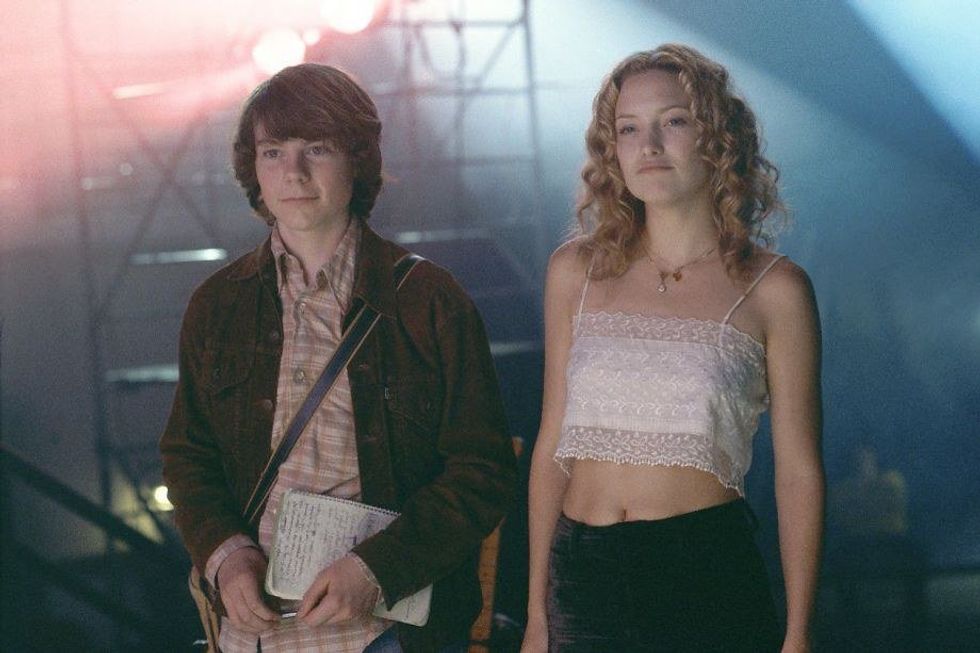
In the year 2000, Cameron Crowe blessed us with his semi-autobiographical film about rock and roll and the 70s: “Almost Famous.” For those who are not familiar — you’ve definitely seen it around - you know, the one with Kate Hudson wearing big glasses — it’s the story of William Miller, a 15-year old aspiring rock writer who ends up on tour with one of his favorite bands to write a piece for “Rolling Stone” in the early '70s/the coolest movie ever.

As a writer and general pop culture junkie, this movie is everything to me, and there’s a lot to be learned from William and his journey cross country to achieve his dream. He was “kidnapped by rock stars,” saw America, and had a classic rock and roll journey, but with several important take aways.
He chased his dream.
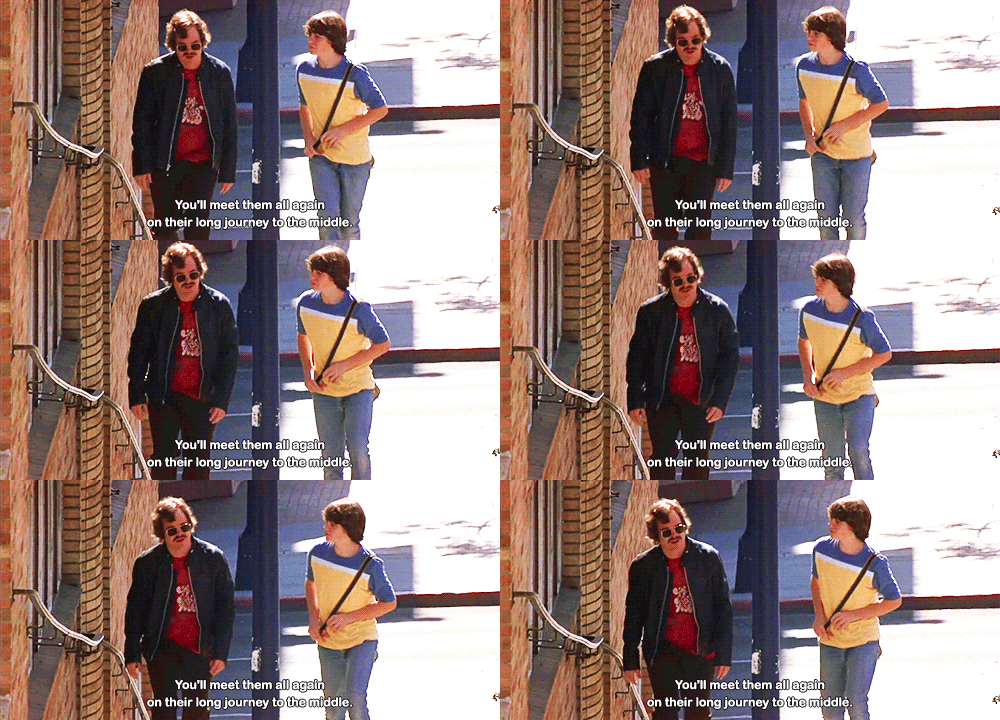
But really, so many of us can claim we’ve done/are doing the same, but The Enemy actually did it. He relentlessly sent his work to someone major in the biz (Philip Seymour Hoffman’s Lester Bangs, editor of the notorious "Creem Magazine"), got an assignment, and turned what could have been a missed opportunity into something of (fictional) legend: getting the cover story of “Rolling Stone” at age fifteen and going on a rock tour.
How many of us, upon seeing our favorite band, or any of our idols, for that matter, would have just kept walking, gushing all the way, forever left to wonder, “What if?” I know I have. William Miller did not. If he had, there would have been no movie. William Miller was willing to make a fool of himself just to tell them he loved them (they’re so incendiary), leading to him going on freaking tour with them. It caused him to grow up quickly and learn about himself, namely, that he has what it takes to take on his dream.
He wasn't afraid.
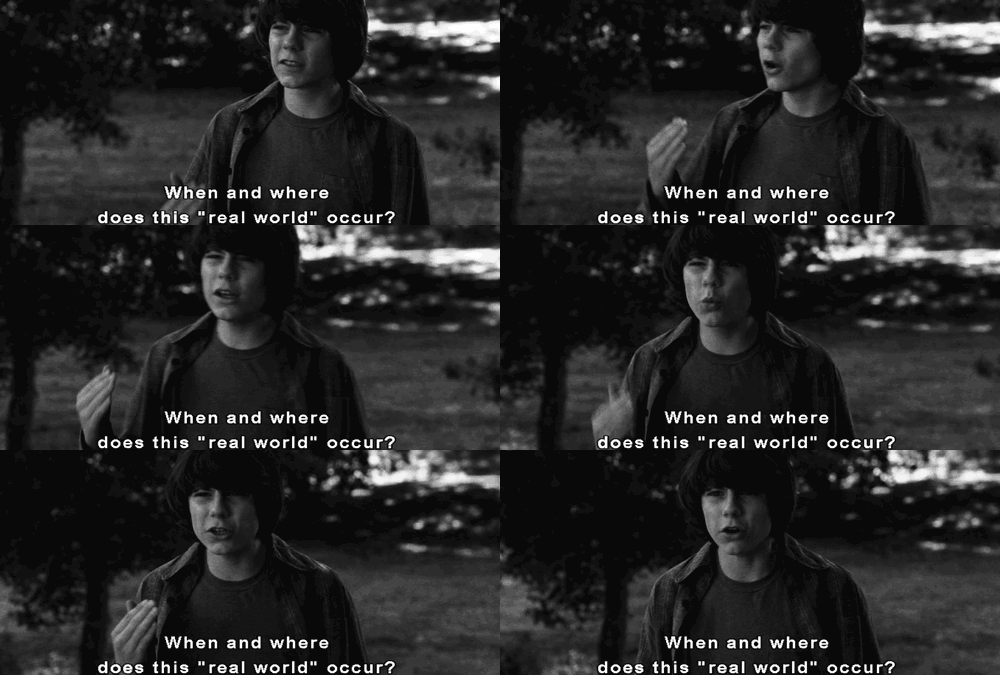
The road is a big, bad world, but can you imagine the road in the 70s? The time of, as Elaine Miller, his mother, (Frances McDormand) put it, “drugs and promiscuous sex.” For those of us who are fans of playing it safe, this could be a deal breaker; or else you claim you trust yourself, and are as honest or as risky as the circumstance permits. But he wasn’t afraid of asking for extensions, whether it be from his mother or his editor; for help, for whichever drug induced adult he had to take care of; for advice, constantly calling up new found pal Lester Bangs. He also clearly wasn’t afraid to take the opportunity to write for “Rolling Stone” under false pretenses, lying about his age, credibility, but he got where he wanted and owned up to everything he had to- he was, for lack of a better word, ruthless.
He spoke up.
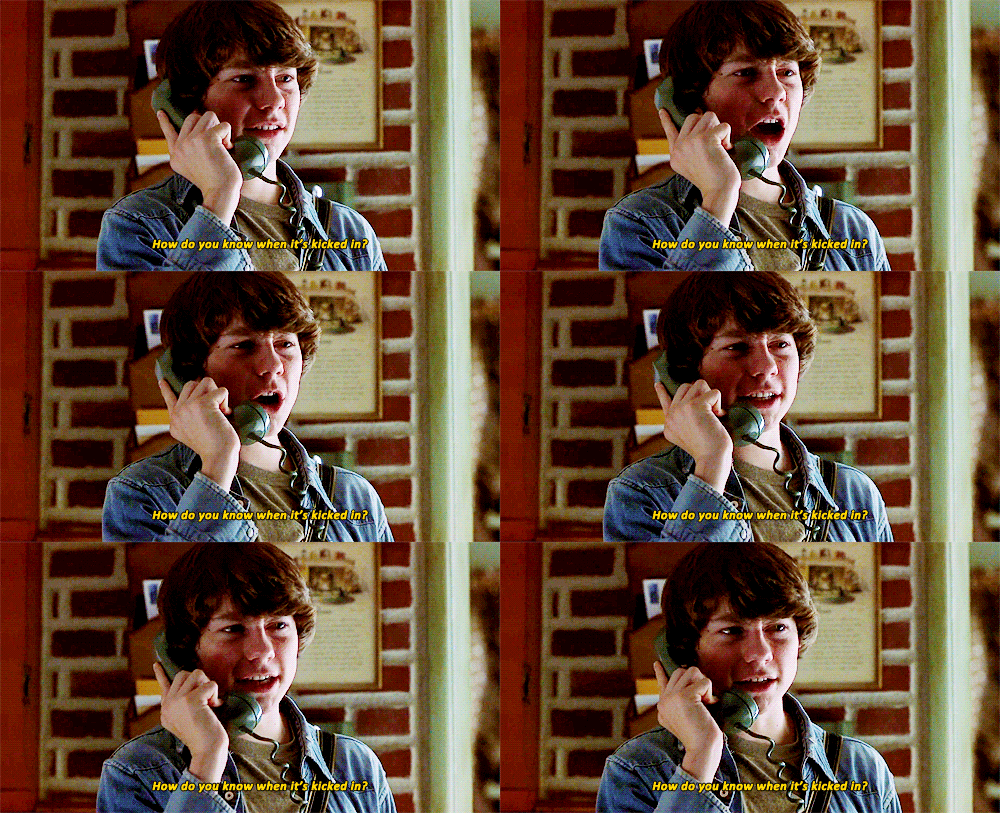
He was so much more than just a wallflower: granted, to be a writer, being a wallflower comes with the territory. It takes observation, keen listening, quick thinking, all of which is not hard in the proper environment. He went with the flow, but wasn’t hesitant to ask for help when he really didn’t know what to do: in a way, he was almost the babysitter, and definitely more adult than originally given credit for, which makes for some damn good storytelling- lucky him. He was never hesitant, he never let the band off easy in getting interviews and doing work, he professed his love for someone who maybe wouldn’t love him back. He had the drive and dedication, that as we learn from the film, is not for everyone and takes years to come by.
He played the cards he was dealt.
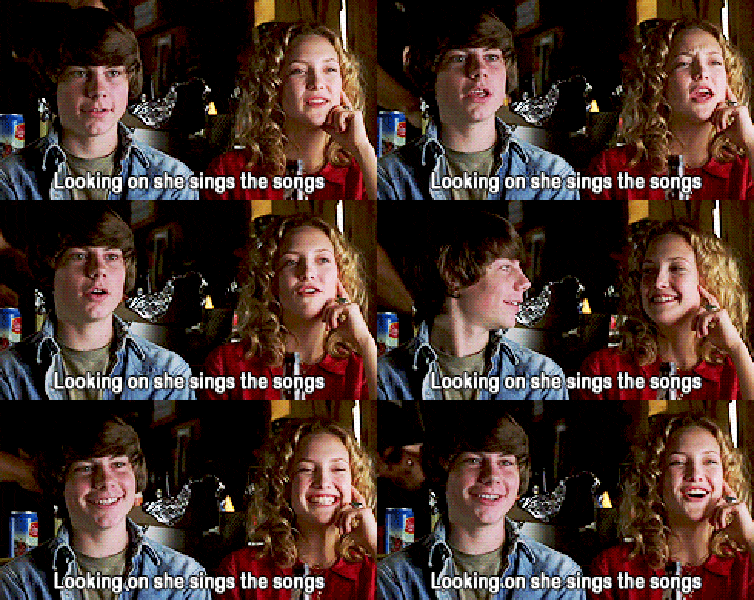
Every time there was a road block, he found a way and was prepared. He was prepared for his mother to dismiss his entire trip. He was prepared to be resigned to his uneventful, but musical life. He was prepared to not go on the adventure of a lifetime, hopefully the first of many. And then she said yes and gave him a whole new deck to play with. It was scary, almost unbelievable, but he played accordingly, and ended up better for it. He only allowed for himself to get so starry-eyed in the pursuit of his work, but when a deadline was approaching he made it known and did what he could to do his job, with little to know help. The world of hardcore 70s rock and roll was a whole new one to him, but he didn’t let it change him- effect him, yes; harden his demeanor and expectations of reality, definitely; but alter him as a person, no way. And then the trip was over and he had to explain to “Rolling Stone” how he was a 15-year old high school graduate writing their cover story. And, after some trying, it got on the cover. Goal achieved? Oh, yes. Life changed for the better? And then some.
He made something of himself.
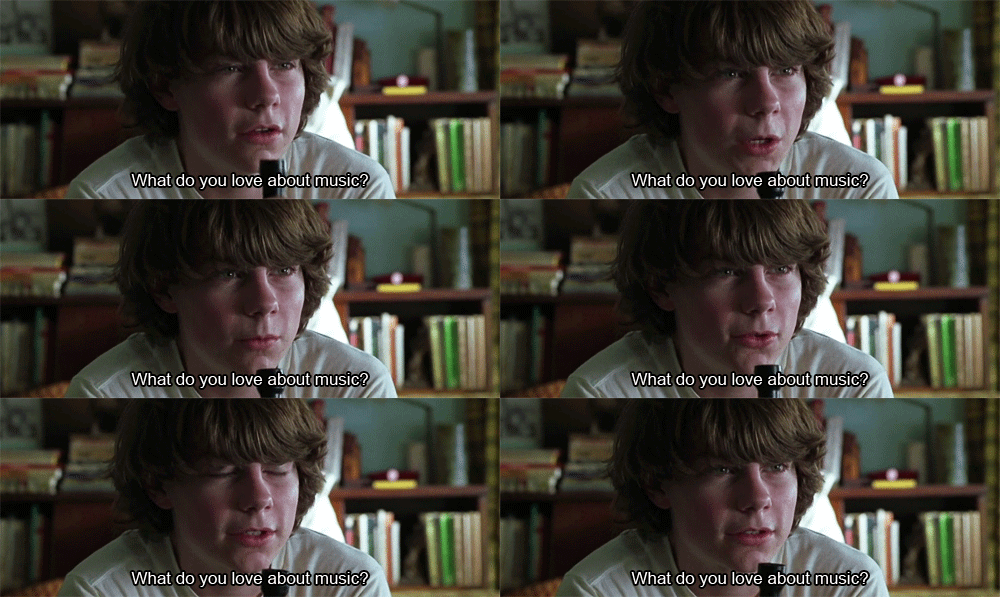
His mom lied to him about his age for most of his life, but that didn’t stop him from succeeding. He never once had the classic “I can’t do this” breakdown, or decided to call it quits. Sure, he cracked under pressure, being the guy who takes the laundry is about as glamorous as it sounds, but he did what he was sent there to do: write a great story. He was set free, he met some really amazing people, he had a near-death experience with his favorite rock band. And he was never the same. For William Miller, there would be no long journey to the middle.
If you’re a writer, pop culture nut, '70s junkie, general human being, you have to see this movie- don’t let “Aloha” tarnish your opinion of Cameron Crowe (though, that movie gets a bad wrap- it’s really not bad). It’s okay to be dark. It’s okay to be mysterious. It’s okay to get pissed off. Be bold, and the mighty forces will come to your aid. Now, go do your best. Follow your dream. Be the freaking buzz.

It's all happening.