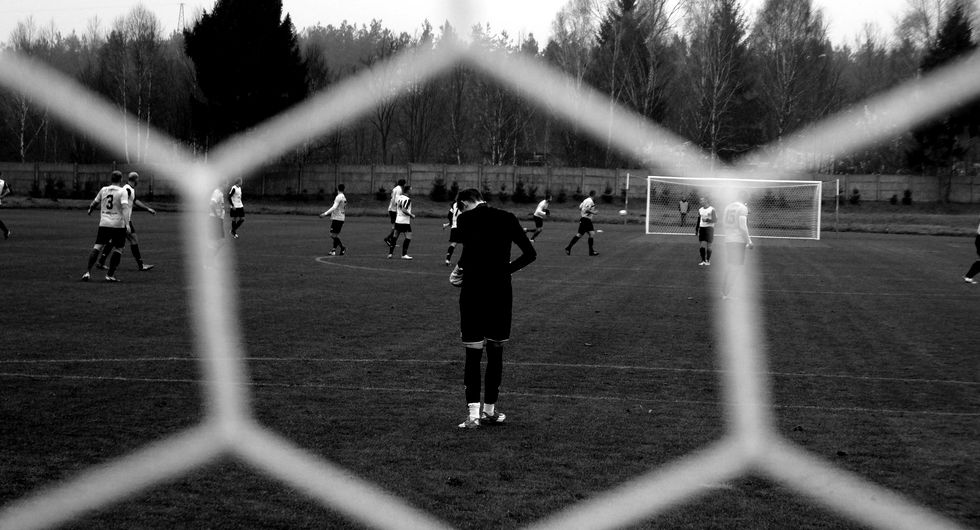
When I was in eighth grade, a team of neurologists told me I would not be permitted to step on to a soccer field ever again. My final game started with the standard blow of the whistle, the first tap, my team's offensive domination, a goal. We celebrated. My final play ended with a swift kick, the clearance of the ball from our defensive zone, my back smacking to the turf, my head spinning, an absolute blackout...
Months later, despite tenacious rehab and a stubborn determination to return to my game, the doctors told me I would only be allowed to run. So I did just that.
I ran for hours until my legs felt an exhaustion that I tried to equate to exhaustion felt after a won game.
I would run until my shirt was soaked with sweat and compare it to the end of a successful soccer practice. I did this until I realized that this was not just conditioning for the sport I still loved, but the compromise I made with doctors who would never understand the heartbreak they were putting me through.
Athletes will know that you cannot replace your sport with another. You cannot recreate the feeling of pride you get when your team succeeds. You cannot capture the same love and devotion to growing as an athlete on the field with an entirely different game.
You can train and do all of the same things for a new sport, but the longing for your sport will always remain.
I learned this as I ran laps around a colored track and visualized kicking balls into nets at the end of the drill. I learned this as my name was announced for ribbons and I waited for my teammates to slap my back with the same success. I learned this as I hoped to identify myself as a runner with the same pride I had as a soccer player, but that pride was NEVER the same.
It has been years now, and I've watched my friends and teammates say goodbye to soccer at their ceremonious "Senior Night." I've watched my friends and teammates turn down and accept offers from colleges to extend their time as athletes. I've been jealous and spiteful as they have all had a concrete moment to say goodbye to the sport. I've been angry and selfish as I thought of my grief when my teammates chose to continue playing for another four years.
Now, I know it is okay.
I had my time on the field even though it was brief. It's ending was sudden. There was so much to the experience that I was unable to control. However, it is my own story. It is who I am. I can claim that.
The lessons I learned on the field from coaches, teammates, and opponents were cut short, but in my recovery, I learned a different type of resiliency.
I learned how to let go. I learned how to move on.