

Today, I had to run into Wal-Mart for one thing or another, and as I was leaving, I couldn’t help but notice these two people making their way into the store from the parking lot. One was a middle-aged woman and the other was a young boy, around five years old. They were almost to the doors when the young boy fell. As someone who has been known to fall from time to time—more like all the— time let me tell you this fall was pretty bad.
The boy had somehow managed to scrape most of the skin off of his left shin and both of his forearms, so there was quite a lot of blood. Reacting on first instinct, I quickly threw my stuff down and went over to the pair. The mother, who had been walking in front of her child, just stopped to look at him without saying a word, while I quickly pulled out some anti-septic wipes and band-aids/gauze that I happened to have on me (because I fall a lot). The boy started to cry, and at that moment, the mother finally became involved. She said, using colorful language that I don’t feel comfortable using, “Stop ******* crying. Be a man. Strong men don’t cry because they fell. Stop it right now.” She quickly yanked the boy to his feet by the back of his shirt and dragged him into the store before I could really do anything to help, and that was it. When this child was hurt and bleeding, all that was offered to him were the poisonous words, “Be a man,” “Stop it,” “Strong men don’t cry.” I was angry, fuming in fact, as I threw all of my first aid supplies back into my purse. This mother had effectively told her child, her five-year-old boy, to be a man. And that’s a problem.
When adults tell small boys that they shouldn’t cry, shouldn’t accept help and should always seem "strong," they are raising the next generation of emotionally repressed and angry men to think that to be a real man, they have to exude testosterone and violence all the time. That’s not healthy for anyone involved, because it’s situations like this that lead to hypermasculinity.
Hypermasculinity is a psychological term for the exaggeration of male stereotypical behavior, such as an emphasis on physical strength, aggression and sexuality. A patriarchal gender system is to blame for this, because it puts the male ideal over the female. Things that are considered traditionally feminine such as housework, child-rearing, showing emotion or even simply being clean, are put down in our society. Men who don’t fit into the traditional role of masculinity are ignored and seen as being weak. This is detrimental to both genders, because it forces young boys to feel uncomfortable in their musicality, forcing them to go out and “prove it,” and it forces women to be seen as the weaker gender because of it. This leads to men lashing out at women either verbally–with sexist jokes, rape insinuations, calling them derogatory terms–or physically, to show that they are above them.
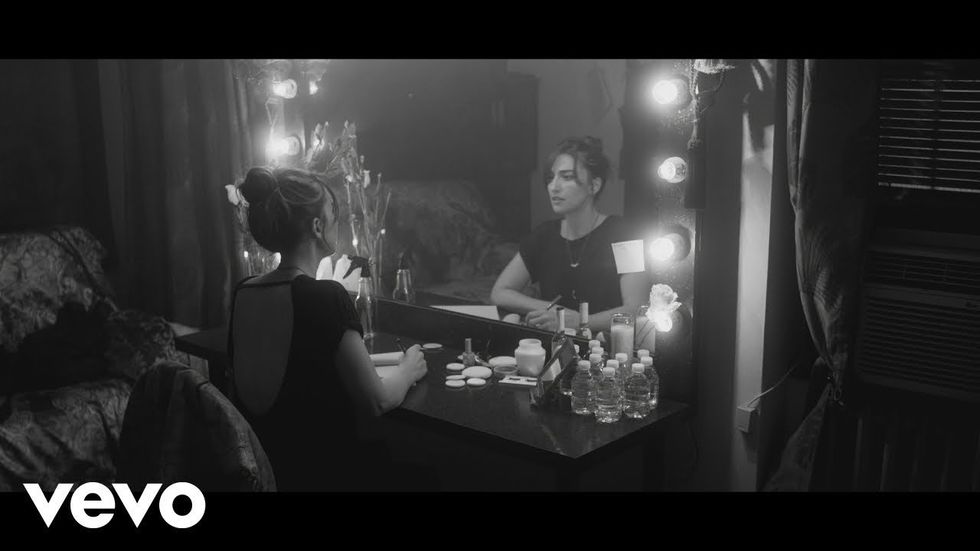
Don't believe me? Take a look at this video.
These notions are outdated and come from our ancient hunter-gatherer societies that are no longer necessary to carry on the next generation. It’s time to shake off these old bonds of gender roles and accept that they are no longer necessary. Instead of labeling people as breadwinners or homemakers, masculine or feminine, alpha or beta, let’s accept the responsibility to just treat people like what they are: people. Hypermasuclity hurts everyone, and it’s a culture that leads to the pain and suffering of the masses.
Consider this a call to action. We can be the generation that changes the thought process of all the boys and girls of the future, so that no one feels like they need to put others down in order to lift themselves up. Let’s end this patriarchal, sexist culture that has been left in tattered pieces by those who have gone before us. Together, we can build a better world, but let’s start with baby steps. If we fall down, there might not be someone around with band aids to try to fix it.