So you've decided to bite the bullet and throw yourself a house party, or better yet, you've volunteered to be your fraternity/sorority's in-house DJ for the evening. If it's your first time taking the reins, you're probably thinking to yourself, “Hey, this is gonna be a piece of cake. My aux cord is practically glued to my car stereo and I knew about Fetty Wap before Fetty Wap even knew about Fetty Wap. I even know all the words to 'Hot N****', I was born to do this." Your attitude is cute, however, as rude as this may seem, cute doesn't raise the roof.
The college music scene is tough, and if you want to survive as a College DJ you need to be willing to follow a particular set of rules. After interviewing a slew of college-aged disc jockeys, I've come up with a short list of tips that will ensure that any party you play gets so crazy, the Coast Guard will have to get involved.
Before I get into specifics, I would like to highlight the disk jockey golden rule: always read your audience. It doesn't matter how skilled you are with the tape deck or how much energy you bring to the boards, if you're playing "Yeezus" at a nursing home, you're going to have a bad time.As extreme as an example that was, the same can really be applied to college parties. Don't assume that your audience will be into the basic pop, rock, dance or hip-hop set.
Different audiences call for different sounds. Being able to tell if an audience is feeling what you are presenting is essential to your survival. Even when you've figured out the right genre for an audience, finding the right set of tracks is essential too. Say, for example, it's a few hours before your blacklight party and you're earnestly flicking through your iTunes playlist trying to figure out just what combination dark ambient psytrance and Swedish breakcore pop will best fit the theme. You may not know it at the time, but you, my friend, have already lost.
I'm exaggerating of course, but the idea is clear; stick to the basics. Crowds of college students are particular with their music, so keeping it simple is a must, regardless of how well-known or, in the case of Swedish breakcore pop, how unknown, the genre is.
I cannot stress this enough, social gatherings are not the time to show the world how well-rounded and eclectic your taste in music is. This means that for whatever theme you do decide to employ, the fundamentals are key.
Speaking of fundamentals, let's talk playlists. Let's say you've got a good idea of what kind of crowd you're going to be playing for and you're thinking a mixture of current pop/hip-hop/dance hits will do the trick. Not bad, however, there are ways to spice up the dance floor without venturing into uncharted musical territory. This is where your "classics," "novelty" or "oldies" playlist could come in. For the college scene specifically, mixing up your playlist with trendy music we know from middle school, high school, old movies and even television shows, from time to time, will bring on a wave of healthy, exciting nostalgia to any dance floor.
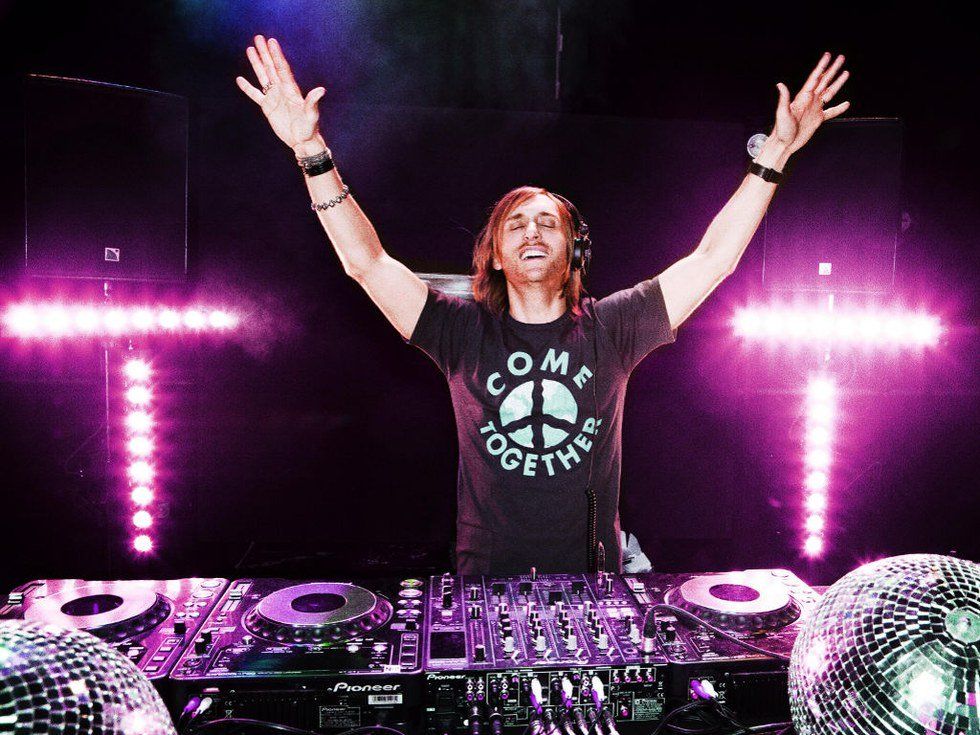
Unless you're a professional, leave your fancy DJing technology at home. It goes without saying that damp, crowded basements filled with inebriated college students are probably the last places you want to bring your $1,000 turntable and mixer set. And if you're not being paid, nobody is expecting you to whip out anything fancy anyway. The real point here, however, is that being a good College DJ is less about your equipment and more about your ability to work with the crowd and transition from track to track smoothly.
Your music choice and your transition techniques speak more about your ability than your tech. Don't try emulating Diplo just yet, however; scratching and loops are both things that either make or break a set, so only use them if you know exactly what you're doing, and even then, use them sparingly. I didn't rush through my homework and stand outside in 30 degree weather waiting for the night bus, to come hear you rip one of my favorite tracks apart. And that goes for all special effects too; anything that ruins the flow of a good tune is akin to a personal insult , so be careful.
That being said, the best disc jockeys must be able to track the BPM of each song and play them back to back accordingly for a smooth transition, anything else is just icing on the cake. So remember padawans: the best transition is the one nobody notices, and leave the scratching to the professionals.
In summary, always have a sense of what your audience wants to hear. Learn the fundamentals of the genre you have chosen to play and don't be afraid to pop a few classic, or novelty songs, when things get flaccid. Also, your ability as a disk jockey is not the sum of all your fancy tech, and keep your hands off the mixer until you've had way more than a few hours of practice.