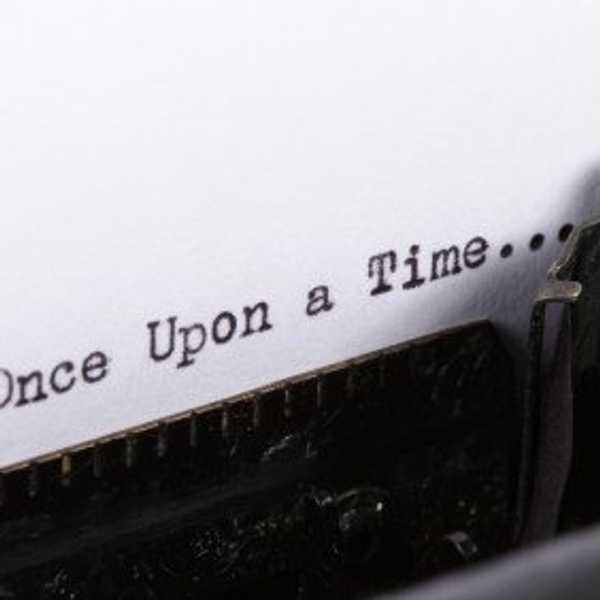

I have always loved writing. When I was little, I always kept a diary or a journal. I remember my first diary — it was a little blue book with a purple spine and a gold lock. I still have it. Inside, I wrote all the musings of a precocious, wide-eyed five-year-old: thoughts on the little boys I had developed crushes on in my kindergarten class, aspirations for jobs "when I was older," and meditations on "Moulin Rouge," my favorite movie (even then I was obsessed). Eventually, I graduated from diary to journal — I distinctly remember writing in my first journal (a marble notebook covered in a purple fabric textbook cover). That journal felt more free, more mature; the absence of a lock allowed my thoughts to be open to the world, unlike in a diary where I had begun to feel like my thoughts were trapped in the confines of those tiny lined pages.
My diary and journal writing had always been recreational — an outlet for me to express myself, never really intended for anyone else's eyes. It was not until third grade, when we started doing paragraph writing in class, that I began to realize that I had a knack for academic writing — well, as "academic" as third grade writing can be. My teacher loved my work, always asking me to share it with the class. My classmates seemed to admire my work as well — they would always come up to me asking how I did it, wondering how I was able to write so well. Really, I was always shocked by their responses. I never wrote with the intention of writing well; I simply wrote, and people seemed to like what came out.
English soon became my favorite subject. I was always placed in the "advanced" reading groups, and I became well-known for my mature vocabulary and descriptive prose. This continued through high school, where I won the departmental award for English every year and continued to be lauded for my writing ability not only in my English classes, but in my social studies classes as well — it seemed that no matter what I was writing about, I was able to do it well enough to impress my teachers.
However, most people would have probably been shocked to hear that I was very insecure about my writing. I always worried about showing too much of myself, showing too much emotion. Although it was in my writing where I freely and easily expressed myself, I could not think too much about people actually reading what I was writing. The thought of people reading my truest, most raw innermost thoughts made me feel embarrassed, ashamed, bashful. My shyness and introversion have always made me feel uncomfortable really sharing my deeper feelings; unless they are feelings of happiness, I have always felt as though my feelings are burdensome on other people.
Because of this, my writing has always been for myself. Although academic writing is generally less emotional, my recreational writing for the Odyssey was always for me; I wrote what I wanted to write. To be entirely honest, I never really kept my audience in my mind as strongly as I probably should have, and that was because I didn't like to think about people reading my work.
It was not until I wrote my last article that I truly opened up about my feelings, and in so doing, became comfortable with baring myself to my audience. As I was writing, I was fully and indeed painfully aware that everyone was going to see how I had truly been feeling. I thought of all the people I knew to whom I had tried to maintain a façade of put-togetherness, of all-encompassing contentment with my life, of happy-go-luckiness and most importantly, of perfection. I was terrified. Terrified at the notion of people worrying about me, and perhaps even more terrified at the notion of people realizing that my life is not perfect. As a perfectionist, it was incredibly hard to come to terms with that notion. But at the same time, I knew that my story needed to be told. I had realized that my story could help so many people, that so many people could identify with my story (as I had found out in the early stages of my new member process in my sorority) and find out that they were not alone. So, I resolved to push aside my embarrassment and write my article with 100 percent candid honesty.
The response I got from my article was unreal. It was beyond anything I could have ever expected or even hoped for. More than 75 people liked my post on Facebook. Friends, family, an older alumnus of my high school, and a former teacher commented congratulating me, applauding my writing, and sharing how happy they were that I had found happiness at college. But the responses that truly changed my viewpoint on writing were the private messages I received from people who had read my article. Fellow new members from my sorority, the co-president of my a cappella group, close friends, people who I considered friends but with whom I was not very close, and even people who go to my school with whom I had never interacted. The private messages that shocked me the most were the ones that came from people I was not even friends with on Facebook — people I did not even know who read my article and reached out to tell me how much my article meant to them. Through this article, I reconnected with a cousin who I had not seen or talked to in years, who identified with the struggles I talked about in my article and was feeling nervous about attending college next year.
People with all different relationships to me — people I had known for months, people I was super close with, people I had just met, people I did not know that well and people I did not know at all — took the time to reach out and share with me how I had done a great job, how they were so proud of me for being so open and honest, how they were so glad I had found personal happiness, and most remarkably, how they had identified with my article and how I had helped them see that they were not alone in their feelings.
It was this outpouring of support, congratulations, and sharing of common experiences that made me realize that my writing has the power to be bigger than me. My writing is bigger than my own feelings. My writing is bigger than the publication I write for. My writing has the power to touch people, to reach people on a deeper level and to help them in some way. Through my writing, I have served as a comforting reassurance that it is okay to feel the way that I felt. I have served as a guiding source of wisdom to those who have yet to attend college and are nervous about the experience. I realized that I had the ability to connect with other people, to help other people, and it was when I was most aware of my audience that I was able to do this.
It was through uncomfortable vulnerability, baring my soul and my innermost feelings to the world, that I was able to touch people. Through this experience, I have learned that the true value of writing lies not in getting my thoughts out on paper, nor in merely expressing myself. Writing, whether in the form of prose, poetry, song or rap, has unique value in its ability to impact people other than the writer. I have touched people through my writing, and if I can continue to do that for even one person in everything I write going forward, then I have done my job as a writer.