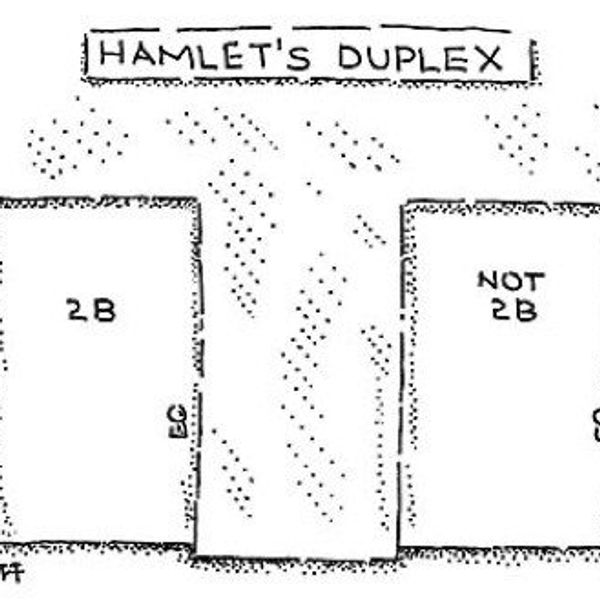
When I was growing up, I was always told that opposites attract and in order for a successful relationship you needed to find someone who was completely different than you. In theory it makes sense. If you were to marry someone who was the opposite of you, you would both bring something new to the relationship that the other person was missing, like two matching puzzle pieces. Over the recent years, however, this idea has changed.
Back in the 1950s, a woman's role was to stay at home to take care of domestic work while her husband was responsible for "bringing home the bacon". During this time, marriage was found on the basis of economic benefits. A man would look for a wife who could take care of their children and their home and a woman would look for a husband who could support their family comfortably. This division in labor played right into the idea of opposites attract. This is no longer the case today. Women have become a huge presence in the work force and it has subsequently changed family life.
Now that more women are getting an education and working in all kinds of job, there has been a shift in our marriage culture. Women are no longer dependent on men and, because of this, they are waiting much longer to get married. These two factors have contributed to a new basis for marriage: love. Instead of marrying their high school sweethearts, people are establishing themselves in the world first before looking for a companion they have a real connection with. If people of both genders are able to support themselves without any help, why wouldn't they take their time to find someone they truly love and connect with? This has inadvertently led to an increase in marriages between people in the workplace. We are no longer looking for a dependence based marriage but an equal one that allows us to share similar interests and opinions.
With that being said, there is a new drastic divide arising in our society. If people are now marrying the people they work with, this means they are marrying people of the same educational and economic level. This is called assortative mating. It is the idea that we marry people who are most similar to us. In other words, a complete reversal of the idea that opposites attract. While this creates less of a divide between spouse incomes and a more equal relationship, it creates a much larger divide between household incomes. The rich become richer and the poor become poorer. The wealth becomes concentrated in these power couples instead of crossing between the classes. It is a continuous cycle that has aided in the disappearing of the middle class we are hearing so much about these days.
This is not something we can look at and say, "Well if we do x, y and z we can solve this problem." We can't stop people from marrying who they want to marry. As I was researching for this article an ad came on my TV for a dating website called Elite Singles. Even dating websites are contributing to the divide and making it easier to find someone with the same socioeconomic position. It's impossible to change the way our society has progressed and the new social norms that have accompanied it, but it doesn't mean there isn't another approach to fixing the continuing divide. The biggest factor contributing to the household income gap is still embedded in the ability to attain a college degree and with college tuitions steadily increasing, the problem has only worsened. In a country that is supposed to be based on better opportunities, we don't do much for our own citizens to capitalize on that.
In addition to that, there is an incredibly negative attitude towards people stuck in poverty. We blame them for their low class status calling them lazy and claiming they are unwilling to do anything to fix their situation when that is far from the truth. In fact, our negative attitude toward people in poverty only contributes to its continuous cycle. We suppress them by segregating them into separate neighborhoods, denying them jobs because we don't trust them, underfunding their school systems, and reinforcing negative stereotypes. They are taught that college isn't meant for them and it removes all incentive to try. Think about it. If for your entire life you were taught by society that you would never make it to college, would you even try? No, you wouldn't. You would skip class, never do your homework, and fail your classes making college completely impossible.
Our society has changed dramatically since 1950 and we're leaving behind those who don't benefit from it. If we were to make an actual effort to make college affordable and tried to help those in need rather than suppress them, we might have a real chance to fix the growing divide between our classes. We can't change the direction our society has come from, but we can absolutely make the changes necessary to make sure no one is left behind.