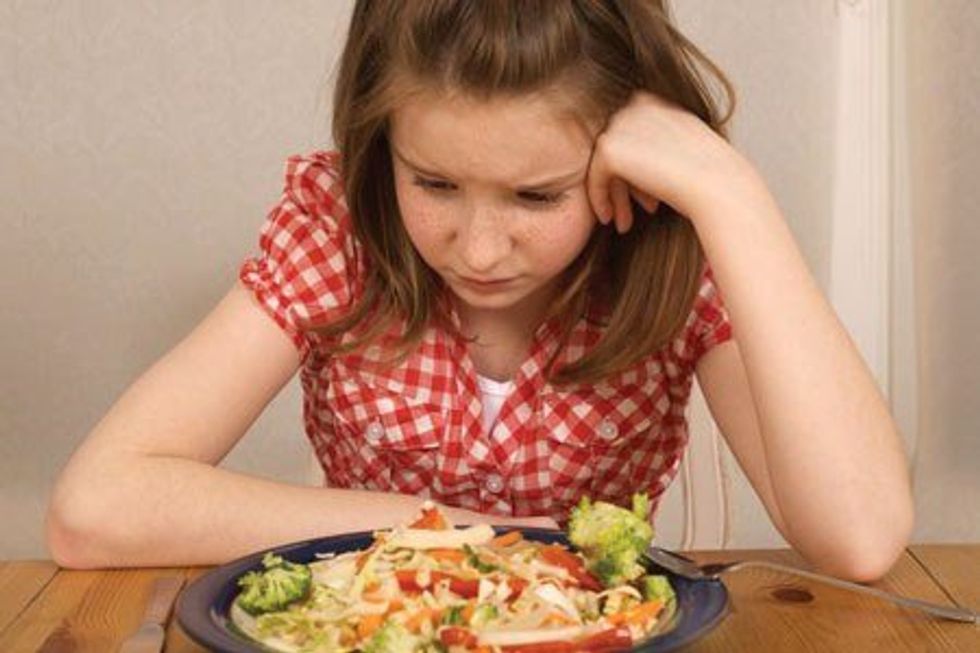
I don’t like hot dogs. I have never had a pickle. I can’t stand any soup unless it’s chicken noodle, and any foreign food, even Americanized foreign food, is a no-go. All my life I have been deemed a picky eater; to many, I have even been called “the pickiest eater” they have ever met. I am well aware of the fact that my eating habits are not normal. I have never wanted to be this selective with my food. I would love to be like one of those people on the Food Network who have no problem trying anything that is put in front of them. Unfortunately, that’s not me. Unfortunately, I must deal with the fact that my food options are limited, and that is not always easy.
Many people believe that being a picky eater is something that I have chosen. They think that I am being stubborn and that I simply refuse to try new things. This is not the case. It’s true, I do not always try new things when they are presented to me. Over the years, though, I have tried many different things; I know what I like, and I know what I don’t like. When a new food is presented to me, I judge it. I judge the smell. I judge the looks. I analyze whether or not I would like the texture. If too many items are mixed together, I immediately reject it. After my analysis, I come to an informed decision. If the plate looks appealing, I will give it a try, but if it does not, then I simply move on. The problem is not that I am unwilling to try new things; the problem is that the list of things that I like and that are appealing to me is much shorter than the list of things that I do not like. But, is that my fault?
My eating habits are arguably the most significant trigger of my anxiety. I don’t like it when I offend people, and I do my best to make people happy. Whenever someone invites me to their home to eat or to go out to a restaurant with them, I immediately get this horrible feeling in the pit of my stomach. If I cannot choose what will be served for dinner, I cannot be sure that I will like it. I am unable to force myself to eat something that does not appeal to me; I simply can’t do it, and if I can’t eat what I am given, then I will feel bad about being rude to those who invited me to dinner. My solution to this problem is to avoid such situations, usually claiming that I have other obligations.
There are circumstances where people understand my eating habits and try to cater to them, changing plans to fit my unconventional needs. This still makes me feel bad; I don’t want plans to change because of me. I don’t want to be an obstacle that gets in the way of what everyone else wants.
Being a picky eater is not fun. It is not something people like me do for attention. It is not something we do because we are stubborn. It is a part of who we are, and it is something that can only be adjusted at our own pace, on our own terms. When people around me tell me to try some food that I do not want to try, and I say “tell” rather than “ask” because that is usually how the situation is presented, the peer pressure really gets to me. Outsiders may see this situation as silly, something that is not a big deal, but to those who are like me, it is a big deal. I hate feeling like I have to apologize for being the way that I am. I’m not asking for people to embrace these habits, but I am asking for people to understand people like myself, people who might really be affected by the way they are judged for habits they cannot control. This goes beyond just the problem of picky eating, and we can all work on being more accepting of others, even if their habits do not match what is seen as conventional.