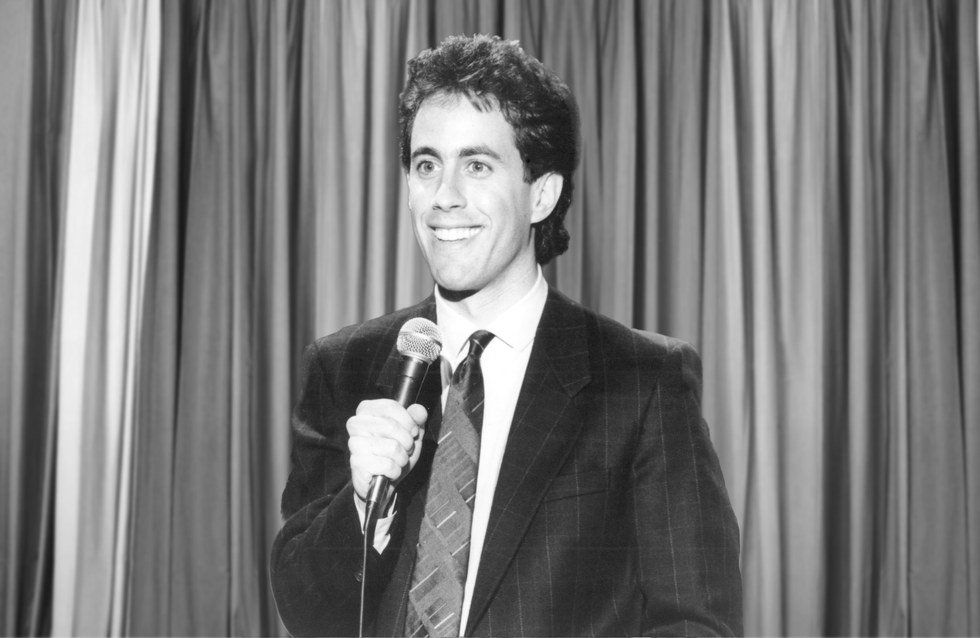
Who decides what can be said, and what cannot be said? Jerry Seinfeld has put his two cents in on the matter of censoring comedy. He, along with fellow comedians Chris Rock, Larry the Cable Guy and the late great George Carlin, have called college campuses “too politically correct” and advise against performing at them. “[College students] just want to use these words: ‘That’s racist;’ ‘That’s sexist;’ ‘That’s prejudice,' they don’t know what the f--- they’re talking about,” said Seinfeld in an interview on Colin Cowherd's radio show, “The Herd.”
Stand-up is not new to controversy. In the 1970s, Richard Pryor became a lightning rod for controversy. At the time, Pryor was being called controversial for, among a myriad of other things, using profanity and finding humor mocking white people the same way he did with black people.
A black comedian crossing their own racial boundary and crafting jokes that insulted white members of the audience was new, and cause for alarm. Though many supported Pryor and called him the comedian of the generation. He was nominated for a Grammy for Best Comedy Recording/Album every year from 1975 to 1983, winning five of nine. Others called for the censorship of Pryor's comedy, negatively contrasting Pryor's act to the clean and safe comedy of Pryor's biggest artistic influence, legend Bill Cosby. While the very funny Cosby found clean humor in the domestic lives of black America, Pryor found his sources in darker areas, touching on taboo topics that affected all races from the perspective of a black man in America.
Controversy in stand-up long predates Pryor. A major influence on both Cosby's and Pryor's comedy was convicted of obscenity in 1964. Lenny Bruce was a comedian who pushed the boundaries of what can be said to a private audience. Because Bruce pushed the envelope of what can be said the performances used as evidence to convict him of obscenity, including a bit about urinating in a sink, seem tame by modern standards. Under the first amendment, New York posthumously pardoned Lenny Bruce 39 years after his conviction.
In 2012, comedian Daniel Tosh made a joke about rape. He quickly apologized for his comments after an account of the performance told from the perspective of the woman who was the target of the joke went viral on Tumblr. The events of the night are unclear. The anonymous audience member claims she left right after Tosh targeted a joke at her for heckling his set, while the owner of the comedy club claims the victim and her friend stayed the remainder of the show and accepted free tickets for a future show. However, what is clear is the meticulously documented reactions of public figures. What is clear is the outpouring of voices on both sides of the argument, “are there untouchable topics?”
If you're going to follow up with any link in this article, read comedian Patton Oswalt's brilliant take in his post on his website titled, “A Closed Letter to Myself About Thievery, Heckling and Rape Jokes.” Oswalt walks the fine line of supporting Tosh as a comedian trying new things and lambasting him for making an unfunny joke in poor taste. Oswalt, initially conflicted with his blind support for all comedy concludes, “think twice about who is the target of the punchline, and make sure it isn’t the victim.”Oswalt succinctly describes where the line is between comedy and hatred. If the punchline relies on an audience's prejudice and hatred of the subject, then it is not comedy. When the punchline relies on an audience's understanding of a situation, where they can empathize with the subject, whether it be Lenny Bruce peeing in a sink, Richard Pryor mocking affluent white life, or any other subject once deemed “untouchable” by the courts of law and public opinion, that is, Oswalt would argue, art.
The history of stand-up has been a push towards freedom of speech, and the right to say anything in the pursuit of humor. If a controversial joke flops, then so be it. Stand-up has relied on the abilities of an audience to discern real hatred from comedians mocking society's racists and sexists.
When Louis C.K. jokes about the privileges of being a white man in America, is he promoting a hatred of minorities and women? Or is he making an observation that belittles those who would truly, foolishly, claim that white males are better than anyone else? To take the joke, “I’m not saying that white people are better. I’m saying that being white is clearly better, who could even argue?”
To a place where it is a censored topic, a subject matter off limits for white comedians is a step back from decades of progress towards comedy's ultimate goal; let the funny, be funny.
So why does it matter that some comedians are beginning to avoid performing at college campuses? Lehigh's mission statement closes with, “The University encourages physical, social, ethical, and spiritual development as well as rigorous intellectual development.” This encouragement of diversity of ideas must be available from all angles. Just as it is important to condemn hateful actions, equally important is the obligation to mock those responsible. In the last year, thousands of lectures have been given all across college campuses on science, business, engineering, poetry, surfing, aliens -- yada yada yada -- by the very best and brightest in their fields. That we would want to discourage stand-up comedy, the art of mocking bigotry, well, it's almost funny.