


For the first time in the college's history, Indiana university held its first TEDx event on Friday, Nov. 13. There is a local TEDxBloomington that generally occurs in the spring, but this event was organized by a small group of students who thought they had “ideas worth spreading” and wanted to bring TED to campus.
TEDx talks is basically a local gathering where previously recorded TED talks are shared with the community. If you haven’t heard of TED talks in general, then stop what you are doing and look them up right now. Seriously, it’s life-changing. With two years of exhaustive planning and work to get the name licensed, TEDxIndiana University’s first event was highly anticipated. The TEDx team's hard work paid off, and the event went on without a glitch. With the theme “eyes on stars, feet on the ground,” the eight speakers’ talks ranged from art to space to the California water crisis. Without further ado, here is a quick synopsis of each talk for those who missed the event, but don’t forget to keep watch for when the full videos are posted on ted.com.
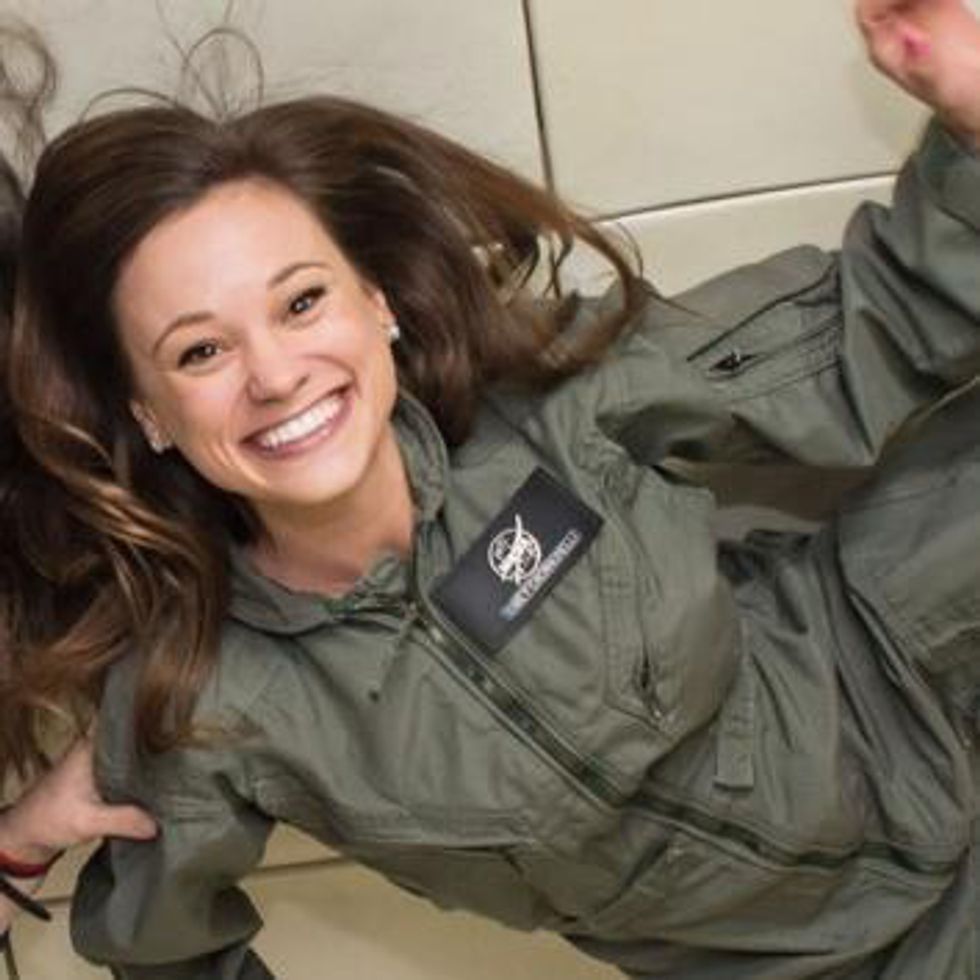
The first speaker was Emily Calandrelli, who has two master degrees from MIT and is producer and host of FOX’s Xploration Outer Space, a nationally syndicated educational program about the space industry. Her talk was titled “Space Exploration is the Worst,” a facetious talk on the importance of funding put towards space science. She broke down her argument into three reasons: snowballs, Facebook, and dinosaurs. Two billion dollars of the NASA’s budget is spent on studying Earth science. However, congress recently passed a bill to defund the program by 300 million dollars. Calandrelli explained that a representative held up a snowball for all to see and proudly proclaimed that if there is still snow, then climate change is a myth. She jokingly said, “Global warming bad, snowball good.”
The next case, Facebook, represented the use of space exploration to send satellites to provided Internet access to everyone in the world, rather than using the current and expensive technique of cables. Again she joked, as the audience laughed, that this “magical tool” is coveted by the wealthy, so of course we must defund it so no one can develop new technologies because “we all remember how hard the transition from MySpace to Facebook was.” Calandrelli’s final reason why space exploration is the worst was dinosaurs, specifically referring to the final of the five major extinctions in Earth’s history. Of all species that have roamed this planet, 99 percent are extinct, meaning at some point, humans will be too. However, space science is trying to find a way to avoid this by developing technologies for humans to survive beyond Earth’s atmosphere. She concluded that space exploration is only the “worst if you hate accurate data about our planet,” and defunding these programs is a major mistake. Space exploration is the most efficient way to see how our planet changes, short term and long term, and these budgets is the greatest investment humankind can make.

The second speaker, whose talk was called “Living on a Water Planet,” was Steve Fleischli, a Senior Attorney and Director of the Water Program at the Natural Resources Defense Council. Fleischli began his talk on the importance of water to all of nature's survival by showing how, in recent years, humankind's pollution and usage of water has become “downright alarming.” Climate change adds to this issue, as the intensity of droughts and floods are only getting worse. With 20 years of work, he recalled that he discovered the strongest sign of water’s importance when visiting Zimbabwe, where poor government policies and lack of infrastructure leaves children on the street begging for water, while two miles away, the world’s largest waterfall rushes on.
The World Health Organization estimates that every individual needs about five gallons of water a day for food preparation and hygiene, but Fleischli exposes that the average American uses over 100 gallons per day. To fight arising crises, such as California’s drought and the east coast flooding, he suggested that we all need to begin to prioritize water – where it goes and how we use it. These suggestions included the improvement of appliances such as toilets and washing machines, recycling water, green landscapes that allow the capture of rainfall as opposed to pavement cities, and making informed decisions on food intake. While this last one may sound confusing, Fleischli flashed a diagram on the screen that compared shower times to the amount of water used to prepare certain foods. For example, one pound of beef is equivalent to a six-hour shower (12 hours with an efficient shower head). The audience laughed as he reassured college students not to worry, as beer is only equivalent to four minutes. He ended with a powerful statement that “water connects us” and invited us to join him in protecting and conserving our most precious resource.
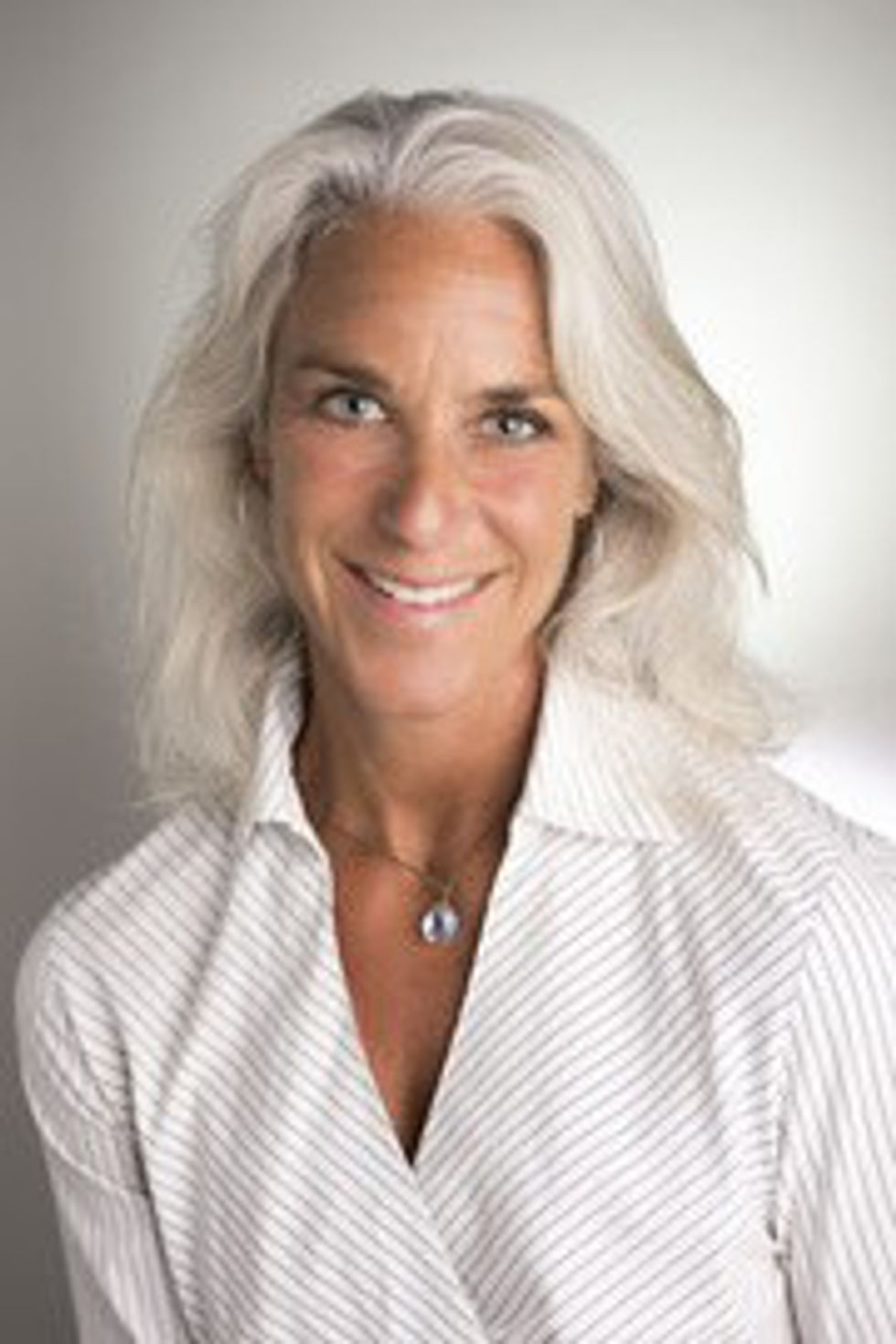
Beth Meyerson was the third speaker, whose talk was called “Art of the Small.” Involved with public health policy and Co-Director of the Rural Center for AIDS/STD Prevention, Meyerson spoke on the HIV outbreak in southern Indiana that started last December and ended over this past summer. Starting with a "Star Wars" reference to Yoda and the Force, Meyerson explained the three key components of understanding what the “art of the small” truly is. She began with the recognition that all are connected through the removal of biases, and concluded with recognizing the ability, capacity, and courage that goes into being small, for the small changes make greater, bigger change.
Her talk consisted of various stories collected from Scott county during Indiana’s outbreak of HIV, rooted in the three-generation abuse of the drug Opana. These stories ranged from addicts marking the syringes that an HIV-infected person used it to Ed Clear’s political sacrifices in pushing a syringe exchange bill to people sharing their stories to, finally, the mayor of Indianapolis resigning a bill that allows syringe exchange. While she agrees with the many protests that the bill was “bad drug policy,” the key was that it was “good public health policy.” Meyerson examines these individually small actions, which started a statewide movement of “harm reduction” and prevention the spread of HIV and Hepatitis C. She invited the audience to join in the art of the small revelation and taking the small steps, as they are better than none, and concluded with a final “May the force be with you!”
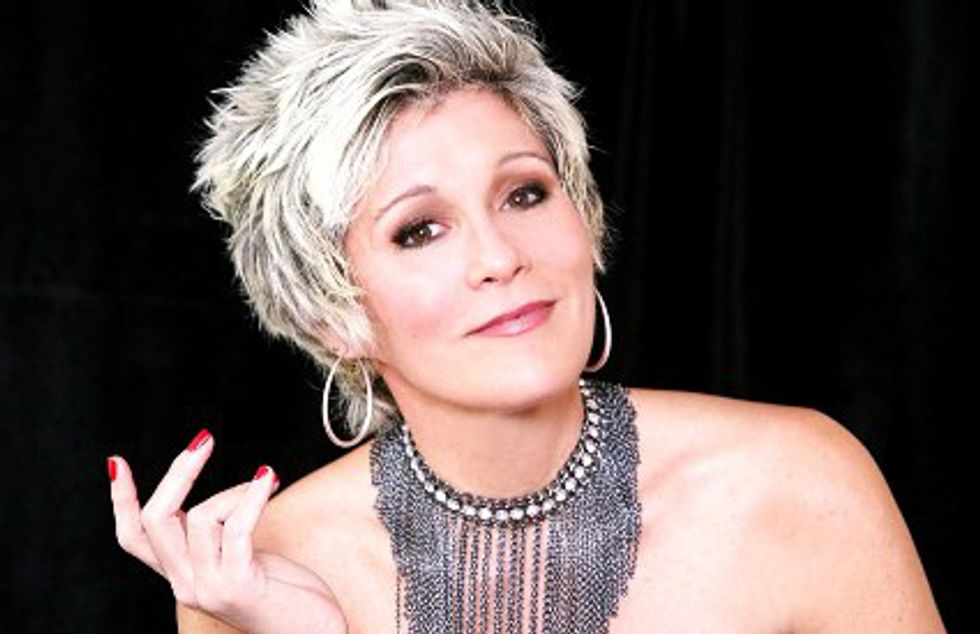
The fourth speaker to step out onto the auditorium stage was Sylvia McNair, alumni and now faculty of our Jacobs School of Music and two-time Grammy award-winner. Opening with "Fly Me to the Moon," McNair’s talk “Perspective is Everything” inspired the audience to avoid feelings of insignificance through a simple change of perspective. As a lover of stars, sunlight, and moonlight alike, McNair used astronomy to remind us how little we are in terms of the vast universe.
While our sun is just an average star among trillions in the millions of galaxies, she offered a two-step plan to ward off the feelings of being small and meaningless. First, she explains, every task of every day should be carried out with gratitude and service. Smiling, she admits that if you ask anyone close to her, students, family, or friends, they will tell you she is terrible at it. Yet, she reminds us that tomorrow is a new day, and she will try all over again to work to be the best version of herself. The second part of her method of fighting the feeling of insignificance is finding your purpose; finding what you love or what fascinates you and do it everyday with love, gratitude, and service. McNair reveals, perhaps obviously, that her passion is singing, and takes out her phone to use an oscillator app. This app helps shows the sound waves of her singing voice versus her talking voice, a testament to the beauty of singing that fascinates humankind. She goes on to explain that though the oscillator will appear the same with all voices, they are incredibly unique and one of a kind, such as a fingerprint or snowflake. McNair encourages the audience to “find the one thing that lets your light shine through” and concludes her talk with a beautiful rendition of "What A Wonderful World."
After half of the speakers spoke to the audience, there was a short intermission with two previous TEDx talks from Vancouver were shown, one about a surfer who sought freezing temperatures and the other about interpretative dance.
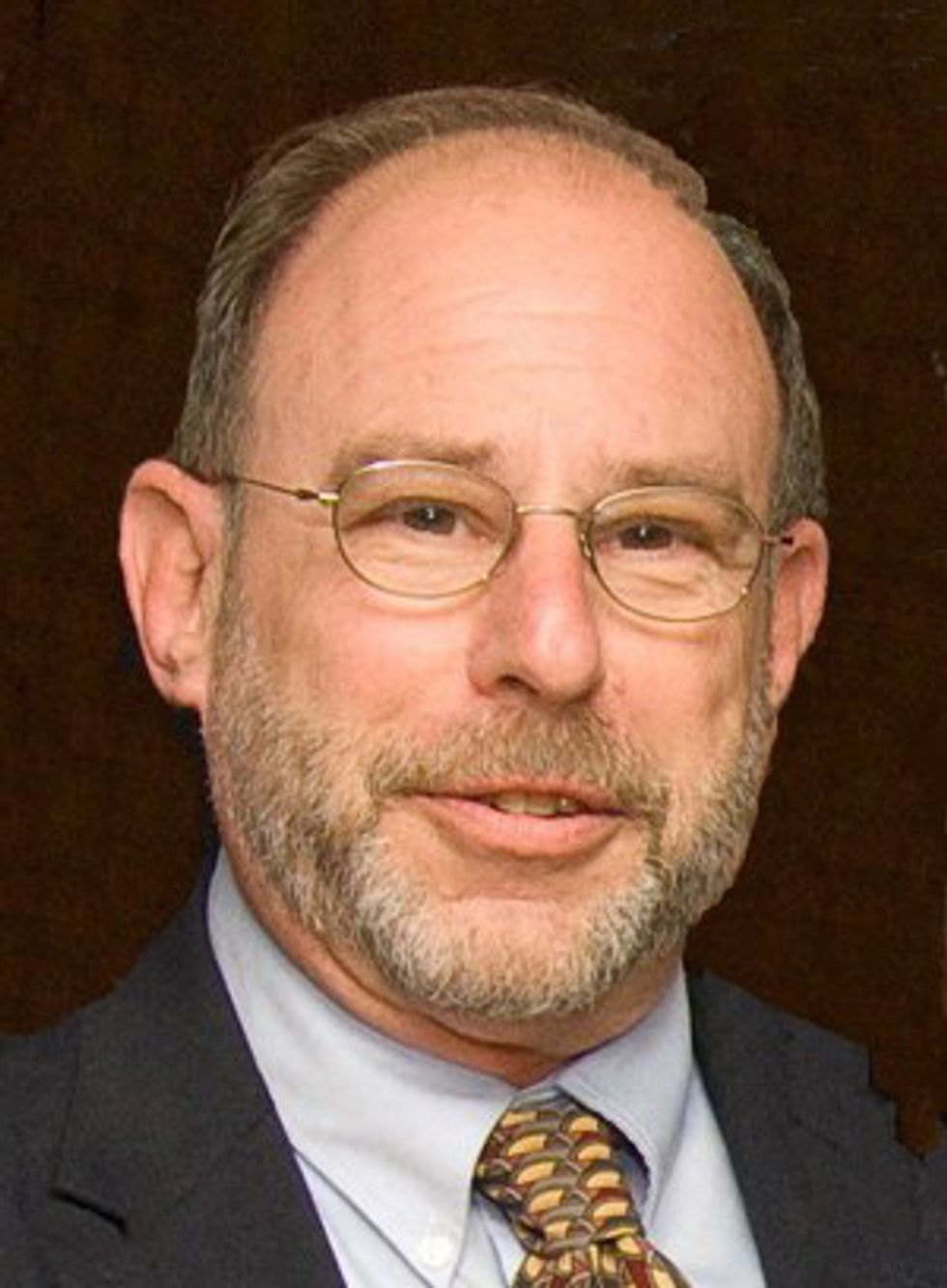
Henry Hertzfeld was the first speaker of the second half of the night, and was, by far, the one most chock-full of information. His talk, “Who Owns the Moon?,” opened with a poll of the audience on three questions: does nobody own the moon, does everyone own the moon, and are there valuable resources on the moon. Hertzfeld answered that each is correct and went on to explain space law in detail. Despite commercial businesses online “selling” stars or an acre of the moon, he explains that not one person or nation can own the moon or any celestial bodies per five treaties made over 50 years ago. Among the legal standards, no nation has ever been given permission to own or build on the moon. He explained many specifics of the treaties, but overall, the nations agreed that there was no sovereignty in space and exploration must be entirely peaceful, without mass destruction weapons and for the benefit of all mankind. Each nation hold the ability to govern with their own discretion on the exact details, such as whether moon rocks are government property or not (in the U.S. they are, but not so in Russia). Hertzfeld concludes his talk about possibilities in the future of commercial space and private activities, but that the upcoming generation must review the loopholes in the treaties so that space can remain ungoverned and unowned while balancing the exploration of nations and companies alike.

The sixth speaker, Alyssa Monks, was a definite crowd favorite with her talk “The Beautiful Awful.” She introduces herself as a successful painter of large-scale figurative pieces. As the youngest of eight siblings, six being brothers, she learned to be quiet, neat, and to stay in line. Monks reminisces about her “super mom” taking her to every available art class in the area when she was younger and the feeling of control while she painted. By the age of 14, Monks knew she wanted to be an artist, and her career after college took off.
She made her career out of painting people in water, as it was intimate and complicated, some paintings being as large as six to eight feet. This time in her life was defined by her eagerness, the search of new ideas, and feelings of success, but it quickly ended with a talk with her mom who revealed she was diagnosed with lung cancer that had spread to her bones and brain. Monks’ father was a doctor, which proved to be a benefit, but she searched for therapies and alternative medicine that could help her mother. She recalled once stopping for a second and asking if this is what her mother wanted, who replied, “no, for I’ll need you later.” Monks learned that if she tried to fix it, she would miss it, and soon moved in with her mother to take care of her daily.
She spoke of this change as a move from resisting to surrendering to the disease. She and her mother created a ritual of daily routines, of breakfast, showering, and other activities that became their “beautiful awful.” After her mother died, a year into the diagnosis, Monks felt herself unravel, and her paintings were no longer safe and careful. She began to find beauty in the chaos and imperfections in the outdoors. Her curiosity grew, and she was soon developing new artwork, different than anything else done her career. Flashing pictures as a sneak peek to her current work, Monks explained that her mother’s death showed her the power of vulnerability and expansive space. In conclusion, she challenged the audience to allow the big losses in life to bring you to your knees and find the beauty in the unknown and the awful.
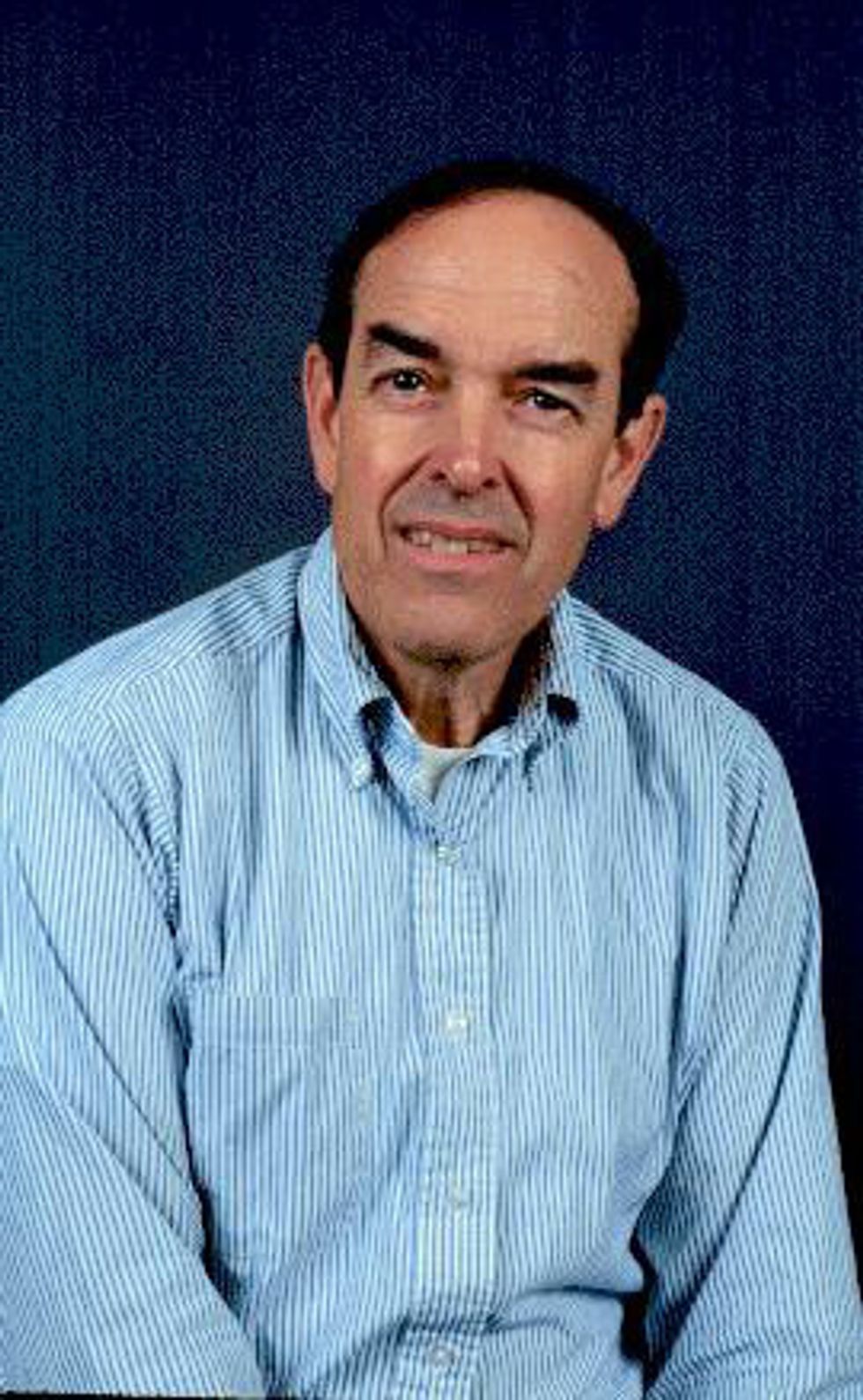
Ben Brabson, a physics professor here at Indiana University, took the stage as the seventh speaker of the night to speak on “The summer/winter problem.” A mix between Bill Nye and Mr. Rogers, Brabson spoke to the “extraordinarily clever folks who are out there watching me” about the concept of capturing summer heat, storing it. and using it to warm buildings in the winter. This solution he presented would save enormous amounts of energy and reduce or even eliminate the use of fossil fuels. To the audience’s pleasure, he suggested we all move to Hawaii and just ignore that winter even exists, but amid laughter, concluded that Hawaiians may think it “awkward” for seven billion people to inhabit their islands.
Returning to his concept of storing heat, he spoke to the question that brimmed in the audience: it sounds easy, but how could it be possible? Brabson’s solution was to store heat in the ground, as no one can possibility own a container big enough. However, the next question to consider was if it will stay warm until it would be needed six months later. Using the hot summer of 2012 and an experimental town in Canada, Brabson explains how this is all possible. Scientists are able to dig a hole deep enough and measure the temperature on the side of the hole to predict past weather from thousands of years ago, so theoretically, heat can be stored in the ground. A town in Canada built a village of 50 homes with solar panels that captured the heat of summer 2012 and stored it in boreholes at 175o F. This heat was then stored and used as 97 percent of the heat needed in those same homes that winter.
In conclusion, Brabson addressed all the “extraordinarily clever” young people in the audience, and apologized for that fact that “we old folks have left lots of interesting problems” to be solved in coming years. He reminded us all to use our clever minds to explore untapped resources and how to eliminate waste for a better future.

Wrapping up a night of fantastic speakers, Ceasar McDowell was the final talk of the night. McDowell is a professor at MIT, and he co-founded the global civic engagement organization "Engage The Power." His talk was titled “Democracy from the Margins” and was perhaps the most relevant to our everyday lives.
He began by commending humankind for coming together and “saying enough, enough of inequality, violence to women, mistreatment of the environment” and more. The questioning of power and fighting the status quo is on the news every day with people coming together from all walks of life. McDowell said that he is inspired by the fact that, for the first time in human history, complex and diverse individuals are coming together to start the conversation. The power of being connected is the strongest force in the universe; to get to know the issues and why they are important. McDowell explained that disconnected narratives of “who belongs and who doesn’t” have ruined society, but people are coming together to change these narratives. The example used was of illegal immigrants fighting to call themselves undocumented, because the problem is bureaucracy, a system that doesn’t know how to handle them, not these individuals searching for a better future.
To fight back the monopoly on information by the 1 percent, he said that people are starting to combine digital and analog. Take “Black Lives Matter,” for example; it began as a hash tag on Twitter and other social media websites, but evolved into meetings in churches, schools, and living rooms on how we can change the stigma. “Black lives matter isn’t isolating; it is proclaiming that people of all races matter, and that black lives matter too.” Moving to discuss disconnect of design, McDowell explained that now, design is focused on the middle and forgets everyone else; his revolutionary solution is to fight this norm and design for the margins. By designing for the margins, the middle will always be covered, like how setting a tent with stakes farther out will only create more stability.
As a final call-to-action, McDowell explained a tool for the audience to use called micro-inclusions, defined as little steps or things that you can do that show those around you that they are included and they exist. Through this, he believes that “as a nation, we will be able to create a mass of people that can bring in a new form of democracy” and to simply be better.

The night was full of tears, laughter, and calls-to-action inspired by eight wonderful speakers. The audience came together as an entire auditorium of people who wanted to create a better future by starting the conversation of “ideas worth spreading." As practical dreamers, we were all challenged to keep our “eyes on the stars [and] feet on the ground” as we ventured out that evening and during the rest of our lives. I truly hope you all take the time to consider what they inspired others to do and make a promise to continue to better yourself for a better future.

















