
This is a story I don’t often tell. Sure, my friends and family know I have arthritis (Rheumatoid Arthritis, to be specific and, you know, medically accurate), I just tend to spare them the details of my ongoing journey with the disease. But arthritis is a part of absolutely every day for me. I haven’t been pain-free in a long time. But it’s because of this story that I’m able to live through the stiffness. And not just live through it … but thrive through it. Dance through it. Sing through it. Really, truly live through it. Because I know there are worse battles to fight … and I’ve fought them.
Juvenile Rheumatoid Arthritis (JRA) is a type of arthritis that causes joint inflammation and stiffness. Categorized as an autoimmune disease, the immune system mistakes the body’s own tissue as foreign, causing it to attack healthy cells and tissue as a means of fighting off the seemingly foreign cells. This can lead to permanent joint damage. JRA affects children aged sixteen and younger. I was diagnosed when I was eleven.
When I was sixteen, after five years of remission, my JRA began a full-out war, intent on deteriorating my health and complicating my plans for the future. My life consisted of constant pain, dulled by medication but raging when left alone. Spreading first to my knees and jaw, then to my ankles, wrists, elbows and fingers, it completely consumed me. I was a prisoner in my own body -- an old woman unable to live life independently, needing perpetual aid wherever I went. Even the simplicity of walking on a flat surface became as laborious as trudging through five feet of snow.
I had always been an active teen, spreading myself thin between different clubs and organizations. I was a competitive dancer and vocalist, a musical theater enthusiast, and an avid member of my school’s band. But my JRA made it nearly impossible for me to continue any of the things that kept me a lively and busy teen. I pushed myself through the pain these activities brought until I was ultimately forced to look on while my friends continued living their exciting lives. It was maddening, to say the least. Music, specifically, had always been there for me, and, unable to neither make nor interpret it, I felt entirely alien. It was as if a new, however broken, person was inhabiting my body.
As that year dragged on, both my physical and mental states were in a steady decline. Everything about every day was a struggle: getting out of bed to go to school, concentrating on the material in class rather than the pain in my joints. Then coming home, crying at the dinner table because it hurt my jaw too much to chew my food, showering for no more than five minutes as standing became harder and harder, before finally relaxing my joints just long enough for me to fall asleep. Every thought in my head suggested that I just give up, stay home, and stop trying.
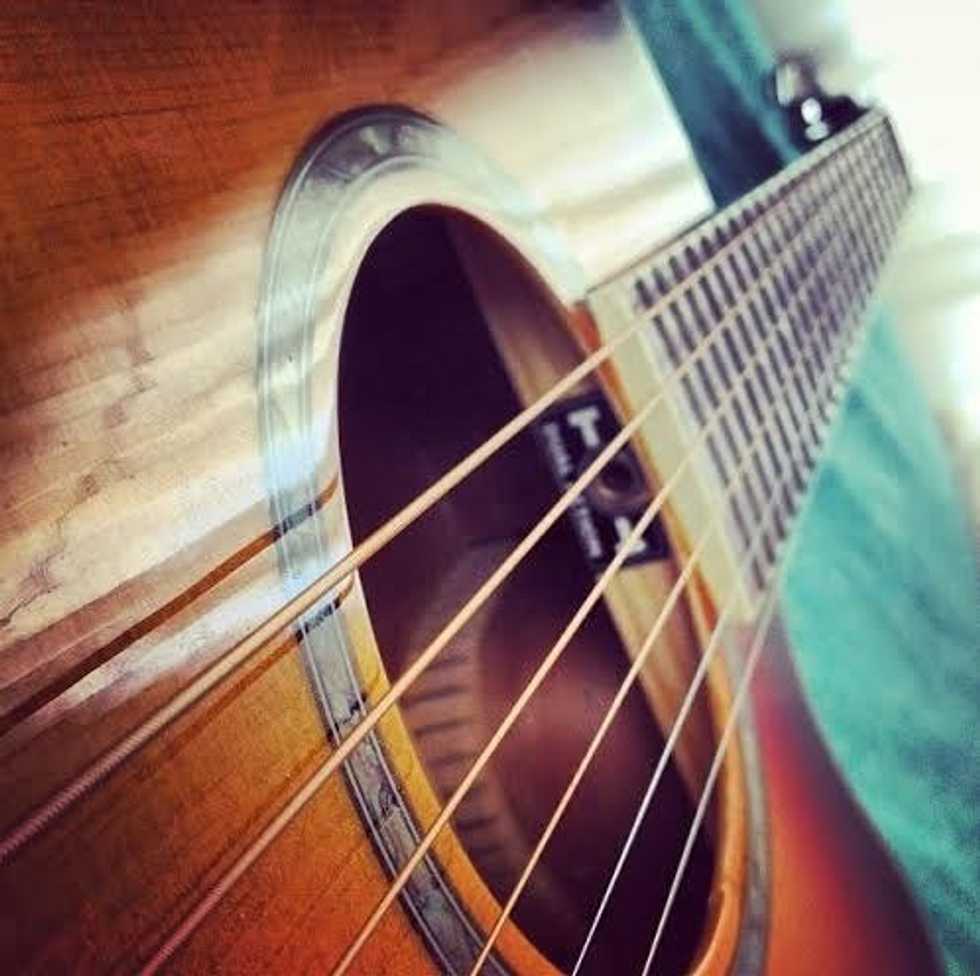
With the constant support of my mom and dad, I somehow made it to school every day. And music found its way back into my life again when I found an old guitar hiding in an unexplored corner of my house. With that guitar and a simple four-chord progression, I found myself again. While my entire body ached, nine of my fingers were arthritis-free, and so without the help of my arthritic left pinky finger, I began teaching myself to play. As cliche as it sounds, I had never felt such a sense of freedom.
Eventually, my rheumatologist prescribed me a new medication that worked miracles. Ten hours after taking my first dose, I rose from the couch by myself for the first time in months. My parents and I cried; it was absolutely unbelievable. Over the next few weeks after that, I was gradually brought back to my feet, literally and figuratively.
My relapse taught me so many valuable lessons. I learned not to take anything for granted; I am thankful for knees and ankles that let me walk and for wrists that are strong enough to hold a glass of water with one hand. For a jaw that can chew food and for elbows that extend fully to reach things in high places. I learned that, sometimes, things get worse before they get better, and that pain doesn’t last forever.
Five years later, my Rheumatoid Arthritis (you get to drop the “juvenile” part when you get old enough) is well-controlled. Whenever I doubt my capability and worth, I remember how, even while battling a war against my RA, I managed to dodge the bullets of physical and emotional burden. I feel empowered every day because of the war that I won and still continue to win.
One of my favorite quotes comes from French philosopher Albert Camus. He says: “In the depth of winter, I finally learned that within me there lay an invincible summer.” I found resilience during my relapse I never knew I possessed, and it was that strength that motivated me to dig myself out of the chasm that my RA had become. In the end, I was exhausted but proud. The “winter” that is my arthritis will never white out my hopes and wishes, my ambitions and my dreams. And my RA, will never define who I am.