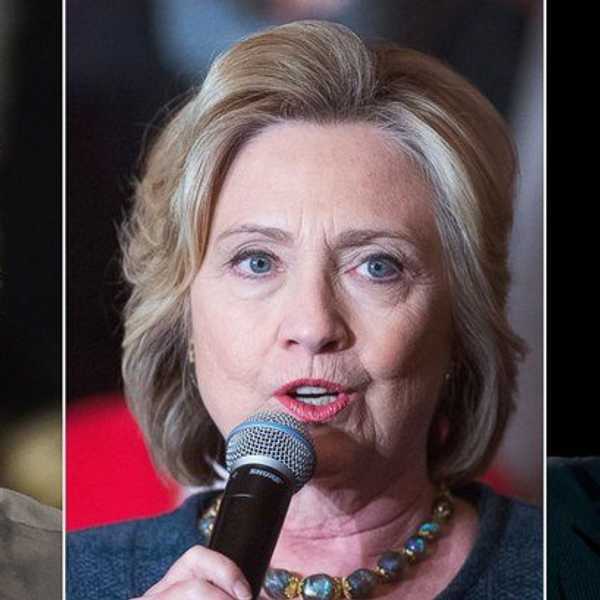
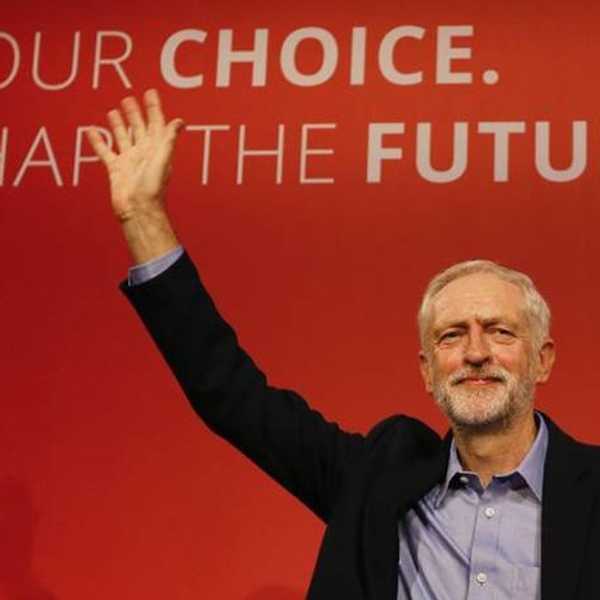
In the United Kingdom of Great Britain and Northern Ireland (maybe the United Kingdom of England and Wales in a few years…), what has happened in the US presidential election would almost never be seen. Within both the Republican and Democratic Party, stark divisions have threatened the fabric of unity. Donald Trump has succeeded in shutting out the moderate Republicans from the face of the party. Bernie Sanders and Hillary Clinton will be working for a very long time to try to bring their two bases of support together. “Bernie or Bust” poses a great threat to Democratic strength. The appearance of divisions within the American parties is nothing new, but the stakes in this year are the highest in recent memory. In the UK, such divisions are rarer because of how their government works.
Unlike a presidential system, a parliamentary system selects the executive from the legislature, meaning that the head of government (and/or state) must be a member of the parliament. The current prime minister in the UK is Theresa May and she served as Home Secretary under Former-Prime Minister David Cameron. The people of the UK did not elect Theresa May to the highest office in their government, and they didn’t directly elect Cameron before her. How the elections work in the UK is different than in the US. The parties elect a person to the position of the nominee through primaries and caucuses before the November election, where the American public goes to the polls and the new president is selected through the Electoral College. In the UK and other parliamentary systems, the public goes to the polls and elect members of parliament (MPs) based on party and whichever party has the majority of votes gains the head of the executive.
In 2010, the Conservative Party (center-right, like the Republican Party in the US) succeeded in gaining a majority of votes, but was forced into a coalition to keep control of the government. The leader of the majority party automatically becomes the head of government in this system. David Cameron was elected to lead from within the ranks of the Conservative Party when the Labour Party (center-left, like the Democratic Party in the US) was in power. Since Labour was still in control of the government, Cameron served as the leader of the opposition in Parliament. Another election could have been held at any time within the Conservative Party and Cameron could have been replaced. When the Conservative-Liberal Democrat coalition took Parliament from Labour, Cameron, as head of the largest party, automatically became the UK’s new prime minister.
Following the Brexit vote to leave the European Union, Prime Minister Cameron announced he would be resigning from his position as head of government. A new election would not be held for the public to vote on MPs, rather, a leadership election was held within the Conservative Party to find a replacement as head of the party and of the government. Secretary May won that contest in July.
I bring this system up to explain that party unity and the establishment is incredibly important to the British political machine. In the United States, outside candidates are allowed to reach top positions in the government, as seen by Donald Trump’s ascendance to becoming the Republican nominee for the presidency. Texas Senator Ted Cruz has repeatedly gone against the wishes of the upper echelons of the Republican party and represents a growing division within the GOP. Such dangerous trends are not as common in a parliamentary system because the party needs to be a whole if they want to keep their appeal. Vermont Senator Bernie Sanders has represented more radical positions than are generally accepted by the accepted Democratic platform, illustrating yet another division in a major US political party.
The United States should have a system to reinforce the unity of the parties. It is true that sometimes opposition is necessary for progress, and this holds strong in the case of progress within a party, but the way opposition within the Republican and Democratic parties works actually does more to hinder the maturation of the modern platform. In the Republican case, Donald Trump’s nomination has dominated discussion and contention within the party. Too much time had been focused on Trump’s future in the party throughout the election and too much time is being spent trying to put out fires caused by the Republican nominee’s frequent inflammatory statements. In the Democratic case, some of Bernie Sander’s supporters have declared “Bernie or Bust” in a final stand against the nominee Hillary Clinton. While his candidacy pushed the Democrats to budge and embrace some aspects of his more radical stances, the kind of atmosphere brought out by his supporters now poses problems for Clinton. Democrats should unite around Hillary. Republicans should unite around Trump. They are the nominees for the presidency. I don’t think Trump should have secured the nomination and I believe he shouldn’t have been allowed the chance to get as far as he has, but he is the nominee now. Nothing can be done to stop Clinton or Trump because the conventions are now over and the nominations are final.
Hopefully the Republicans and Democrats will be able to form more united party structures in the future. In the best case, the parties will become stronger after 2016 and in 2020 the appropriate candidates will be able to secure their nomination. The American political process will do much better with parties that can unite themselves and present a cohesive platform for the electorate to decide on.